Is the Colorado River in Glenwood Canyon Safe to Wade?
Fishing the Colorado River through the stunning Glenwood Canyon can feel like a dream, with those incredible canyon walls rising around you and the promise of strong trout. But if you’ve ever stood on the bank, watching that powerful current surge by, you’ve probably asked yourself the exact same question: "Is the Colorado River in Glenwood Canyon safe to wade?" It's a completely valid concern, as the river here presents unique challenges that can quickly turn a peaceful outing into a perilous one if you’re not prepared. This guide will walk you through the realities of wading this iconic stretch of water, helping you understand the risks and how to navigate them safely so you can enjoy its legendary fishing without unnecessary worry.
Understanding the Colorado River's Power in Glenwood Canyon
When we talk about the Colorado River in Glenwood Canyon, we're not talking about a gentle, meandering stream. This is a significant river, carving its way through formidable geology, and its power is something that demands respect. Many anglers, especially those new to large Western rivers, underestimate just how much force moving water can exert, and this stretch is no exception. The canyon funnels the water, increasing its velocity in many areas, and the riverbed itself often hides obstacles that can trip up even experienced waders.
The Strength of the Current and Water Depth
One of the biggest factors making wading dicey in Glenwood Canyon is the sheer strength of the current. The Colorado River here is a workhorse, draining a massive basin, and even at moderate flows, the water pushes with incredible force. Imagine standing in a strong current, trying to keep your balance while thousands of gallons of water per second rush past your legs – it's a constant battle, and one wrong step or a submerged rock can easily send you tumbling. This isn't just an inconvenience; it can be genuinely dangerous, pulling you downstream faster than you can react.
Beyond the current, the depth of the water is another major consideration. While there might be occasional shallow riffles and bankside eddies, large sections of the river in Glenwood Canyon are deep, often dropping off abruptly. What looks like a manageable shallow flat from the bank can quickly become waist-deep or even chest-deep, especially if you're not intimately familiar with the specific contours of the riverbed. Wearing waders designed for cold water is crucial, but remember, they offer no buoyancy if you go down in deep, fast water. Falling in with waders full of water can be terrifying and disorienting.
The Unpredictable Riverbed and Submerged Obstacles
The bottom of the Colorado River in Glenwood Canyon is far from a smooth, uniform surface. It's a dynamic environment, constantly shifting with the forces of erosion and deposition. You'll encounter everything from large, slick boulders and loose cobble to deep holes and sudden drop-offs. These underwater features are often completely invisible from the surface, especially when the water has any turbidity, which is common during certain seasons or after precipitation.
Stepping onto a patch of unstable rocks, slipping on moss-covered stones, or suddenly dropping into a hole can instantly throw you off balance. Furthermore, the canyon walls and surrounding landscape contribute a lot of debris to the river over time. Submerged logs, branches, and other snags are common, creating hazards that can trap your feet or gear if you stumble. These hidden dangers emphasize why a cautious, slow approach, combined with the right equipment, is absolutely essential for anyone considering wading here. Even using a service like FishingBooker to find a local guide can significantly enhance safety by providing expertise on these hidden dangers.
Seasonal Fluctuations and Wading Safety
The safety of wading in the Colorado River in Glenwood Canyon isn't a static condition; it changes dramatically with the seasons. Colorado's high-altitude environment means that snowmelt plays a huge role in river flows, transforming the river from a relatively placid (though still powerful) entity into a raging torrent and back again. Understanding these seasonal shifts is paramount for any angler hoping to get their feet wet.
Spring Runoff and High Water Dangers
The most dangerous time to wade in Glenwood Canyon is undoubtedly during the spring runoff, which typically peaks from late May through early July, depending on the snowpack. This is when the melting snow from the high country swells the river to its maximum volume and velocity. The river transforms into a powerful, muddy behemoth that is almost entirely unwadeable for all but the most experienced and foolhardy.
During runoff, the current becomes incredibly strong, capable of sweeping a person off their feet in an instant. Visibility also plummets as the water turns silty and brown, making it impossible to see the riverbed or any hazards lurking beneath the surface. Water temperatures are also at their coldest, increasing the risk of hypothermia if you do fall in. Trying to wade during this period is not just risky; it's genuinely dangerous. It’s far wiser to embrace the wisdom shared in our guide on "When Colorado's Spring Runoff Hits and How to Fish Around It", which offers strategies for finding safer fishing opportunities during this challenging time.
Summer and Fall: Lower Flows and Better Conditions
As the summer progresses and the snowmelt subsides, river flows typically begin to drop, often reaching their lowest and most stable levels in late summer and into the fall. This period generally offers the safest wading conditions in Glenwood Canyon. The currents are less aggressive, the water often clears up, and the riverbed becomes more visible, allowing anglers to pick their steps more confidently.
However, "safer" does not mean "safe without caution." Even during lower flows, the Colorado River remains a powerful body of water. There will still be deep pockets, swift runs, and potentially slick rocks. Afternoon thunderstorms in the summer can cause flash rises in flow and sudden turbidity, so always be aware of weather patterns upstream. Fall, with its crisp air and beautiful foliage, often brings some of the most comfortable and productive wading conditions, but vigilance is still key. Consulting resources like "Colorado Fishing Seasons Month by Month" can help you plan your visit during optimal flow periods.
Here's a quick overview of wading safety by season in Glenwood Canyon:
| Season | Typical Flow Conditions | Wading Safety | Notes |
|---|---|---|---|
| Spring (Mar-Apr) | Moderate to Rising | Challenging | Increasing flows, colder water, some turbidity. |
| Runoff (May-Jul) | High to Very High | Extremely Dangerous | Strong currents, poor visibility, cold water. Avoid wading. |
| Summer (Jul-Aug) | Dropping, Moderate | Moderate | Flows stabilize, better visibility, warmer water. Still requires caution. |
| Fall (Sep-Oct) | Low to Moderate | Best | Clear water, stable flows, comfortable temperatures. Best time for wading. |
| Winter (Nov-Feb) | Low, Stable | Moderate to Challenging | Icy banks, very cold water, potential for slush. Requires specialized gear. |
Essential Gear and Safety Practices for Wading
Even when conditions are favorable, successful and safe wading in the Colorado River through Glenwood Canyon requires more than just good intentions. It demands the right gear and a disciplined approach to safety. Skimping on these aspects is simply not worth the risk, as the consequences of a misstep can be severe.
Wading Boots, Waders, and a Wading Staff
Your footwear is your first line of defense against slips and falls. High-quality wading boots with felt soles or rubber soles specifically designed for traction on slick river rocks are non-negotiable. Many experienced anglers prefer studded boots for extra grip, especially when dealing with icy banks in colder months or particularly slick bedrock. Our guide, "Do You Need Studded Boots for Icy River Banks?" dives deeper into this topic. Matching your boots with sturdy, well-fitting waders is also crucial. While waders keep you dry, they can also become a hazard if they fill with water in a fall, so proper fit and a good wading belt are important.
Perhaps the most underestimated piece of wading safety equipment is a wading staff. This isn't just for looking cool; it's a vital tool for probing the riverbed ahead of you, testing depth and current strength, and providing a crucial third point of contact with the bottom. Think of it as your extra leg – it can prevent a fall before it happens and help you regain balance if you start to wobble. Always deploy your wading staff before taking a step into unknown water.
Understanding Current Dynamics and Choosing Your Approach
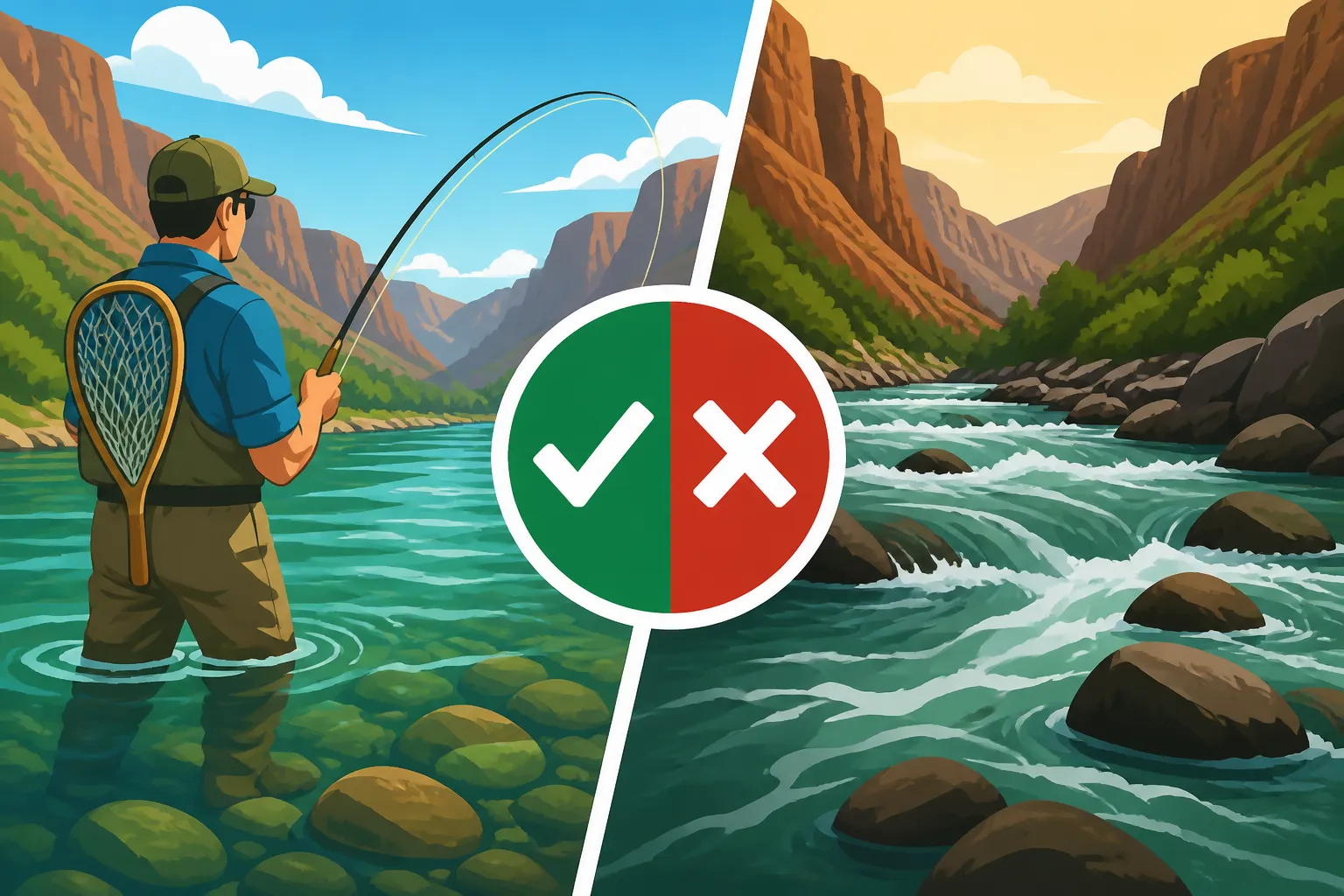
Before you even step into the water, take the time to read the river. Observe the currents, look for eddies and slower pockets, and identify potential entry and exit points. Fast, churning water, especially where it’s pushing against canyon walls, is almost always too dangerous to wade. Look for seams, riffles, and slower moving glides where the current is more manageable. When wading, always face upstream and shuffle your feet, never lifting both feet off the bottom at the same time. Move slowly, deliberately, and always be prepared to retreat if conditions feel too challenging.
Understanding Reading Water on a Colorado Freestone River is a skill that takes time to develop but is invaluable for safety and fishing success. Pay attention to warnings about high water, especially after heavy rains, as explained in "Why Colorado Rivers Get Dangerous During Afternoon Storms". Consider using a trusted service like FishingBooker to connect with a local guide who can interpret these conditions firsthand. A good guide's knowledge of the specific sections of Glenwood Canyon can make all the difference between a safe, productive trip and a stressful, potentially dangerous one.
What to Do If You Fall In
Despite all precautions, sometimes a fall happens. Remaining calm is the most important thing. If you find yourself in the water, immediately turn onto your back with your feet pointed downstream. This "whitewater swimmer's position" allows you to see what’s coming, protect your head, and use your feet to fend off rocks. Try to swim or maneuver towards the nearest bank, prioritizing getting out of the main current rather than holding onto your rod.
If you are wearing a wading belt, it helps to prevent your waders from filling completely with water. Don't panic about losing gear; your safety is paramount. Once you're out of the water, assess yourself for injuries and get warm immediately. Carrying a small, dry bag with extra layers, a first-aid kit, and a way to signal for help is always a good idea. Our detailed guide, "What to Do If You Fall In While Wading", offers even more in-depth advice on handling this challenging situation. Knowing these steps beforehand can genuinely save your life.
Alternative and Safer Fishing Options in Glenwood Canyon
Given the inherent challenges of wading in Glenwood Canyon, especially during periods of high flows, it’s completely understandable to look for alternative, safer ways to experience this incredible fishery. Luckily, there are several options that allow you to enjoy the Colorado River without putting yourself at undue risk in the current.
Bank Fishing and Shoreline Access
While vast sections of Glenwood Canyon plunge steeply into the river, there are specific areas that offer more accessible bank fishing opportunities. These spots often include larger pull-offs along I-70 or designated recreation areas where the canyon widens slightly, allowing for a more gradual slope to the river's edge. At these locations, you can often cast effectively into accessible pockets, eddies, and slower runs without needing to enter the main current.
It requires a bit of scouting, and sometimes a short hike from parking areas, but these spots can be very productive. Always be aware of your surroundings, especially with the highway nearby, and make sure you're on public land or have permission for private access. Exploring options for Fishing Colorado River in Glenwood Canyon can often point you to known bank fishing locations, as many outfitters and local resources highlight these areas. Even a quick search on FishingBooker for local spots might yield some unexpected bank-fishing gems.
Guided Float Trips for a Full Experience
For the ultimate safe and comprehensive fishing experience in Glenwood Canyon, a guided float trip is hands down the best option. When you book a trip with a professional outfitter, you get the benefit of an experienced guide who knows the river intimately, from its currents and hidden hazards to the best fishing holes and appropriate techniques. They'll navigate the powerful water in a drift boat or raft, allowing you to focus purely on fishing from a stable platform.
These trips typically cover longer stretches of river than you could ever wade, giving you access to pristine and often less-pressured water. The guide will provide all the necessary safety equipment, local insights, and often gear like rods and flies. This is an excellent choice for beginners, families, or anyone who wants to maximize their fishing time while minimizing risk. When researching options, consider looking up reputable guides through platforms like FishingBooker, as they often list guides specializing in the Glenwood Canyon stretch of the Colorado River, ensuring a safe and productive day on the water.
Disclaimer
The information provided in this guide is for general informational purposes only and does not constitute professional advice. Wading in rivers, especially powerful ones like the Colorado River in Glenwood Canyon, carries inherent risks. Always exercise caution, assess conditions carefully, and prioritize your personal safety above all else. River conditions can change rapidly, so stay informed about current flows and weather. If in doubt, do not wade, and consider hiring a professional guide.