Why Kokanee Salmon Turn Red Before Spawning
You've probably seen it before, especially if you spend any time around Colorado's reservoirs or rivers in the fall: a brilliant, almost shocking transformation. The sleek, silvery fish you might have caught earlier in the season are suddenly ablaze with crimson, deep olive, and sometimes even a touch of white. It's a striking sight that often leaves anglers, and even seasoned observers, wondering: why do these kokanee salmon turn such an intense red color? This guide is here to unravel the fascinating biological reasons behind this dramatic seasonal shift in Colorado's kokanee.
The Astonishing Transformation of Kokanee Salmon: A Biological Imperative
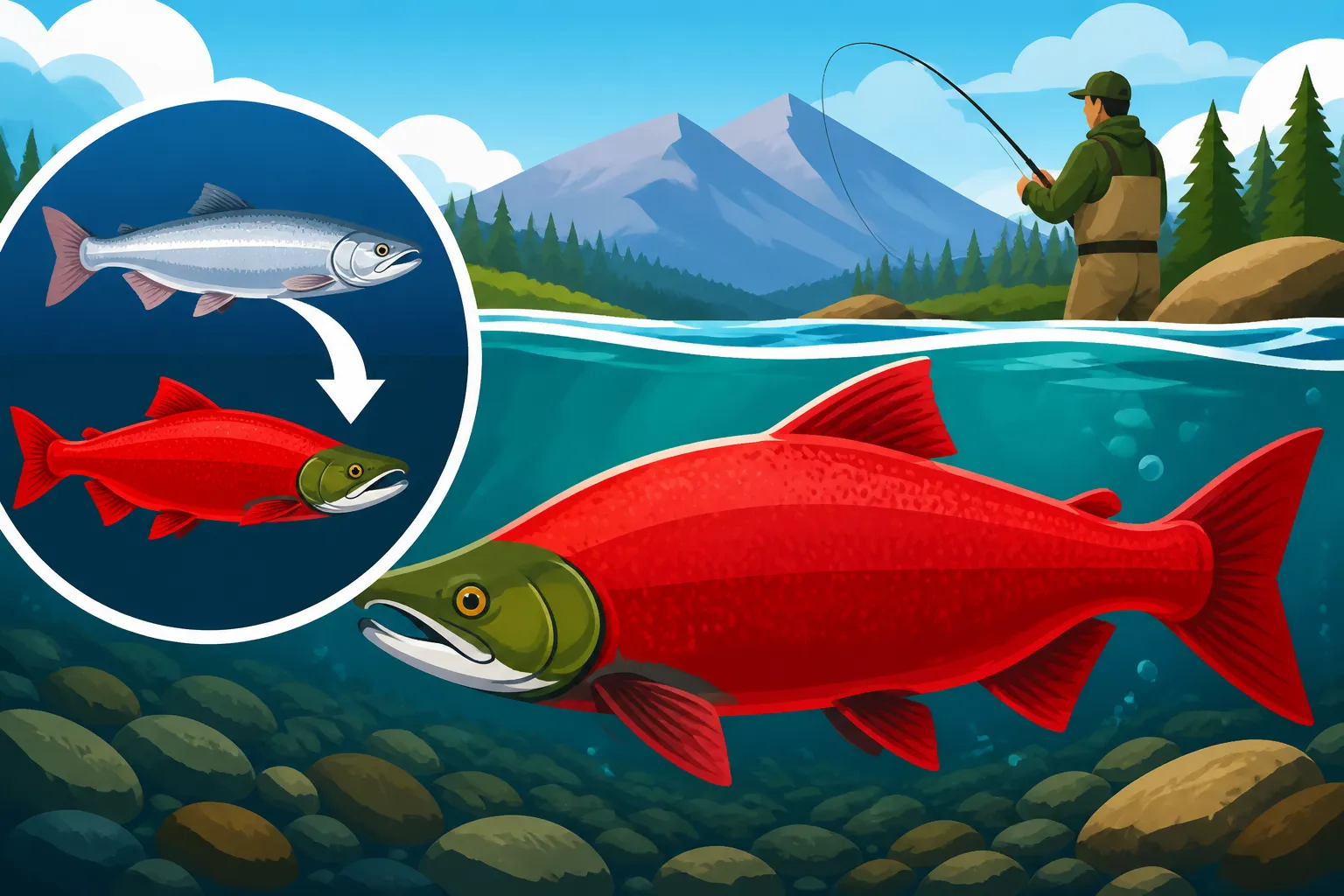
Witnessing kokanee salmon change from their usual metallic silver to a vibrant, fiery red is truly one of nature's most incredible spectacles, especially here in Colorado. It's not just a superficial color change; it's a profound physiological shift that signals the peak of their life's purpose: reproduction. This isn't unique to kokanee; many salmon species undergo similar transformations, but it's particularly noticeable and dramatic in our landlocked sockeye.
A Biological Imperative: Signaling Readiness
At its core, the color change in kokanee salmon is all about attracting a mate and successfully spawning. Imagine the murky, fast-moving waters of a river or the low light of dawn or dusk. A brightly colored fish, particularly a male displaying vibrant red hues, is much more visible to potential partners than a camouflaged silvery one. It's a billboard, essentially, shouting "I am ready to spawn! Look at me!" This display is a key part of their courtship ritual and competition.
The males typically undergo the most dramatic changes, developing not only the intense red body but also a humped back and a hooked jaw (known as a kype). These physical alterations, combined with their striking coloration, serve to intimidate rival males and impress females. It's a high-stakes game where the most vibrant and robust-looking male often wins the right to fertilize eggs. Females, while also changing color, tend to be less intensely red and don't develop the pronounced physical deformities of the males, focusing their energy more on egg development.
This biological imperative is so strong that the salmon pour all their remaining energy into it. They stop feeding once they begin their upstream migration and transformation. Their digestive systems essentially shut down, and their bodies start to reallocate resources to support the arduous journey, the development of their spawning attire, and the production of eggs and milt. It's a race against time, as this final act of reproduction is also the last chapter of their lives. For more on this life cycle, check out Kokanee Salmon Life Cycle in Colorado.
The Role of Carotenoids in Their Diet
So, where does this vibrant red color actually come from? It's not just magic; it's science, specifically biochemistry. The red and orange pigments that give kokanee salmon their distinctive spawning color are called carotenoids. These are the same types of pigments found in carrots, tomatoes, and flamingos – and just like those organisms, kokanee salmon cannot produce carotenoids themselves. They must obtain them through their diet.
During the years they spend growing in Colorado's large reservoirs like Blue Mesa, Taylor Park, or Granby, kokanee feed heavily on small crustaceans, particularly copepods and Daphnia. Many of these tiny organisms consume algae that are rich in carotenoids. As the kokanee eat these crustaceans, they absorb and store these pigments in their flesh and skin. Over time, these carotenoids accumulate.
When the spawning season approaches and the fish stop feeding, their bodies begin to mobilize these stored carotenoids, moving them from their muscle tissue (which is why their flesh turns pale as they approach spawning) into their skin and scales. This transfer is hormonally regulated and coincides with the development of their secondary sexual characteristics. It’s a remarkable example of how diet directly influences appearance, all for the sake of ensuring the next generation. If you're interested in the best ways to catch these fish before their transformation, you might want to read Trolling for Kokanee Salmon in Colorado. You can often find specialized trolling flies and lures that mimic their prey on platforms like Amazon, designed to attract pre-spawning kokanee still actively feeding.
Timing and Triggers in Colorado's Waters
The timing of this dramatic color change isn't random; it's a finely tuned process dictated by environmental cues and their inherent biological clock. For Colorado's kokanee, which are landlocked sockeye salmon, this annual event is critical for the survival of the species in our high-altitude environment. It truly is a marvel to observe.
The Journey from Reservoir to Spawning Grounds
The journey for kokanee salmon in Colorado typically begins in late summer or early fall. After spending years growing fat and silver in the deep, cold waters of reservoirs, a powerful urge compels them to migrate towards their ancestral spawning grounds. These grounds are usually located in the upstream tributaries or river inlets of the very reservoirs they've called home. For instance, the Gunnison River inlet at Blue Mesa Reservoir is a renowned spot for these magnificent runs.
As they leave the safety and abundance of the main reservoir and enter the shallower, often faster-moving river systems, their bodies begin to prepare for the monumental task ahead. This physical exertion, combined with the cessation of feeding, is what kickstarts many of the physiological changes, including the intense coloration. It's an arduous journey, fraught with challenges from predators and physical obstacles, but the drive to reproduce is overwhelming. Understanding these movements is key to appreciating Kokanee Salmon Spawning Runs in Colorado.
Environmental Cues: Water Temperature and Light
While the internal biological clock is ticking, external environmental cues play a crucial role in triggering and timing the kokanee's transformation and migration. The two most significant factors are declining water temperatures and shortening daylight hours. As summer gives way to fall in Colorado, the days grow shorter, and the crisp mountain air begins to cool the rivers and surface waters of the reservoirs.
These changes in light and temperature are sensed by the fish and signal to their bodies that it's time to begin the final phase of their life cycle. Cooler water temperatures are often a prerequisite for successful egg development and incubation, and shorter days are a reliable indicator of the advancing season. The precise timing can vary slightly from year to year depending on weather patterns and snowmelt, but generally, by September and October, the kokanee runs are in full swing and their vibrant colors are unmistakable. You can often see this spectacle unfolding in specific areas like Where Kokanee Salmon Spawn Near Blue Mesa. Many anglers will pack a good pair of polarized sunglasses, easily found on Amazon, to better spot these fish in the often-turbid spawning waters.
What This Means for Colorado Anglers
For those of us who love to fish Colorado's waters, the kokanee's spawning transformation presents both an incredible viewing opportunity and a unique set of considerations. It's a time when ethics, regulations, and even culinary preferences come into sharp focus.
Catching Spawning Kokanee: Ethical Considerations
When kokanee salmon turn red and begin their spawning run, they are no longer feeding. Their focus is entirely on reproduction. This means they are not actively biting on traditional lures or flies out of hunger. Any fish caught during this time is typically snagged or enticed through aggressive, territorial strikes rather than genuine feeding. This raises significant ethical questions for anglers.
Many ethical anglers choose to avoid targeting these spawning fish, allowing them to complete their life cycle undisturbed. Catching fish during their spawn can cause undue stress, injure them, or disrupt their crucial reproductive activities. Furthermore, Colorado Parks and Wildlife (CPW) often has specific regulations regarding snagging or keeping kokanee during their spawning runs, especially in sensitive areas. It's absolutely crucial to consult the most current regulations for the specific body of water you intend to fish. Penalties can be steep for violating these rules. This leads many to wonder, Can You Snag Kokanee During Their Spawning Run? – and the answer is complex and often restricted.
The Culinary Aspect: Are Red Kokanee Edible?
This is a common question, and the short answer is: while technically edible, kokanee salmon that have turned bright red are generally not considered good table fare. As we discussed, the red color comes from carotenoids being moved from their flesh to their skin. This process leaves their muscle meat pale, mushy, and largely devoid of the rich, firm texture and flavor that makes pre-spawning kokanee so desirable.
Their bodies are also undergoing significant breakdown, as they are no longer eating and are literally consuming their own stored energy and tissues to fuel the spawn. This further deteriorates the quality of their meat. Most anglers who enjoy eating kokanee target them earlier in the season, typically in summer, when they are still actively feeding and retaining their silvery appearance and vibrant orange-red flesh. If you do catch a pre-spawning kokanee and plan to keep it, it's often recommended to quickly and humanely dispatch it, then bleed it immediately to preserve meat quality, a topic covered in Do You Need to Bleed a Kokanee Salmon Right Away?. You can find various resources on Amazon for proper fish handling tools, like specialized knives or bleeding tubes, to ensure the best possible culinary outcome.
Observing the Spectacle: When and Where
Even if you choose not to fish for them during their spawn, observing the kokanee salmon run in Colorado is an unforgettable experience. It's a chance to witness nature's raw power and the incredible drive for procreation. The best time to observe these runs is generally from late September through October, though it can extend into early November depending on the specific location and the year's weather.
Prime locations often include the inlet streams of major kokanee reservoirs. Blue Mesa Reservoir, with its expansive waters and significant kokanee population, is one of Colorado's premier spots. The Gunnison River upstream from the reservoir sees large numbers of these fish. Other notable locations can include tributaries flowing into Granby Reservoir, Williams Fork Reservoir, and Taylor Park Reservoir. Remember to be respectful of the fish and their environment, keeping a safe distance and avoiding disturbing them. Bringing a good camera or binoculars (which you can easily find on Amazon) will enhance your viewing experience, allowing you to capture the stunning colors and behaviors without interfering.
To help visualize the difference, here's a quick comparison:
| Characteristic | Pre-Spawning Kokanee (Summer) | Spawning Kokanee (Fall) |
|---|---|---|
| Color | Silvery, metallic blue/green | Bright red, olive, dark head/tail |
| Flesh Quality | Firm, rich orange/red | Pale, soft, mushy, less flavorful |
| Jaw Structure | Normal, slightly pointed | Males develop pronounced kype (hooked) |
| Body Shape | Streamlined, sleek | Males develop humped back |
| Feeding Behavior | Actively feeding on zooplankton | Cease feeding, focused on reproduction |
| Location | Open water in reservoirs | Migrating to/in spawning tributaries |
The kokanee salmon's transformation is a poignant reminder of the cycle of life and death in the natural world. While it marks the end of their individual journey, it's also a vibrant celebration of life's continuation. Understanding why they turn red helps us appreciate these amazing fish even more and encourages us to be responsible stewards of Colorado's precious aquatic resources.
Disclaimer
This article is for general informational purposes only and does not constitute professional advice. Laws, prices and regulations vary by location and change over time. Consult a qualified professional for guidance on your specific situation.