Barbless Hook Rules on Colorado Rivers
When you're out on a beautiful Colorado river, casting your line and soaking in the majestic scenery, the last thing you want to worry about is whether your hook is legal. It's easy to get caught up in the excitement of the moment, but overlooking specific regulations, like those governing barbless hooks, can lead to unnecessary stress, fines, and—most importantly—harm to the incredible fish we cherish. This comprehensive guide is here to untangle the rules surrounding barbless hooks on Colorado rivers, ensuring your next angling adventure is both compliant and deeply respectful of our precious aquatic ecosystems.
The Critical Role of Barbless Hooks in Colorado Fishing
It might seem like a small detail, just a tiny bit of metal on a hook, but the presence or absence of a barb makes a world of difference when it comes to the well-being of the fish. Colorado Parks and Wildlife (CPW) implements barbless hook regulations for very good reasons, primarily centered around conservation and ensuring the health of our fish populations, especially in waters where catch-and-release is prevalent.
Minimizing Fish Stress and Injury
Imagine being caught by something that hooks you in a way that’s difficult to remove, potentially tearing flesh. That's essentially what a barbed hook can do to a fish. When a trout or other species takes a barbed hook, the barb often creates a larger wound upon removal, tearing delicate mouth tissues, lips, or even the tongue. This can lead to infection, difficulty feeding, and increased mortality rates after release.
Barbless hooks, on the other hand, slide out much more easily and cleanly. This means less struggle for the fish, a quicker release, and significantly reduced physical trauma. A fish that's released quickly and with minimal injury has a much higher chance of surviving and thriving, which is crucial for maintaining healthy populations. It’s all about giving that fish the best possible shot at continuing its life cycle in the river.
Promoting Healthy Native Populations
Colorado is home to several stunning native trout species, including the Greenback Cutthroat, Colorado River Cutthroat, and Rio Grande Cutthroat. These species are incredibly important to the state's natural heritage and are often the focus of intense conservation efforts. Many waters that hold these fragile native populations have strict regulations, including mandatory barbless hooks, to protect them.
When fishing in sensitive areas, particularly those designated for native trout recovery, adherence to barbless hook rules isn't just a suggestion; it's a vital part of the conservation strategy. Every effort to reduce stress and injury to these fish, especially during catch-and-release, contributes directly to their survival and the long-term health of their populations. It’s a small price to pay to help preserve these magnificent creatures for future generations of anglers. You can learn more about specific rules in these areas in our guide on Catch-and-Release Rules on Colorado's Cutthroat Waters.
The Role of Catch-and-Release
Many of Colorado's most celebrated fisheries operate under strict catch-and-release rules. This management strategy is designed to create and sustain trophy fisheries, where fish can grow larger and older without being removed from the population. The success of catch-and-release, however, hinges entirely on the health and survival of the released fish. This is precisely where barbless hooks become indispensable.
In a catch-and-release scenario, you're intentionally putting fish back into the water. Using a barbed hook in these situations can feel contradictory to the very principle of release. A barbless hook ensures that the act of catching, enjoying the fight, and then letting go is as gentle and humane as possible. It's about respecting the resource and understanding that the joy of fishing doesn't have to come at the expense of the fish's life.
Where Barbless Hooks Are a Must on Colorado Rivers
Colorado has a diverse array of fishing waters, and the regulations can vary significantly from one section of a river to another. It's not a blanket rule across the entire state, which is why knowing where barbless hooks are specifically required is so important. These rules are usually in place on the most pristine, productive, or sensitive fisheries.
Colorado's Gold Medal Waters
Perhaps the most famous designation for quality fishing in Colorado is "Gold Medal Water." These are specific stretches of rivers and lakes that consistently support exceptional coldwater habitats and have the capability of producing large numbers of quality trout, defined as at least 60 pounds of trout per acre, with at least 12 trout per acre being 14 inches or longer. Many of these world-renowned fisheries, like sections of the Fryingpan River, the South Platte River near Deckers, and the Gunnison River, require the use of barbless hooks.
These rules are central to maintaining the high quality of these Gold Medal fisheries, ensuring that the large, healthy fish that qualify these waters for their designation can be caught and released without undue harm. If you're heading to a Gold Medal stretch, consider barbless hooks a non-negotiable part of your gear. Our detailed guide on Colorado Gold Medal Water Regulations Explained offers a deeper dive into these unique areas, where you'll also often find the Colorado's 14-Inch Trout Length Rule in effect for keeping fish, if allowed.
Designated Catch-and-Release Only Sections
Beyond the widely recognized Gold Medal Waters, many other specific sections of rivers are designated as "Catch-and-Release Only." These areas are managed to protect specific species, promote population recovery, or simply to enhance the angling experience by ensuring a vibrant, untouched fishery. In virtually all of these C&R specific sections, barbless hooks are a mandatory requirement.
These sections are often clearly marked with signage at access points, outlining the specific regulations. For example, some stretches of the Arkansas River, the Rio Grande, or various high-country streams might have these specific designations. The logic is straightforward: if you're mandated to release every fish, then you must use the method that gives those fish the best chance of survival.
Specific River Sections and Special Regulations
It’s crucial to remember that regulations can be highly localized. A river might flow for miles, but only a particular stretch, perhaps a few hundred yards or several miles, will have special regulations regarding barbless hooks. This might be due to a specific spawning ground, a unique conservation project, or simply a particularly productive section that needs extra protection.
These "special regulations" can be a bit tricky to keep track of, as they don't always fall under a broader Gold Medal or general C&R umbrella. They require a careful review of the fishing regulations for the precise water you intend to fish. Failing to check these localized rules is a common mistake and one that can easily be avoided with a little homework before you hit the water. This also applies to other important guidelines outlined in the Colorado Fishing Regulations Every Angler Should Know.
Decoding Colorado's Fishing Regulations for Hook Requirements
The complexity of Colorado's fishing regulations, with rules varying from one river section to another, can be daunting. It’s a lot to take in, but thankfully, Colorado Parks and Wildlife (CPW) provides excellent resources to help anglers navigate these waters. Your responsibility as an angler is to utilize these tools to ensure you’re always in compliance.
Navigating the CPW Fishing Brochure
The official Colorado Fishing Regulations brochure is your bible when it comes to understanding the rules. This annually updated document details general regulations, statewide bag and possession limits, and crucially, specific regulations for individual waters. It's often organized by drainage or region, and each specific river, lake, or reservoir will have its own entry outlining special rules, including whether barbless hooks are required.
You can pick up a physical copy of the brochure wherever you purchase your Colorado Fishing License Guide for Residents and Nonresidents, or you can download a digital version directly from the CPW website. Before every trip, especially to a new-to-you spot, make it a habit to open that brochure, find your planned fishing location, and read through the specific regulations. It’s a small investment of time that prevents big headaches later. Our guide on Reading Colorado's Fishing Regulations Brochure can help you master this essential skill.
Checking the Colorado Fishing Atlas
For a more interactive and visually intuitive way to understand regulations, the Colorado Fishing Atlas is an invaluable online tool. This interactive map allows you to zoom in on any body of water in the state, click on it, and immediately see all the specific regulations for that location. It’s incredibly useful for planning trips, exploring new spots, and double-checking rules on the fly, assuming you have cell service.
The Fishing Atlas provides real-time information and highlights specific stretches of rivers with special regulations, making it much easier to identify where barbless hooks (or other rules like bait restrictions) are in effect. It’s a fantastic resource that leverages technology to simplify regulation lookup and ensure you're always informed. It can be a vital part of your planning, much like using it to learn about Colorado's Weekly Stocking Report.
Staying Current with Updates
Regulations aren't set in stone. CPW routinely issues emergency closures, temporary restrictions, or updates to existing rules, especially concerning fish health, drought conditions, or spawning seasons. While the annual brochure is comprehensive, checking the CPW website for "Fishing News" or "Emergency Regulations" is a good practice, particularly during sensitive times of the year or periods of environmental stress.
Imagine planning a trip to a favorite river, only to arrive and find out it's been put under an emergency barbless-only restriction due to high water temperatures. A quick check of the CPW website or social media channels before you leave can save you a wasted journey and ensure you're always fishing legally and ethically.
Making the Switch: From Barbed to Barbless
So, you've checked the regulations, and your chosen water requires barbless hooks. Now what? The good news is that converting your existing tackle to barbless is incredibly easy, affordable, and requires minimal effort. You don't necessarily have to buy all new gear; often, a simple modification is all that's needed.
Pinching Barbs on Existing Hooks
This is by far the most common and practical method for converting your hooks to barbless. All you need is a good pair of pliers or, even better, a pair of fishing forceps or hemostats. Forceps, often available on Amazon or at any good fishing supply store, are particularly useful because their fine tips allow for precise manipulation of small hooks and their locking mechanism keeps them securely closed.
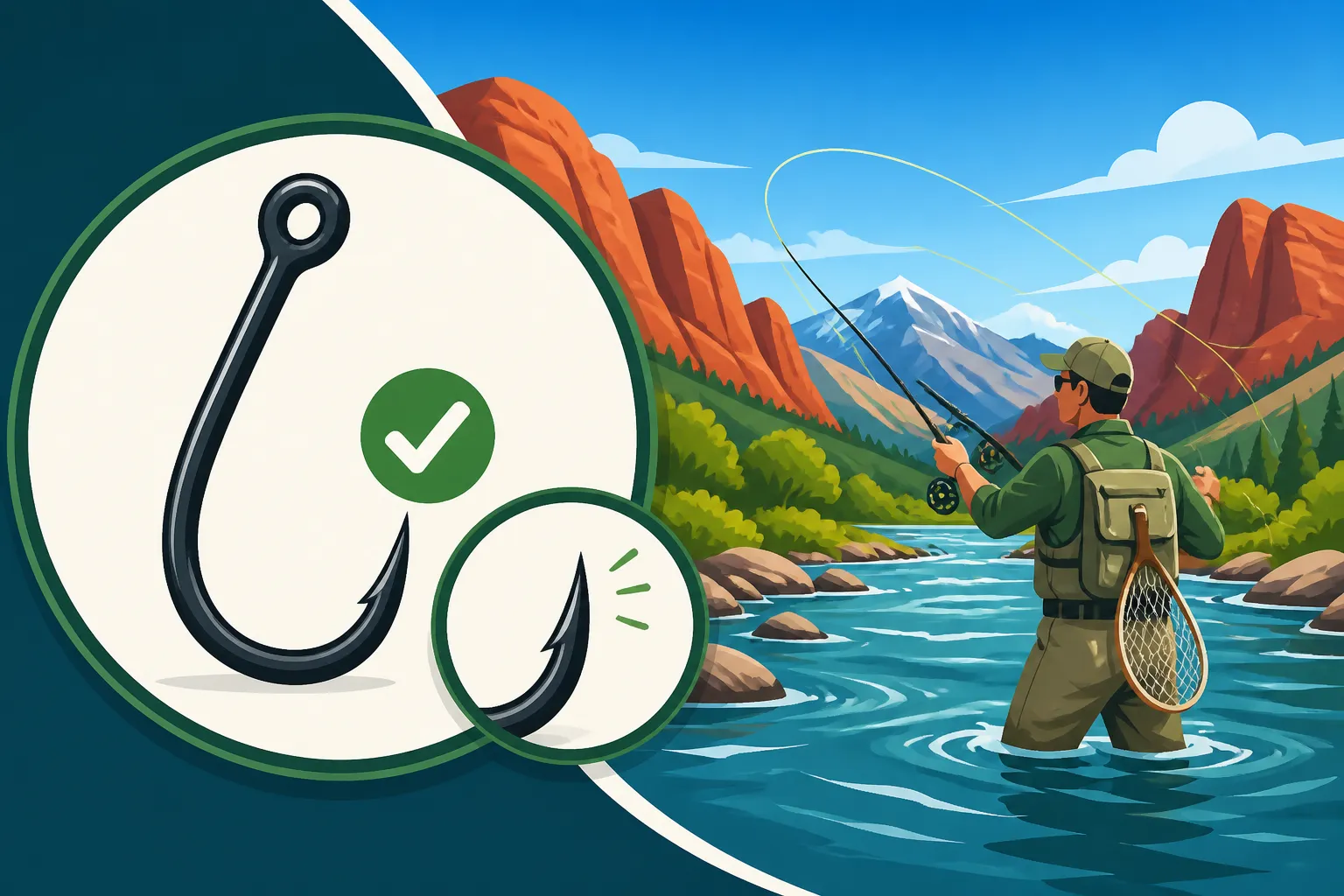
To pinch a barb, simply grasp the barb firmly with your pliers or forceps and apply pressure until it is completely flat against the hook shank. You want the barb to be flush, not just bent. Run your finger carefully over the point – it should feel smooth, with no protrusion. It literally takes seconds per hook, and you can convert an entire fly box or tackle tray in short order. This quick conversion is a lifesaver when you realize a favorite fly isn't barbless.
Buying Pre-Made Barbless Hooks
If you're a fly tier, or simply prefer to buy tackle that's ready to go, many manufacturers now offer hooks that are produced without barbs. Brands like Gamakatsu, Daiichi, and Tiemco have extensive lines of hooks specifically designed to be barbless. This eliminates the need for pinching and ensures a consistently smooth, barb-free hook.
For those who purchase ready-made flies or lures, more and more companies are offering barbless options right off the shelf. While not as universally available as barbed options, a quick search online, perhaps on Amazon, or a visit to your local fly shop will reveal a growing selection. Buying pre-made barbless hooks guarantees that your tackle meets the requirements without any effort on your part, allowing you to focus purely on the fishing.
Tools and Techniques for Modification
Beyond basic pliers or forceps, having a small multi-tool that includes pliers can also be incredibly handy for on-the-spot barb modification. Some anglers even prefer a dedicated pair of barb-crushing pliers, which are designed to apply even pressure specifically to the barb. Whatever tool you choose, the key is to ensure it has enough grip and leverage to fully flatten the barb without damaging the hook point or shank.
When modifying hooks, especially tiny ones for midge patterns, a magnifying glass can also be useful to ensure the barb is truly flattened. The goal is to make the hook release as smoothly as possible, mimicking the action of a factory-made barbless hook. It's a simple skill, but practicing it at home with a few old hooks can make you more confident when you're out on the water.
Here’s a quick overview of common hook types and how to prepare them:
| Hook Type / Lure | Original State | Conversion Method | Tools Needed |
|---|---|---|---|
| Single Fly Hook | Barbed | Pinch barb flush against shank | Forceps, Needle-nose Pliers |
| Treble Hook | Barbed | Pinch all three barbs flush | Strong Pliers, Vise (optional) |
| Jigs & Lures | Barbed | Pinch barb flush | Forceps, Needle-nose Pliers |
| Spin Fishing Hooks | Barbed | Pinch barb flush | Pliers |
The Consequences of Overlooking Barbless Hook Rules
Ignoring fishing regulations, even seemingly minor ones like barbless hook requirements, can lead to a host of unpleasant consequences. Beyond the ethical implications of potentially harming fish, there are tangible legal and reputational impacts that no angler wants to face. It's a situation that's completely avoidable with a little preparation and respect for the rules.
Fines and Legal Repercussions
Fishing with a barbed hook in a designated barbless-only area is a violation of Colorado state law. Colorado Parks and Wildlife (CPW) officers, commonly known as game wardens, actively patrol these special regulation waters. If you're caught using barbed hooks, you can expect to receive a citation, which typically carries a significant fine. These fines can range from hundreds of dollars for a first offense, and potentially more for repeat violations or if other infractions are found.
Furthermore, repeated or severe violations can lead to more serious legal repercussions, including the suspension or revocation of your fishing privileges in Colorado and potentially in other states through interstate compacts. It's a harsh reality, but ignoring the rules isn't worth the risk. Just as there are Penalties for Fishing Without a License in Colorado, there are similar consequences for not following specific gear requirements.
Impact on the Fishery and Your Reputation
Beyond the direct legal penalties, fishing with barbed hooks in regulated areas has a detrimental effect on the very fishery you're trying to enjoy. Every fish that suffers increased injury or mortality due to a barbed hook impacts the overall health and population numbers of that water. It undermines the conservation efforts that CPW and dedicated anglers work so hard to achieve.
There's also the impact on your reputation as an angler. The fishing community, particularly in Colorado, places a high value on ethical behavior and conservation. Being identified as someone who disregards regulations not only harms the fish but also casts a shadow on the entire angling community. It can lead to distrust, resentment, and a general negative perception that ultimately hurts everyone who loves to fish.
What Game Wardens Look For
CPW officers are trained and diligent. They know the regulations for every stretch of water they patrol, and they are adept at checking for compliance. When a game warden approaches you on the river, one of the first things they might ask to see, after your fishing license, is your tackle. They'll often quickly inspect your line, leaders, and most importantly, your hooks.
They might use a small piece of cloth or their finger to quickly slide over the hook point to feel for a barb. Some even carry small magnifying glasses for a closer inspection. It's a quick, efficient process for them, and trying to argue or conceal a barbed hook will only make the situation worse. Transparency and compliance are always the best approach when interacting with law enforcement on the water. Our guide on What Colorado Game Wardens Check When They Stop You provides more insight into these interactions.
Embracing Ethical Angling Beyond the Letter of the Law
While regulations define the minimum standard of behavior, true ethical angling goes beyond merely following the rules. It's about cultivating a mindset of respect, stewardship, and personal responsibility for the natural resources we enjoy. Embracing barbless hooks, even where not explicitly required, is a powerful demonstration of this commitment.
Voluntary Barbless Use
Even on waters where barbless hooks aren't legally mandated, many conscientious anglers choose to use them voluntarily. This is especially true for trout fishing, where the goal is often to enjoy the experience of catching fish rather than keeping them. For species like rainbow trout, brown trout, or the various Colorado's Trout Species, A Field Guide you might encounter, using a barbless hook simply reduces harm and ensures a healthier fishery for everyone.
Think of it as an extra layer of care. If you plan to release a fish, regardless of the local regulations, why not make that release as gentle as possible? It’s a habit that fosters good karma on the river and deepens your connection to the sport and the environment. It shows a proactive dedication to conservation that extends beyond what's written in the rulebook.
Best Practices for Fish Handling
Using barbless hooks is just one piece of the puzzle for responsible catch-and-release. The overall handling of the fish is equally, if not more, important for its survival. Always wet your hands thoroughly before touching a fish; dry hands can strip away the fish's protective slime coat, leaving it vulnerable to disease. Minimize the amount of time the fish spends out of the water, ideally only long enough for a quick photo.
When removing the hook, use forceps or pliers to gently back it out. With a barbless hook, this is often a simple twist and pull. If the fish is deeply hooked (which is less common with barbless hooks, but can happen), it's often best to cut the line as close to the hook as possible rather than trying to dig it out, which can cause even more damage. Gently revive the fish in the current, supporting it until it swims away under its own power. Our guide on How to Handle Trout for a Safe Release provides more in-depth advice on this crucial topic.
Educating Fellow Anglers
Finally, a truly ethical angler plays a role in fostering a community of responsible stewards. If you see someone struggling with a barbed hook, or are fishing with a buddy who isn't aware of the barbless rule, approach the situation with kindness and education, not confrontation. Share your knowledge about why barbless hooks are important and how easy it is to pinch them.
A simple, "Hey, just a heads-up, this section is barbless only. Do you have a pair of pliers? I can show you how to pinch your barbs, it makes releasing fish so much easier!" can go a long way. Most people want to do the right thing; they just might not be informed. By respectfully sharing information and demonstrating best practices, you contribute to a stronger, more knowledgeable angling community that collectively protects Colorado's incredible fishing resources.
Disclaimer
The information provided in this guide is for general informational purposes only and is not intended to be a substitute for official Colorado Parks and Wildlife (CPW) regulations. Fishing regulations can change frequently, and it is the responsibility of each angler to consult the current official CPW Fishing Regulations brochure or website before engaging in any fishing activity. Always prioritize safety and adherence to all local and state laws.