Does a Fish Finder Help on Small Mountain Lakes?
Heading up to those pristine, sparkling small mountain lakes in Colorado is an absolute dream, isn't it? But then you get there, and the vastness, coupled with the sheer clarity and unknown depths, can make you wonder: where in the world are the fish hiding? Many anglers wrestle with the idea of bringing a fish finder along, hoping for a technological edge. This guide will dive deep into whether a fish finder truly offers a benefit on these often remote and challenging waters, helping you decide if it's worth the extra gear for your next high-country adventure.
The Unique Challenges of Small Mountain Lakes
Fishing small mountain lakes in Colorado is a world apart from casting into a large reservoir or a meandering river. These are often high-altitude, glacially carved bodies of water, presenting a distinct set of conditions that can either make a fish finder incredibly useful or utterly superfluous. Understanding these unique characteristics is key to making an informed decision about your gear.
Depth and Clarity
One of the most striking features of Colorado's small mountain lakes is their depth and incredible water clarity. Many of these lakes can be surprisingly deep, often with steep drop-offs right from the shore. The clear, cold water, fed by snowmelt, means that fish often have plenty of places to hide, whether in deep pockets or around submerged structures. However, this same clarity can also work against a fish finder in some ways. When the water is crystal clear, fish might be visible to the naked eye, or at least spooky enough that a boat with a transducer pinging might deter them before you even get close. It's a double-edged sword: deep water makes finding fish harder, but clear water makes them wary. For more on the specifics of these unique environments, check out our guide on How Altitude Affects Fishing at Colorado's High Lakes.
Remote Access and Portability
Let's be real: getting to many of Colorado's best small mountain lakes isn't exactly a walk in the park. We're talking about long hikes, sometimes over rugged terrain, with elevation gains that will make your calves burn. Every ounce of gear you pack has to justify its weight. A heavy, bulky fish finder system, especially one requiring a separate battery and transducer mount, might just not be practical for a multi-mile trek into the wilderness. The sheer effort of hauling it up to an alpine lake, where you might only fish for a few hours, often makes anglers question its necessity. This is why many gravitate towards minimalist setups, prioritizing lightweight essentials.
Minimal Structure and Species Diversity
While some mountain lakes boast impressive submerged rock formations, downed timber, or varying bottom contours, many of the smaller, higher elevation lakes can be quite uniform in their bottom composition. They might be relatively featureless bowls, making it harder for a fish finder to highlight significant "structure" where fish are congregating. Additionally, the species diversity in these lakes tends to be lower, often dominated by brook trout, cutthroat trout, or rainbow trout, which might behave differently than warmwater species targeted in larger reservoirs. Understanding Colorado's Trout Species, A Field Guide can help you predict their behavior in these specific environments.
How Fish Finders Work and Their Limitations in Alpine Settings
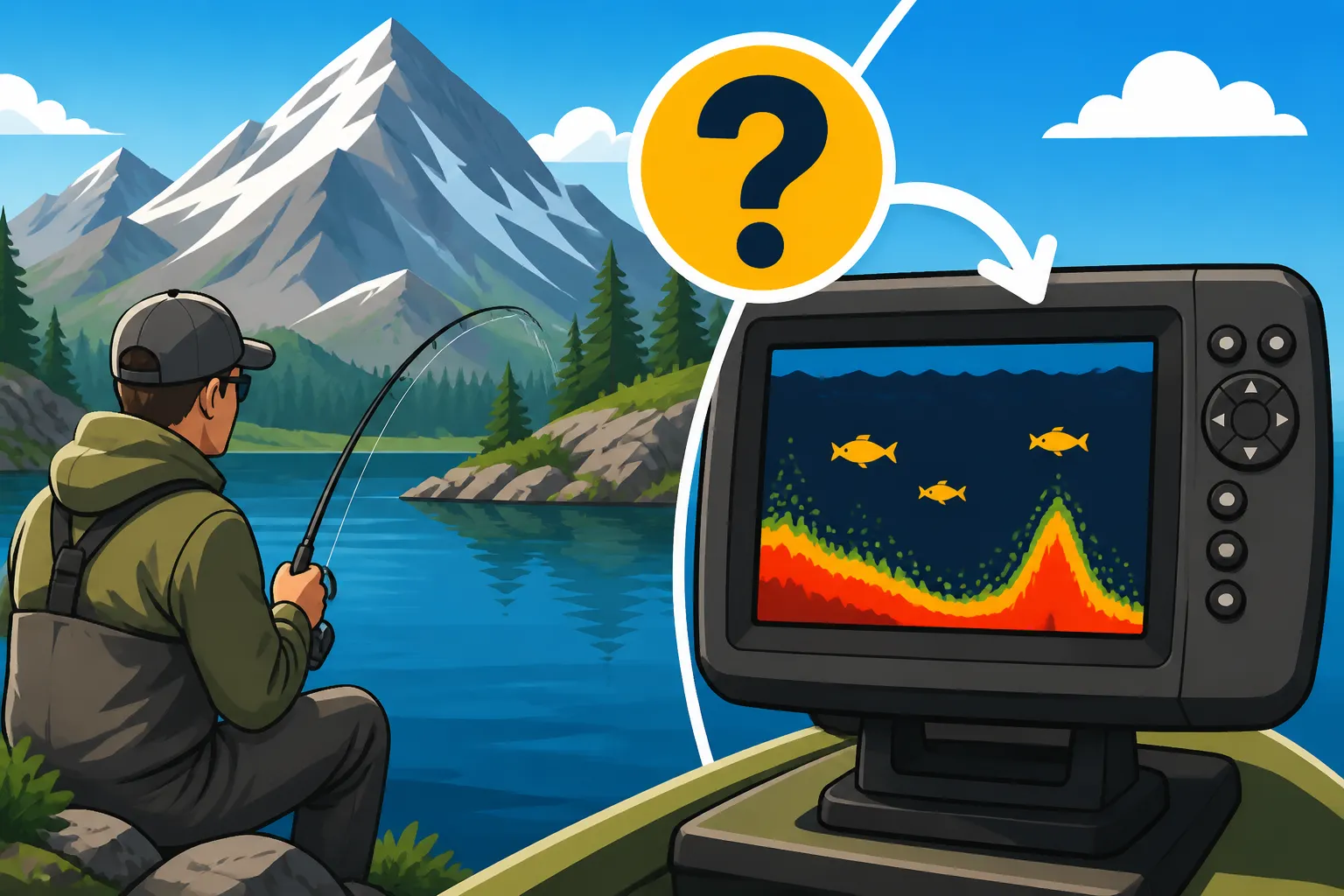
A fish finder, at its core, uses sonar technology to send sound waves into the water and interpret the echoes that return. These echoes paint a picture of what's beneath your boat or where you're casting, showing depth, bottom contours, and, hopefully, fish. But like any piece of technology, it has its strengths and weaknesses, especially when faced with the specific conditions of Colorado's small mountain lakes.
Sonar Principles and What They Show
Traditional fish finders typically operate at various frequencies, sending out sound pulses that bounce off objects in the water column and return to a transducer. The time it takes for these echoes to return, along with their strength, allows the unit to create a visual representation on a screen. You'll see the bottom, depth, and any objects – including fish – between the surface and the bottom. More advanced units might offer side imaging or down imaging, giving a photographic-like view of the underwater world. For a larger body of water, knowing Best Sonar Settings for Locating Lake Trout can be a game-changer, but for a smaller lake, the principles remain the same, though the scale changes drastically.
However, the effectiveness of this display hinges on several factors. In small, often gin-clear mountain lakes, fish can be incredibly sensitive to boat presence or even the sonar pings themselves. They might scatter before you even get a solid reading. The smaller size of these lakes also means that mapping capabilities, a huge advantage on expansive reservoirs, might not be as beneficial, as you can often observe the entire lake from a vantage point.
Battery Life and Weather Dependence
Another practical consideration for high-country adventures is battery life. A traditional fish finder requires a power source, usually a 12V battery. Hauling this battery up a mountain trail adds significant weight and bulk. While portable models with smaller, rechargeable batteries exist, they too have finite operating times. Imagine finally getting to your dream lake, only for your fish finder to die an hour into your session!
Mountain weather is notoriously unpredictable. Sunny skies can turn into torrential downpours or even snow in a matter of minutes. Electronic devices and water don't always mix well, and even waterproof units need careful handling. The extreme temperature fluctuations, from freezing nights to warm afternoons, can also impact battery performance and screen visibility. Relying heavily on electronics in such an environment adds another layer of potential frustration to your day, especially when you consider How Wind Affects Fishing on Colorado's High Lakes, which can make operating small boats and electronics even more challenging.
Cost vs. Value Proposition for Small Waters
Let's talk brass tacks: fish finders aren't cheap. Even a decent portable model can be a significant investment. When you're considering this for small mountain lakes, you have to weigh the cost against the actual value it brings. If you're primarily fishing vast reservoirs or big rivers where structure and depth are paramount and constantly changing, the investment is usually justifiable. But for a tiny tarn where you can see the bottom in many spots or quickly learn its contours with a few casts, is that expense truly worth it?
Many anglers find that the thrill of exploring and adapting to these smaller, more intimate waters without the aid of advanced electronics is part of the experience. It forces you to hone your observation skills, learn about fish behavior in different conditions, and truly "read" the water, which often yields more satisfaction than simply locating a blip on a screen.
Situations Where a Fish Finder Might Be Useful
Despite the challenges, there are indeed specific scenarios where a fish finder can offer some benefits, even on smaller mountain lakes. It's not a universal tool, but in the right hands and the right situation, it can certainly help you uncover some secrets.
Identifying Deep Submerged Structure
Even in seemingly barren alpine lakes, there can be hidden gems: large submerged boulders, old log piles from previous avalanche activity, or subtle ledges and depressions that aren't visible from the surface. These are prime hiding spots for trout, especially larger ones that prefer the security of deeper water. A fish finder can be invaluable for quickly pinpointing these features, allowing you to focus your efforts rather than casting blindly.
Imagine you're fishing a lake, say one of the many stunning high-country lakes in the San Juan Mountains, and you notice a sudden drop-off near the shore. A portable fish finder, like some of the compact, castable models available on Amazon, could confirm how deep it goes and if there's any structure associated with it that might be holding fish. This saves time and helps you understand the lake's bottom topography, which is crucial for determining where trout might ambush prey or seek refuge. This is particularly useful when you're trying to figure out How to Find Drop-Offs on a Colorado Reservoir or a lake.
Locating Schools of Suspended Fish
While many trout in small mountain lakes will hold near the bottom or structure, sometimes they school up and suspend in the middle of the water column, often chasing baitfish or feeding on plankton. This behavior can be incredibly difficult to detect without some electronic aid. If you're out on a float tube or a small inflatable craft, a fish finder can quickly show you if there are fish suspended at 10, 20, or even 30 feet down in an otherwise featureless open water area.
This is less common for solitary, large cutthroat but can be very useful for finding schools of smaller brook trout or rainbow trout. When these fish are suspended, trying to reach them with traditional casting techniques from the shore can be a guessing game. A fish finder tells you exactly what depth to target, allowing you to adjust your leader length or retrieve depth accordingly.
Estimating Lake Depth and Mapping Contours
For those who truly want to understand a small mountain lake, a fish finder can provide accurate depth readings that contribute to creating a mental (or even physical) map of its contours. This knowledge helps you understand how fish might move throughout the day as light and temperature change. Knowing where the deepest holes are, or where a shallow flat quickly drops into a trench, offers significant tactical advantages.
This kind of detailed mapping can be especially useful if you plan to visit the same lake multiple times throughout a season or over several years. Over time, you'll develop an intimate understanding of the lake's topography, which is invaluable. Even basic models can provide reliable depth information, which you can use in conjunction with topographic maps or apps that also help you identify features like access points and trails. For those interested in deeper dives into lake features, our guide on Best Technique for Fishing Deep Reservoir Structure offers helpful insights that can be adapted to smaller lakes.
Alternative Strategies for Success in Small Mountain Lakes
While a fish finder can have its niche uses, many experienced Colorado high-country anglers rely on time-tested, low-tech strategies that are often more effective and definitely lighter to pack. Success in these waters often comes down to observation, patience, and a deep understanding of trout behavior.
Reading the Water and Observation
The most powerful tool an angler has, especially in small, clear mountain lakes, is their eyes. Before you even make a cast, take the time to observe. Look for rising fish, insect hatches, current seams (even subtle ones), and any visible structure like fallen trees, rock piles, or weed beds. In clear water, you might even spot individual fish cruising the shallows or holding near a drop-off.
"Reading the water" is an art form. It's about looking for changes in water color, depth transitions, shadows, and anything that breaks the uniform surface. The shoreline can tell you a lot about what's submerged; a steep bank above water often means a steep drop-off below. Pay attention to wind direction, as it can push insects and therefore fish to one side of the lake. Often, simply sitting quietly for 15-20 minutes, taking it all in, will tell you more than a sonar screen.
Focusing on Structure and Cover
Without a fish finder, your best bet for consistently finding fish is to target areas that offer them shelter, food, and security. In small mountain lakes, this means focusing on the natural contours and features.
Key areas to target include:
- Inlets and Outlets: Where streams flow into or out of the lake, bringing in food and oxygen. These are always high-percentage spots.
- Rock Piles and Boulders: These provide ambush points, shade, and protection from predators.
- Fallen Trees/Logs: Similar to rocks, these offer excellent cover.
- Steep Drop-offs: Where shallow feeding areas quickly transition to deep safety. Trout will often cruise these edges.
- Overhanging Vegetation: Offers shade and often drops insects into the water.
- Wind-Blown Shores: Wind can concentrate insect hatches and other food sources here.
By systematically working these features, you'll cover the most likely holding water. This approach is highly effective for Fishing the San Juan Mountains' High Alpine Lakes and countless other remote spots.
Strategic Casting and Lure Selection
Since you're likely covering water without precise electronic guidance, a methodical casting approach is crucial. Instead of just hucking a line out, think about how you're presenting your lure or fly. Fan casting, where you cast to different angles from a single position, allows you to cover a wide area and identify where fish might be holding. Varying your retrieve speed and depth until you find what the fish are reacting to is also key.
Lure selection should be geared towards the species and conditions. Small spoons, inline spinners, or jigs are often very effective for spin fishing these trout. Fly anglers will do well with imitations of local insects (midges, caddis, stoneflies, terrestrials) and attractor patterns. Having a selection of both surface and subsurface offerings allows you to adapt to whatever the trout are focused on. For specifics on effective presentations, our article on Spin Fishing Techniques for Colorado Trout offers more detailed advice.
Embrace the Simplicity
Ultimately, fishing small mountain lakes often celebrates simplicity. The journey itself, the crisp air, the stunning views, and the challenge of outsmarting wild trout in their natural habitat are the true rewards. Packing light, relying on your knowledge and observation skills, and enjoying the solitude away from the buzz of electronics can be incredibly liberating and often more effective.
| Feature | Fish Finder Benefit (Small Lakes) | Traditional Angling Benefit (Small Lakes) |
|---|---|---|
| Depth/Contour | Precise depth readings, identifies hidden ledges/holes. | Visual observation of shoreline, casts, and knowledge of typical alpine lake structure. |
| Finding Fish | Can show suspended schools or fish holding very deep. | Observing rises, knowing likely holding spots (inlets, structure), reading water. |
| Portability | Requires smaller, portable units; battery weight/life still a factor. | Minimal gear, lightweight for hiking long distances. |
| Cost | Significant investment for a dedicated unit. | Low-cost approach, relying on skill and basic tackle. |
| Stealth | Sonar pings can spook fish in very clear, shallow water. | Quiet approach, less disturbance on sensitive fish. |
| Learning Curve | Requires understanding sonar interpretation and settings. | Develops intuition and observation skills over time. |
| Remote Areas | Battery limitations, risk of damage on rough trails. | Robust against elements, less reliance on power. |
| Satisfaction | Data-driven approach, confirming fish presence. | Rewards of understanding nature, finding fish through skill. |
For many of us, part of the allure of those high-altitude gems is getting away from all the screens and gadgets that dominate our daily lives. While a portable fish finder purchased from a retailer like Amazon might seem like a smart addition to your pack, don't underestimate the power of simply learning to read the water and trusting your instincts in these unique environments.
Disclaimer
This article is for general informational purposes only and does not constitute professional advice. Laws, prices and regulations vary by location and change over time. Consult a qualified professional for guidance on your specific situation.