How to Fish a Jig Along a Rocky Reservoir Shoreline
There’s a unique kind of frustration that settles in when you’re standing on the rocky shoreline of a gorgeous Colorado reservoir, looking out at the shimmering water, and feeling like the fish are just out there somewhere, completely ignoring your offerings. It’s easy to feel like you need a boat to access the best spots, but I’m here to tell you that’s not always the case. Learning how to effectively fish a jig along these rocky shorelines can be an absolute game-changer, unlocking fantastic angling opportunities right from the bank. This guide will walk you through everything you need to know to turn those frustrations into triumphant catches.
Why Rocky Shorelines Are Prime Real Estate for Fish (and Anglers)
When you look at a rocky shoreline, you might just see, well, rocks. But to a fish, it’s a bustling metropolis, a pantry, and a safe haven all rolled into one. Understanding why fish gravitate to these areas is the first step in knowing how to target them effectively.
Structure and Shelter
Think about it from a fish's perspective. Would you rather hang out in a wide-open, exposed area where predators can easily spot you, or would you prefer a place with plenty of nooks and crannies to hide, ambush prey, and feel secure? Rocky shorelines offer an incredible amount of structure that fish absolutely adore.
These rocks can range from massive boulders that create deep underwater caves and ledges, to smaller rip-rap that forms intricate networks of crevices, all the way down to pebble-strewn gravel beds. Each type of rock provides different kinds of shelter. Larger rocks create significant shadows and current breaks, offering weary fish a place to rest out of the sun or strong flows. Smaller rocks and rip-rap are perfect for smaller baitfish to hide in, which, in turn, draws in larger predatory species like trout, walleye, bass, and even northern pike. It’s a natural ecosystem playing out right beneath the surface, offering both protection and strategic ambush points. When you cast your jig near these structures, you’re essentially dropping it into a fish’s living room, or more accurately, its favorite hunting blind.
Forage Opportunities
Beyond just shelter, rocky areas are veritable buffets for many fish species. The same structure that provides cover for small baitfish also harbors a multitude of invertebrates. Crayfish, scuds, aquatic insects, and insect larvae all thrive in rocky environments, clinging to the rough surfaces and hiding between stones. These are primary food sources for many of Colorado’s freshwater fish.
Imagine a crayfish scuttling along the bottom, or a minnow darting between two boulders. A well-presented jig, mimicking one of these natural food items, can be irresistible. When you jig along a rocky shoreline, you're not just casting randomly; you're placing your lure in an area where fish are actively searching for food. They know these spots are productive, so they patrol them regularly. This means your chances of encountering an actively feeding fish are significantly higher than casting over a featureless, sandy bottom.
Temperature and Oxygen Refuges
Rocky shorelines, particularly those with deeper water access close to the bank, also play a crucial role in regulating water temperature and oxygen levels, making them attractive to fish throughout the year. In the colder months, darker rocks can absorb more sunlight, ever-so-slightly warming the surrounding water, which can be a draw for sluggish fish looking for a bit more comfort. Conversely, during the scorching Colorado summer, deep rock structures can create cool thermal refuges where fish can escape the warmest surface temperatures and find more oxygen-rich water.
As the seasons change, fish will adjust their depth, but the rocky structure remains a constant draw. In spring, when waters are still chilly, fish might move shallower to sun-warmed rocks. In the heat of summer, they might retreat to the deeper rocky ledges. Fall sees them actively feeding around rocks as they fatten up, and even in winter, open-water rocky points can hold fish seeking stable temperatures. Understanding this dynamic helps you fine-tune your approach, fishing slower and deeper in cold water, or faster and shallower during prime feeding windows.
Essential Gear for Shoreline Jigging in Colorado
You don’t need a fancy boat or a truckload of expensive equipment to fish jigs effectively from a rocky shoreline. However, having the right basic gear makes a world of difference in your success and enjoyment. It’s all about matching your tools to the task at hand.
Rod, Reel, and Line Selection
Choosing the right rod, reel, and line is paramount for successful jigging, especially when you're working tricky, rocky bottom.
- The Rod: For shoreline jigging, I generally recommend a medium-light to medium power spinning rod between 6 to 7 feet long. A fast action tip is crucial. What does all that jargon mean?
- Medium-light to medium power: This gives you enough backbone to cast your jigs a good distance, handle fish ranging from a feisty 12-inch rainbow to a larger walleye or small pike, and pull a snagged jig free from some lighter snags. Too heavy, and you lose sensitivity; too light, and you're underpowered.
- Fast action: This means the rod bends primarily in the top third or quarter of its length. This sensitivity is absolutely key for jigging. You need to feel every little "tick" and "thump" as your jig bounces off rocks, and distinguish that from a subtle bite. It also provides a quick, powerful hook set to drive the hook home, which is vital when fishing with jigs.
- The Reel: A spinning reel in the 2000-3000 size range is perfect. These reels are lightweight, balance well with the recommended rod, and have a smooth drag system, which is important when a big fish suddenly decides to pull hard against a light line. A good retrieve ratio helps you take up slack quickly after a cast or during a retrieve.
- The Line: This is where things get interesting for jigging. I highly recommend a braided main line of 10 to 15-pound test.
- Braid's advantages: It has virtually no stretch, offering unparalleled sensitivity. You'll feel everything that happens at the end of your line – every rock, every twig, and most importantly, every faint bite. It's also incredibly strong for its diameter, allowing for longer casts and more pulling power if you get snagged. You can find excellent braided lines on sites like Amazon.
- Fluorocarbon leader: Because braid is highly visible in clear Colorado waters and doesn't have much abrasion resistance against sharp rocks, you’ll want to tie on a 6 to 10-pound fluorocarbon leader to the end of your braided main line. Fluorocarbon is nearly invisible underwater, and its abrasion resistance is superior to monofilament, giving you an edge against those jagged rocks and a bit more stealth. A leader of about 3 to 5 feet is usually sufficient. Learn to tie a good braid-to-fluoro knot, like an FG knot or a Double Uni knot; it's a game-changer!
The Right Jigs for Rocky Bottoms
The world of jigs is vast, but for rocky shorelines, we can narrow it down to a few essentials. The key is variety, so you can adapt to different conditions and fish preferences.
- Jig Head Types:
- Weight: Start with 1/8 to 1/4 ounce jigs for shallower water (up to 10-15 feet) and calm conditions. If it's windy, deeper water, or you're fishing in stronger currents, move up to 3/8 or even 1/2 ounce. The goal is to be heavy enough to feel the bottom and maintain control, but light enough for a natural fall.
- Shape: Round head jigs are versatile and effective. Stand-up jigs (like mushroom or football heads with a flat bottom) are fantastic for rocky areas because they help the soft plastic stand upright when resting on the bottom, mimicking a feeding creature. Football head jigs are also excellent for crawling over rocks.
- Weedless Jigs: Consider jigs with a weed guard if you're constantly getting snagged on heavy cover. While they might reduce hook-up percentages slightly, they can save you a lot of frustration and lost lures.
- Soft Plastics: These are the real stars of jig fishing. The key is to have a good assortment of shapes and colors.
- Grubs: Single or double-tail grubs (1.5 to 3 inches) are incredibly versatile. They mimic minnows or aquatic insects.
- Tubes: Hollow, cylindrical baits with tentacles. Great for mimicking crawfish or bottom-dwelling creatures.
- Swimbaits: Small paddle-tail swimbaits (2-3 inches) can imitate baitfish darting around the rocks.
- Creature Baits: Think small worms, lizards, or anything with appendages that create subtle action.
- Colors: Start with natural colors like green pumpkin, brown, black, white, and clear with glitter for clearer water. In stained or murky water, don't be afraid to try chartreuse, orange, or brighter colors. Having a good selection of soft plastics can be cost-effective if you buy them in bulk from retailers like Amazon.
- Hard Jigs:
- Blade Baits: These thin, metallic jigs vibrate intensely on the retrieve, attracting fish from a distance. Excellent for colder water or when fish are less active.
- Spoons: Jigging spoons can be deadly, especially for lake trout or larger rainbows. They flash and flutter on the drop, mimicking injured baitfish.
Other Must-Have Accessories
Beyond your rod, reel, and tackle, a few other items will make your shoreline jigging experience much more enjoyable and productive.
- Pliers or Forceps: Essential for removing hooks, especially if a fish swallows it deep. Get a pair with a line cutter built-in.
- Line Cutters: Small scissors or nail clippers are perfect for cleanly trimming tag ends.
- Measuring Tape/Scale: If you plan on keeping fish, you'll need to know if they meet the legal size limits. Even for catch and release, it's fun to know the stats!
- Small Tackle Box or Bag: Keep your jigs and soft plastics organized and easily accessible. A small, lightweight bag or a fanny pack is often better than a bulky box when you're moving along the shore.
- Comfortable, Grippy Footwear: This is non-negotiable for rocky shorelines. Wading boots or sturdy hiking shoes with good ankle support and aggressive treads will prevent slips and falls. Many of Colorado's reservoirs, like Chatfield or Cherry Creek, have rip-rap banks that can be incredibly unstable.
- Sun Protection: Hat, sunglasses, and sunscreen are crucial in the Colorado sun, even on cloudy days.
- Water Bottle/Snacks: Stay hydrated, especially if you're hiking a bit to get to your spot.
- Small Net: A rubber-coated net is gentler on fish if you're practicing catch and release. To ensure you're fishing legally and responsibly, always review the latest Colorado fishing regulations. A good place to start is by checking a comprehensive guide like Colorado Fishing Regulations Every Angler Should Know.
Mastering the Art of Shoreline Jigging Techniques
Now that you’ve got your gear sorted, it’s time to talk about the fun part: actually fishing those jigs! Shoreline jigging isn't just about casting and reeling; it's an art form that involves feel, patience, and understanding fish behavior.
Casting and Presentation
The way you cast and present your jig is perhaps the most critical aspect of shoreline jigging. You’re not just trying to hit water; you're trying to hit specific, fish-holding structure.
- Targeted Casting: Instead of simply launching your jig straight out, think about casting parallel to the shoreline. Fish often patrol these rocky edges looking for food. Casting parallel allows your jig to stay in the strike zone longer. If the shoreline has distinct points or coves, fan-cast around them, making several casts to each area. Don't forget to cast into any deeper pockets or drop-offs you can identify. The more you explore, the better you’ll understand the underwater terrain. Using resources like What Colorado's Fishing Atlas Shows You can provide valuable insights into reservoir contours and depths.
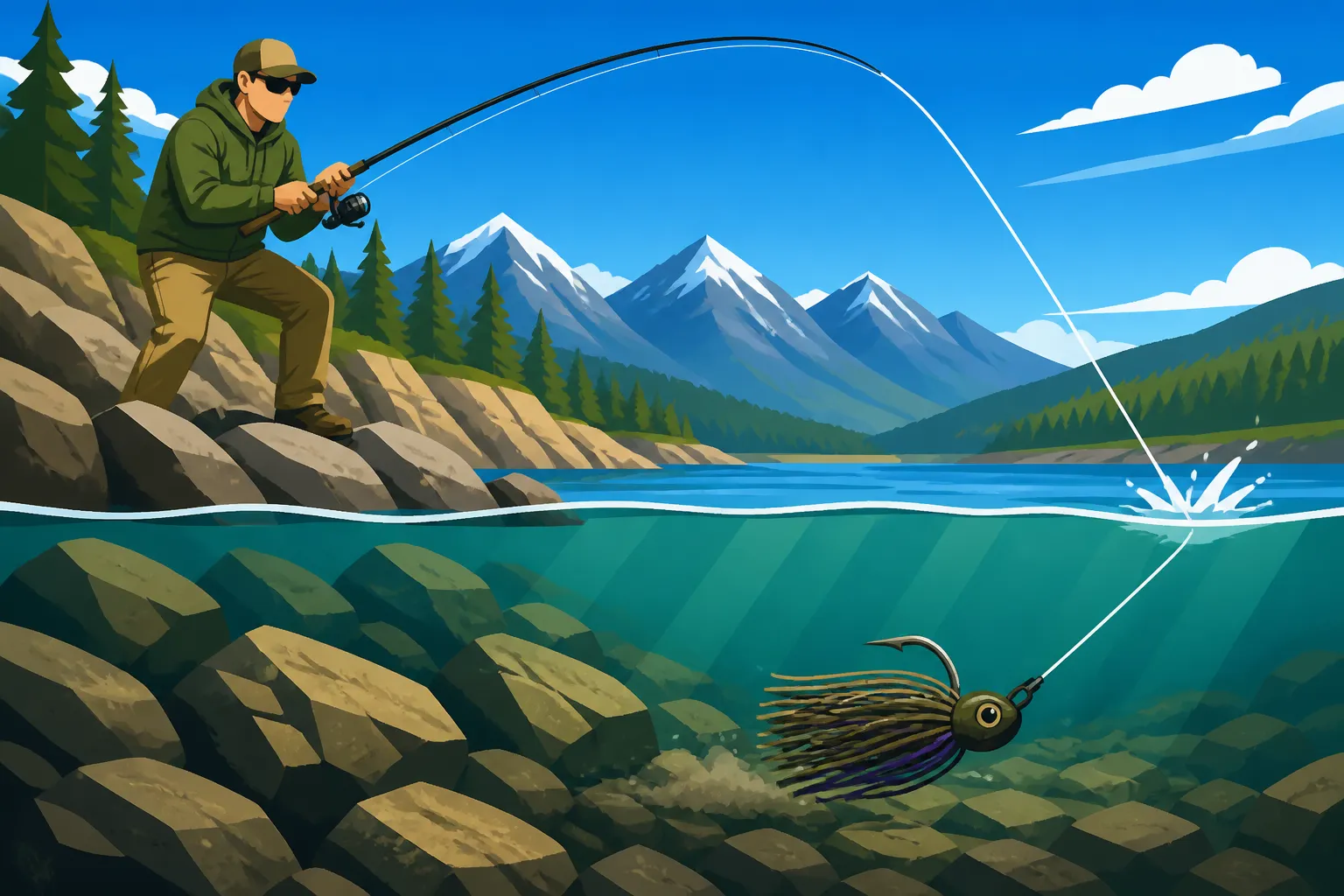
- Feeling the Bottom – The "Thump": This is where sensitivity comes into play. As soon as your jig hits the water, let it sink on a semi-slack line. You want to feel it thump the bottom. If you don't feel that distinct thump, it's either too light for the depth/current, or you're not paying enough attention. Once it hits, retrieve just enough slack so you have a direct connection to the jig without pulling it off the bottom.
- The Retrieve Styles:
- Hop-and-Drop: This is a classic for a reason. Lift your rod tip sharply about a foot or two, then immediately drop it, allowing the jig to fall back to the bottom on a semi-slack line. The fall is when most bites occur. The idea is to make it look like a fleeing or injured baitfish, or a crawfish trying to escape. Pause for a few seconds before repeating. This is especially effective for walleye and trout.
- Drag-and-Pause: For less active fish or very cold water, a slow drag can be deadly. Cast out, let it sink, then slowly drag the jig along the bottom with your rod tip, keeping contact. Pause for several seconds, then drag again. This technique mimics a crawfish or a sluggish bottom-feeder.
- Swim-and-Pause: More active than the drag, this involves reeling in a few cranks, letting the jig swim a foot or two off the bottom, then pausing and letting it fall back. This is great for active fish targeting minnows and can cover more water faster.
- Vary Your Retrieve: Don't get stuck on one method. Experiment! Some days, a quick, erratic hop works wonders. Other days, a subtle, slow drag is what they want. Pay attention to what the fish tell you.
Working the Structure Effectively
Fishing rocky shorelines isn't just about casting; it's about purposefully working your jig around and through the underwater topography. This is where you become a detective, mapping the bottom with your line.
- Targeting Specific Features: Look for seams where rocks meet sand, or where a large boulder creates a current break. Cast into pockets or eddies formed by submerged rocks. These are prime ambush points. Transitions in the bottom composition are always key areas where different forage species might gather.
- Dealing with Snags: Let's be honest: if you're fishing rocky bottoms, you will get snagged. It's part of the game.
- Minimize Snags: Use lighter jig weights when possible to reduce how deeply your jig wedges into crevices. Fish with your rod tip high to keep the jig slightly elevated. If you feel your jig about to wedge, try a quick, sharp hop over the obstacle.
- Freeing Snags: If you do get stuck, don't just pull hard. Give your line a bit of slack, then quickly snap your rod tip back towards the snag. Sometimes the jig will pop free. You can also try walking around the snag (if safe and possible) to change the angle of your pull. If all else fails, a steady, strong pull will usually break your fluorocarbon leader, saving your braid. This is why the leader is so important! It's better to lose a jig than your entire main line.
Seasonal Adjustments and Species-Specific Tips
Colorado's reservoirs are dynamic environments, and fish behavior changes significantly with the seasons and target species. Adapting your jigging approach is crucial.
- Spring: As ice melts and water temperatures begin to rise, fish often move shallower to sun-warmed rocky points and coves. Focus your efforts in depths from 5-15 feet. Fish might be sluggish early in spring, so a slower drag-and-pause retrieve can be very effective. This is also a great time to target spawning walleye near rocky areas.
- Summer: During the heat of the day, fish might retreat to deeper, cooler rocky structure, often 15-30 feet deep or more. Focus on early morning, late evening, or night fishing for shallower presentations. During the day, concentrate on casting out to deeper rock piles or sharp drop-offs. A quicker swim-and-pause retrieve can work for active fish.
- Fall: This is prime time! Fish are actively feeding, fattening up for winter. They can be found at various depths along rocky banks. They might be aggressive, so experiment with faster retrieves and larger soft plastics. As waters cool, fish might school up. For more detailed insights into fall fishing strategies, check out Fall Fishing in Colorado, What Changes.
- Winter (Open Water): Even if the reservoir isn't iced over, cold water makes fish lethargic. Slow down dramatically. Use the slowest drag-and-pause or hop-and-drop. Very subtle movements are key. Tiny jigs with small grub tails in natural colors can entice a bite. While this guide focuses on open water, many of these principles apply to cold conditions, similar to strategies used for Winter Fishing on Colorado's Tailwaters.
- Species-Specific Tips:
- Trout (Rainbows, Browns): Smaller jigs (1/8 oz) with grub tails or small swimbaits are often irresistible. Natural colors (olive, brown, white) usually work best. Target rocky points and submerged humps. Learn more about their behavior in Colorado's Trout Species, A Field Guide.
- Walleye: These bottom-huggers love jigs. Use stand-up jig heads with scented grubs or plastic worms. Yellow, chartreuse, and white are often popular colors. Slow, deliberate drag-and-pause retrieves are key. They're often found along rocky ledges and transitions. For specific walleye hotspots, read Walleye Fishing in Colorado.
- Bass (Smallmouth, Largemouth): Smallmouth bass are particularly fond of rocky environments. Tube jigs, creature baits, and small crawfish-imitating soft plastics are excellent. Largemouth might be found in rocky areas with some weed cover nearby. Greens, browns, and black are go-to colors. Check out Bass Fishing in Colorado for more specific bass information.
- Perch: Often overlooked, yellow perch love rocky bottom structure. Tiny jigs (1/16 oz) with small grubs or pieces of worm can be very effective. Look for them in schools.
Safety and Conservation on Colorado's Shorelines
Fishing from a rocky reservoir shoreline in Colorado is an incredibly rewarding experience, but it comes with responsibilities. Safety and conservation are paramount, ensuring both your well-being and the health of our precious aquatic ecosystems.
Navigating Rocky Terrain Safely
Those beautiful, fish-holding rocks can also be treacherous. A momentary lapse in judgment or an unfortunate slip can turn a great day into a painful one.
- Appropriate Footwear is a Must: I cannot stress this enough. You need sturdy, closed-toe shoes with excellent grip, preferably hiking boots or dedicated wading boots. Flip-flops, sandals, or even casual sneakers are just asking for trouble. Rocky shorelines are often uneven, covered in loose gravel, and can be incredibly slippery when wet with algae or mist. Good ankle support is a huge bonus.
- Watch Your Step: Don't rush. Take your time, especially when moving between spots. Always look where you're putting your feet. Test rocks before putting your full weight on them. If a rock looks unstable, it probably is.
- Awareness of Your Surroundings: Be mindful of steep drop-offs, both on land and in the water. Some shorelines plunge quickly into deep water. Also, be aware of weather changes. A sudden rainstorm can make rocks even more slippery and potentially dangerous. If you're heading to a more remote area, consider bringing a buddy.
- Sun Protection and Hydration: The Colorado sun, even in cooler months, can be intense, especially with reflection off the water. Wear a wide-brimmed hat, polarized sunglasses, and apply sunscreen regularly. Always carry plenty of water and stay hydrated.
Ethical Angling Practices
As anglers, we are stewards of the environment. Our actions directly impact the health of the fisheries we enjoy. Practicing ethical angling ensures these resources remain vibrant for generations to come.
- Catch and Release Best Practices: If you're practicing catch and release, do it right.
- Minimize fight time to reduce stress on the fish.
- Handle fish as little as possible, with wet hands. Avoid touching their gills or eyes.
- Use a rubber-coated net if possible, as it's gentler on their slime coat and fins.
- Remove hooks quickly and carefully with pliers or forceps. Barbless hooks make this much easier.
- Revive the fish by holding it gently in the water, facing into the current, until it can swim away on its own. For more detailed guidance, see How to Handle Trout for a Safe Release.
- Litter Prevention: Pack it in, pack it out. This means everything – old line, bait containers, snack wrappers, empty water bottles. Leave no trace. Litter not only degrades the natural beauty but can also harm wildlife.
- Respect Private Property and Other Anglers: Always be aware of land ownership. Some excellent fishing spots might border private land, and respecting those boundaries is crucial. Guides on topics like Do You Need a License to Fish Private Water in Colorado? can clarify property rules. Also, be courteous to other anglers. Give them space, keep noise to a minimum, and remember we're all out there to enjoy nature.
Understanding Local Regulations
Colorado Parks and Wildlife (CPW) establishes specific regulations for different waters to manage fish populations and ensure sustainable angling. It's your responsibility to know and follow these rules.
- Always Check Specific Reservoir Regulations: While there are general state-wide regulations, many individual reservoirs have unique rules regarding bag limits, size restrictions, and bait restrictions. For instance, some waters might be artificial flies and lures only, or have specific length restrictions for certain species. You can usually find these in the annual Colorado Fishing Regulations brochure.
- Bag and Possession Limits: Be aware of the daily bag limit (how many fish you can keep in one day) and the possession limit (how many fish you can have in your possession, including those at home) for each species. Exceeding these limits can result in fines and loss of fishing privileges. Learn more about specific limits in Colorado Bag and Possession Limits by Species and Colorado Fishing Season Dates and Bag Limits.
- Bait Restrictions: Some waters prohibit live bait or certain types of bait to prevent the spread of diseases or invasive species. Always verify what is allowed on the specific reservoir you plan to fish. You can find useful information on this in Colorado Bait Restrictions and Where They Apply.
- Fishing License: Of course, you’ll need a valid Colorado fishing license. Make sure it's current and you have it with you, either physically or digitally on your phone.
By following these safety and conservation guidelines, you’ll not only enhance your own fishing experience but also contribute to the long-term health and enjoyment of Colorado’s incredible fisheries.
Jigging Gear Comparison
To help you choose the right tools for your rocky shoreline adventures, here’s a quick comparison of popular jig types and their best uses:
| Jig Type | Best Use for Rocky Shorelines | Advantages | Disadvantages | Target Species (Examples) |
|---|---|---|---|---|
| Round Head Jig | All-around versatile, good for general hopping/dragging | Simple, widely available, effective with many plastics | Can wedge easily in tight rock crevices | Trout, Walleye, Bass, Perch |
| Stand-Up Jig | Crawfish imitation, presenting plastics upright | Minimizes snags by "standing" on bottom, great presentation | Slightly less aerodynamic for long casts | Walleye, Smallmouth Bass, Trout |
| Football Head Jig | Crawling over rocks and bottom structure | Excellent for feeling bottom, good weed resistance | Can still snag in very deep, tight rock piles | Walleye, Smallmouth Bass, Pike |
| Weedless Jig | Heavy cover, dense rocks, submerged brush | Significantly reduces snags, saves lures | Can sometimes hinder hook sets | Bass, Pike, Trout in snaggy areas |
| Blade Bait | Cold water, covering water, attracting attention | Strong vibration, flash, attracts fish from distance | Can get snagged easily if fished too low/slow | Trout, Walleye, Perch, Pike |
| Jigging Spoon | Deeper water, targeting suspended fish near structure | Flash and flutter mimics injured baitfish, heavy | Requires vertical jigging, can snag on bottom | Lake Trout, Walleye, Large Rainbow Trout |
| Soft Plastic Grubs | Mimics small baitfish or insects, very versatile | Wide range of colors/sizes, easy to rig | Can be torn by toothy fish | Trout, Bass, Walleye, Perch |
| Soft Plastic Tubes | Excellent crawfish imitation, good darting action | Great for "flipping" into rock pockets, subtle action | Requires specific rigging for best action | Smallmouth Bass, Walleye, Trout |
There you have it! Shoreline jigging along Colorado's rocky reservoirs isn't just possible, it's an incredibly effective and rewarding way to fish. With the right gear, a bit of patience, and a willingness to experiment with your retrieves, you can unlock a whole new world of angling opportunities right from the bank. So, grab your rod, tie on a jig, and get out there—those rocky edges are calling!
Disclaimer
This article is for general informational purposes only and does not constitute professional advice. Laws, prices and regulations vary by location and change over time. Consult a qualified professional for guidance on your specific situation.