Ice Fishing Blue Mesa Reservoir in Winter
For many anglers, the thought of fishing in Colorado during the dead of winter brings forth images of numb fingers, frozen lines, and the daunting challenge of breaking through thick ice. But for those who brave the elements, a truly unique and exhilarating experience awaits on the vast, frozen expanse of Blue Mesa Reservoir. This guide will walk you through everything you need to know to successfully tackle ice fishing on one of Colorado's premier winter fishing destinations.
The Allure of Blue Mesa in Winter: A Premier Ice Fishing Destination
Blue Mesa Reservoir, nestled in the Gunnison Valley, transforms into an ice fishing paradise once winter fully sets in. It's not just another frozen lake; it's a massive body of water, the largest in Colorado, known for producing some truly exceptional fish, even through the hardwater. The cold, crisp air and the quiet stillness of the frozen landscape add an almost spiritual dimension to the angling experience. What truly sets Blue Mesa apart during the colder months is the opportunity to target trophy-sized lake trout and a healthy population of kokanee salmon, offering diverse challenges and rewards for dedicated ice anglers.
Targeting Trophy Lake Trout and Kokanee Salmon
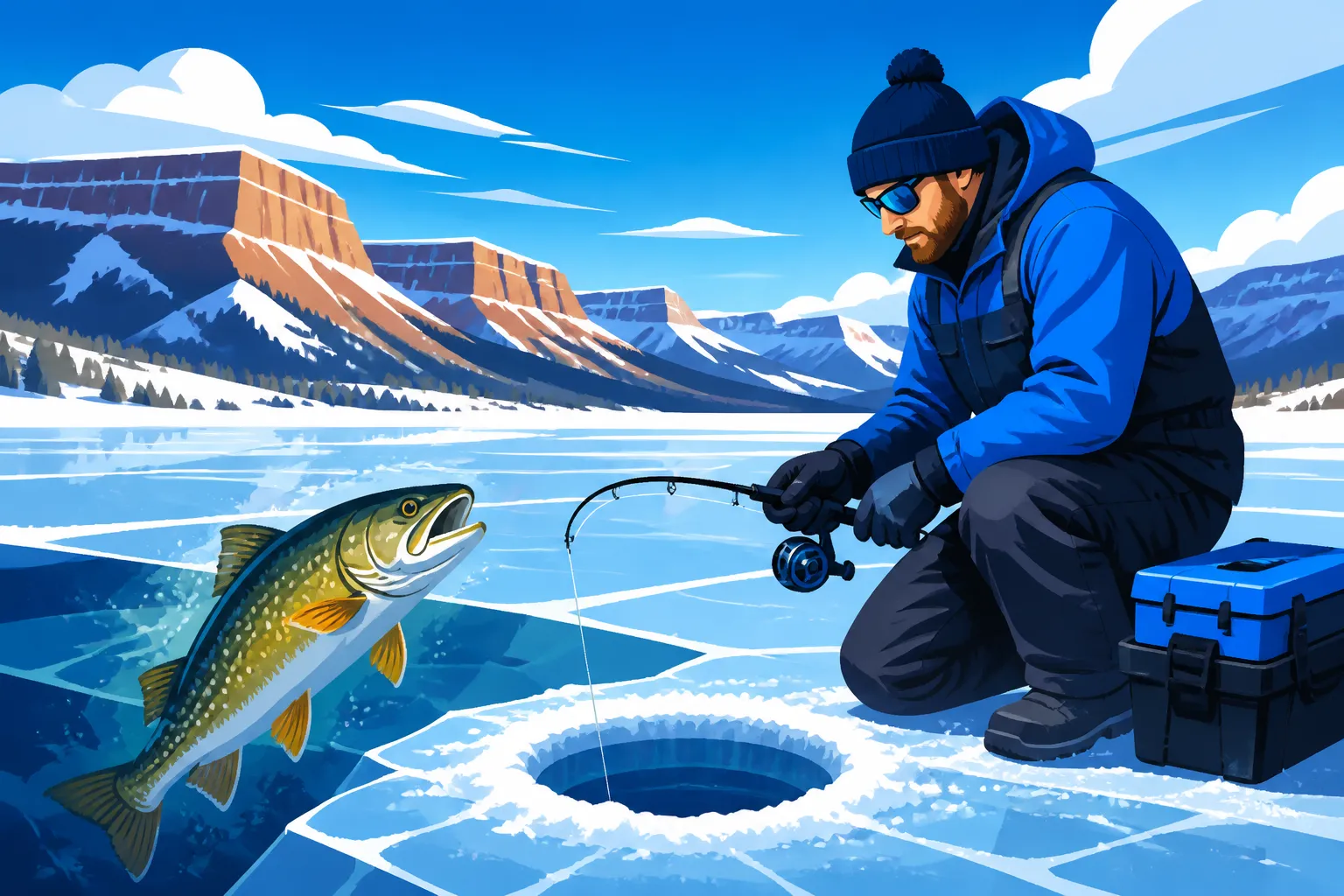
When you talk about ice fishing Blue Mesa, the conversation inevitably turns to lake trout, or "mackinaw" as they're often called. These powerful predators grow to impressive sizes in Blue Mesa's deep, cold waters, with some individuals pushing into the 20-pound range or even larger, making every hookset a potential battle of a lifetime. The sheer size and fighting prowess of these fish make them a primary target for many who venture out onto the ice here. The reservoir's nutrient-rich environment supports a robust forage base, allowing these lakers to thrive and grow exceptionally large. While catching them can be a test of patience and skill, the reward of landing a trophy lake trout through a small hole in the ice is an unforgettable experience.
But lake trout aren't the only game in town. Blue Mesa is also renowned for its kokanee salmon fishery. These landlocked sockeye salmon are feisty fighters on lighter tackle and provide a fantastic eating experience. During the winter, kokanee often school up, and finding one can lead to a hot bite with multiple fish. While they don't reach the same titanic sizes as the lake trout, their aggressive strikes and spirited runs make them incredibly fun to pursue. The challenge with kokanee is often locating these nomadic schools and presenting small, enticing offerings at the right depth. It’s a different kind of ice fishing, demanding finesse and a keen eye on your electronics. If you're looking for more general information on these species, you can check out our guides on Lake Trout Fishing in Colorado and Kokanee Salmon Fishing in Colorado.
Why Blue Mesa Stands Out Among Colorado's Ice Fishing Spots
Blue Mesa's vastness and depth are certainly factors in its prominence, but it's more than just size. Colorado Parks and Wildlife (CPW) actively manages the fishery, stocking both rainbow trout and contributing to the self-sustaining kokanee and lake trout populations. This management, combined with the reservoir's diverse underwater topography, creates an incredibly rich and stable ecosystem for fish. The sheer scale of the reservoir means that even on busy weekends, there's always plenty of room to spread out and find your own piece of quiet.
Beyond the main targets, anglers can also encounter respectable populations of brown trout and even some rainbow trout, especially in areas closer to inlets or where shallower shelves transition into deeper water. These diverse opportunities mean you can often switch tactics or target different species if one bite slows down. The consistent cold temperatures throughout winter also ensure a prolonged ice fishing season, typically running from late December into March, sometimes even April in colder years. This long season, combined with the quality of the fish, firmly plants Blue Mesa at the top of the list for serious Colorado ice anglers.
Essential Gear and Safety for Blue Mesa Ice Anglers
Stepping onto the ice at Blue Mesa Reservoir requires more than just a rod and a bucket. The conditions can be extreme, and the reservoir's large size means you could be a good distance from your vehicle. Proper gear is not just about comfort; it's about safety and maximizing your chances of success. Preparing adequately for the cold and understanding ice safety protocols are paramount before you even think about drilling your first hole.
Must-Have Ice Fishing Equipment for Blue Mesa
Your equipment choices will significantly impact your experience. First and foremost, you'll need an ice auger. For Blue Mesa, especially when targeting lake trout, a power auger (gas, propane, or electric) is highly recommended. The ice can get incredibly thick, often exceeding two feet, and hand augers can quickly become exhausting. An 8-inch or 10-inch auger will handle most fish, but a 10-inch is better for those trophy lake trout.
Next, shelter and heating are crucial. Portable ice fishing shelters (shanties or huts) are highly popular, offering protection from the relentless wind and often bitter cold. Pairing your shelter with a portable heater (like a Mr. Heater Buddy) can make a world of difference in comfort and endurance. You'll also want comfortable, insulated seating, like a bucket or a small folding chair.
For rods and reels, consider the species you're after. For lake trout, a medium-heavy to heavy ice fishing rod (28-36 inches) paired with a robust spinning reel spooled with 10-20 lb test fluorocarbon or braid is ideal. For kokanee, a lighter, more sensitive rod (ultralight to medium-light, 24-30 inches) and a smaller spinning reel with 4-6 lb test fluorocarbon or monofilament will give you the sensitivity needed for their subtle bites.
No serious Blue Mesa ice angler goes without fish finders or flashers. These electronic devices are indispensable for locating fish, identifying structure, and monitoring your bait's depth. Brands like Vexilar, Marcum, and Humminbird are popular choices. Given the vastness of Blue Mesa, this technology dramatically improves your odds.
Finally, don't forget essential accessories:
- Ice scoop/skimmer: To keep your holes clear of slush.
- Rod holders: For setting multiple lines (ensure you have the appropriate Colorado's Second-Rod Stamp and Who Needs One if using two).
- Headlamp/lantern: For early mornings, late evenings, or even night fishing.
- Sled: To transport your gear across the ice.
- GPS/Map: Essential for navigation on such a large body of water, especially in whiteout conditions or when trying to relocate productive spots.
- Warmest layers: We’re talking insulated bibs, a heavy jacket, thermal base layers, waterproof boots, heavy gloves/mittens, and a warm hat. Layering is key!
Prioritizing Safety on the Ice
Ice fishing is an incredible experience, but it comes with inherent risks, especially on a large, dynamic reservoir like Blue Mesa. Your safety should always be your top priority.
The most critical safety consideration is ice thickness. While a general rule of thumb is 4 inches for ice fishing on foot, Blue Mesa's currents, natural springs, and reservoir operations can create highly variable ice conditions. Always check with local sources – bait shops, the CPW office in Gunnison, or online forums – for current ice reports before heading out. Never assume the ice is safe, even if others are out. Always drill test holes as you go, checking thickness every 20-30 feet. A good reference for Ice Fishing in Colorado, Getting Started can provide more detail on general safety.
Beyond ice thickness, personal safety gear is a must:
- Ice picks: Worn around your neck, these can be life-saving if you fall through, allowing you to pull yourself out.
- Rope: A length of sturdy rope can be thrown to a struggling angler.
- Buddy system: Never fish alone, especially in remote areas or extreme conditions.
- First aid kit: Always have one handy.
- Charged phone: For emergencies.
Weather awareness is also crucial. Blue Mesa is at a high elevation (over 7,500 feet), and conditions can change rapidly. Blizzards, high winds, and rapidly dropping temperatures are not uncommon. Always check the forecast and be prepared to pack up if conditions worsen. Frostbite and hypothermia are real dangers; dress in layers, stay dry, and know the signs. If you plan to drive a vehicle onto the ice (only when explicitly safe and allowed), ensure you know the designated access points and risks involved. Always park vehicles at a safe distance from other anglers and never near open water or weak ice.
Strategies for Consistent Success on Blue Mesa's Hardwater
Once you've got your gear and safety plan sorted, it's time to talk tactics. Blue Mesa's diverse fishery demands different approaches for its primary targets. Understanding fish behavior in winter and adapting your techniques accordingly will greatly increase your success rate.
Techniques for Lake Trout Through the Ice
Lake trout in Blue Mesa are often found in deeper water, typically ranging from 30 to over 100 feet. They relate heavily to structure – humps, underwater points, drop-offs, and channel edges. Locating these features with a reliable fish finder or by studying contour maps is your first step.
The most effective method for ice fishing lake trout is jigging. Heavy spoons, tube jigs, and bucktail jigs are go-to lures. Popular spoon brands include Northland Buck-Shot Spoons, Swedish Pimples, and Crippled Herrings. Tube jigs in white, pearl, or glow colors (often 3-6 inches) are also highly effective. Many anglers tip their jigs with a piece of sucker meat, a large shiner, or even a generous strip of cut bait. The scent and added attraction can be irresistible to a hungry laker. Our detailed guide on Jigging for Lake Trout Through the Ice offers more specific tips.
The key to successful jigging is experimentation with retrieve patterns. Start with aggressive lifts and drops, mimicking a wounded baitfish, then pause for several seconds. Often, the strike comes on the pause. If no bites, try subtler jigging motions, gentle shakes, or simply holding the lure still. Watch your fish finder intently; if you see a mark approach your lure but not commit, change your retrieve or even your lure. Sometimes, a slow, methodical lift and drop is all it takes. For targeting these fish, understanding How Deep to Fish Blue Mesa Reservoir for Lake Trout is crucial.
Cracking the Code for Winter Kokanee Salmon
Kokanee salmon present a different challenge. Unlike the deep-dwelling lake trout, kokanee often suspend in the water column, sometimes as shallow as 10-20 feet, but can be much deeper. They are also schooling fish, so finding one often means finding many. They tend to be more finicky, requiring lighter tackle and smaller presentations.
Small jigs are the ticket for kokanee. Popular choices include glow jigs, small tube jigs, or teardrop jigs in bright colors like pink, orange, or chartreuse. These are typically tipped with a few kernels of Shoepeg corn, which adds scent and visual appeal. Some anglers use small spoons, often tipped with corn as well. Scented baits like Pautzke's Fire Bait or Mike's Glow Eggs can also be used as tipping agents.
Depth is paramount when targeting kokanee. They are notoriously depth-sensitive. Your fish finder is your best friend here. If you mark fish at 25 feet, try to present your lure exactly at that depth, or slightly above them to draw them up. Jigging for kokanee is usually more subtle than for lake trout. Small, rhythmic lifts and drops, sometimes just a gentle quiver of the rod tip, can entice a bite. Watch for those subtle rod tip twitches or changes in your line, as kokanee bites can be very light. If you're interested in more general kokanee strategies, even for open water, our Trolling for Kokanee Salmon in Colorado article has good insights into their behavior.
Understanding Fish Movement and Prime Times
Winter fishing, particularly on a large body of water like Blue Mesa, often means adjusting your approach based on the time of day and prevailing conditions. Generally, low light periods — early morning and late afternoon/dusk — are considered prime times for many species, including lake trout and kokanee. During these hours, fish often move shallower to feed, or their activity levels increase. However, Blue Mesa is vast, and active fish can be found throughout the day, especially if you're marking them on your electronics.
Environmental factors like barometric pressure can also influence fish activity. Stable high pressure often leads to more consistent bites, while rapidly changing pressure (especially dropping pressure before a storm) can trigger a feeding frenzy or shut it down entirely. Keeping an eye on weather patterns can give you an edge.
It's also worth noting that fish movements can be influenced by light penetration through the ice and snow cover. On clear, sunny days, fish might hold a bit deeper to avoid direct light, while on overcast days or days with heavy snow cover, they might be more comfortable in shallower water. Mobility is key; if a spot isn't producing after a reasonable amount of time, don't be afraid to drill more holes and explore new areas.
| Species | Target Depth (approx.) | Preferred Baits/Lures | Notes |
|---|---|---|---|
| Lake Trout | 30-100+ feet | Heavy spoons (3-6"), tube jigs (3-6"), bucktail jigs, tipped with sucker meat/shiner | Focus on structure, aggressive jigging, watch electronics for marks |
| Kokanee Salmon | 10-50 feet (suspended) | Small jigs (1/8-1/4 oz), small spoons, tipped with Shoepeg corn/Pautzke's | Locate schools, subtle jigging, depth-sensitive |
| Brown Trout | 10-40 feet | Small spoons, tube jigs, minnow baits, often near structure/shallows | Can be opportunistic, often shallower than lake trout |
| Rainbow Trout | 5-30 feet | Small jigs, PowerBait, mealworms, salmon eggs | Often found near inlets, stocked areas, or shallower flats |
Planning Your Blue Mesa Winter Fishing Trip
A successful ice fishing trip to Blue Mesa requires careful planning, not just in terms of gear and technique, but also understanding access, conditions, and the necessary legalities. Without these practical considerations, even the best angler can run into trouble.
Access Points and Current Ice Conditions
Blue Mesa Reservoir offers several popular access points, but not all are reliable for ice fishing, especially early or late in the season. The most common access points include:
- Elk Creek: Often one of the first areas to freeze solid and is popular. It provides access to a large bay and deeper water.
- Lake Fork: Another popular spot, offering access to deeper parts of the reservoir.
- Sapinero: Depending on the ice, this area can provide good access to kokanee and smaller trout.
It's absolutely vital to check current ice conditions before you head out. The official Colorado Parks and Wildlife (CPW) website is a great resource, but local bait and tackle shops are often your best bet for real-time, ground-level information. Shops like Gene's Place in Gunnison or Sportsman's and Gunnison Angler can provide invaluable intel on ice thickness, recent catches, and which access points are safest and most productive. They are also excellent places to pick up local bait and tackle specifically suited for Blue Mesa. Road conditions leading to the reservoir can also be challenging in winter, so always check the Colorado Department of Transportation (CDOT) website for updates on Highway 50.
Licensing and Regulations Specific to Blue Mesa
Before drilling a single hole, ensure you are legally prepared. Anyone 16 years or older needs a valid Colorado fishing license. This applies to both residents and nonresidents. You can purchase a license online at CPWShop.com, by phone, or in person at various vendors, including most sporting goods stores and many Walmarts across Colorado. Our guide on Colorado Fishing License Guide for Residents and Nonresidents offers a comprehensive overview.
Beyond the standard license, most anglers will also need to purchase Colorado's Habitat Stamp. This stamp contributes to wildlife habitat preservation and restoration across the state. While certain exemptions exist, such as for very young anglers or those purchasing certain lifetime licenses, most adults will need it. For more information, read our article, Do You Need a Habitat Stamp to Fish in Colorado?.
Crucially, you must be aware of the specific bag and possession limits for Blue Mesa Reservoir, as they can differ from general state regulations. For example, kokanee salmon often have specific limits, especially during spawning periods (though ice fishing targets non-spawning kokanee). Lake trout also have specific size and bag limits designed to protect the trophy fishery. Always consult the most current Colorado Parks and Wildlife Fishing Regulations brochure, available online or at license vendors. This brochure will detail all species-specific limits, including those for Colorado Bag and Possession Limits by Species. Pay particular attention to rules regarding the use of multiple rods; if you plan to use two rods simultaneously, you'll need to purchase a Colorado's Second-Rod Stamp and Who Needs One in addition to your regular license. Failure to adhere to these regulations can result in hefty fines and penalties.
Local Resources and Accommodations
Gunnison, Colorado, is the closest major town to Blue Mesa Reservoir and serves as an excellent basecamp for your ice fishing adventure. Here, you'll find a variety of accommodations, from hotels and motels to vacation rentals. Make sure to book lodging well in advance, especially during peak winter weekends.
Local tackle shops are invaluable resources, not just for gear and bait, but also for up-to-the-minute fishing reports and expert advice. Don't hesitate to strike up a conversation with the staff; they often have the most current insights into what's biting and where. If you're new to ice fishing or want to maximize your chances of catching specific species, consider hiring a local guide. Services found on platforms like FishingBooker can connect you with experienced Blue Mesa ice fishing guides who specialize in targeting lake trout or kokanee and can provide all the necessary gear and expertise. A guided trip is an excellent way to learn the ropes, gain local knowledge, and potentially land the fish of a lifetime.
Additionally, Blue Mesa offers opportunities for camping, even in winter, though facilities may be limited. If you're brave enough for winter camping, check out our guide on Camping Options Near Blue Mesa Reservoir for year-round tips, but be prepared for extreme cold. Always double-check campground availability and winter-specific rules with the National Park Service or CPW.
Disclaimer
Please note that fishing conditions, regulations, and ice safety can change rapidly. Always consult the latest Colorado Parks and Wildlife regulations and local conditions reports before planning and embarking on any fishing trip. Safety should always be your top priority on the ice.