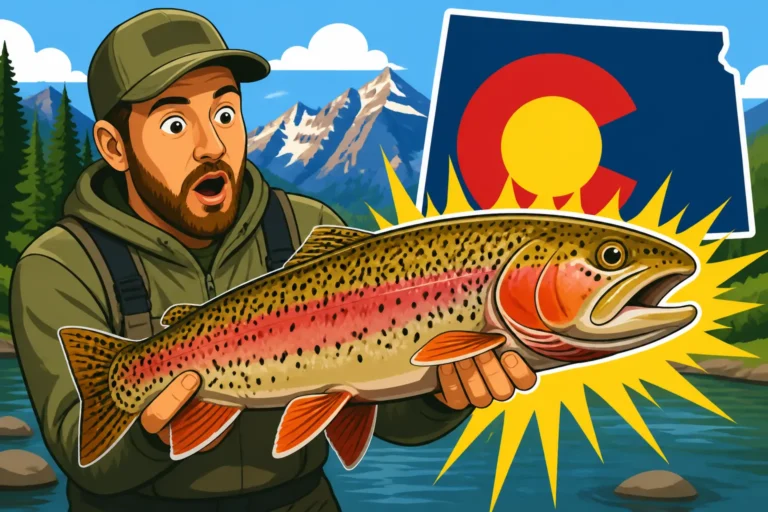
What Rio Grande Cutthroat Trout Look Like
There's nothing quite like the thrill of reeling in a beautiful trout in Colorado, but for many anglers, especially those new to our high-country streams and remote valleys, figuring out exactly what kind of trout you've just caught can be a real head-scratcher. With so many species and subspecies, and even hybrids swimming in our waters, it's easy to feel a bit overwhelmed. This guide is dedicated to helping you confidently identify one of Colorado's true native gems: the Rio Grande Cutthroat Trout, by breaking down its unique physical characteristics so you can spot it in the wild and appreciate its distinctive beauty.
The Distinctive Features of Rio Grande Cutthroat Trout
The Rio Grande Cutthroat Trout (Oncorhynchus clarkii virginalis) is a striking fish, and once you know what to look for, it often stands out. It's not just about a pretty face, though; recognizing these native beauties is crucial for their conservation, as they represent a vital part of Colorado's natural heritage. They've faced significant challenges over the years from habitat loss and hybridization with non-native trout, making their pure strains a precious find.
Body Coloration and Patterns
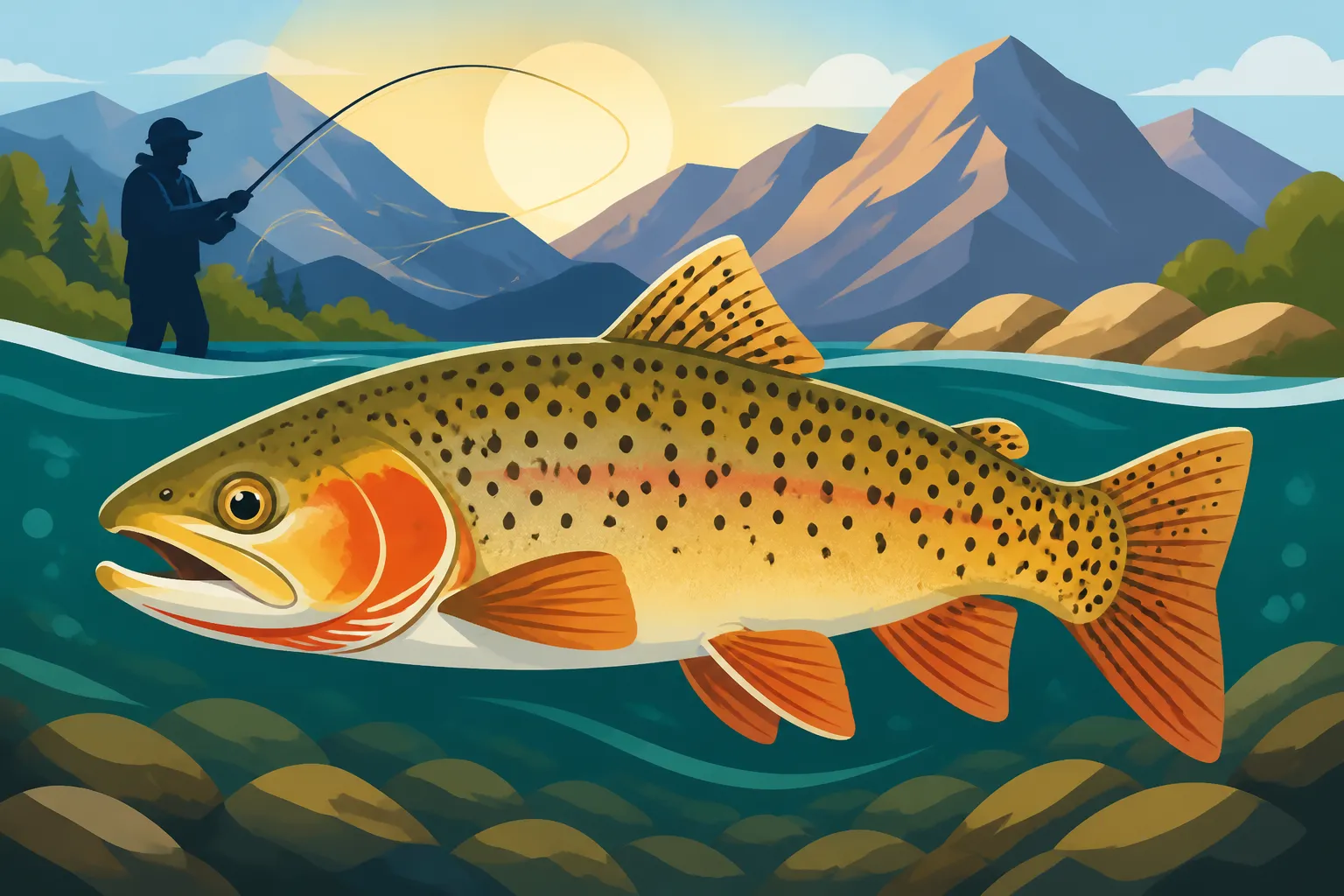
When you first glimpse a Rio Grande Cutthroat, you'll likely be struck by its overall coloration. These trout tend to have a base body color that ranges from a yellowish-tan or olive-green on their back, fading to lighter, often golden or silvery sides, and a creamy white or pale yellow belly. It's a very natural, almost earthy palette that helps them blend into the streambeds and riffles of their native habitat.
One of the most defining visual elements is their spotting pattern. Rio Grande Cutthroat Trout typically display numerous, small, and irregularly shaped black spots. These spots are usually concentrated more heavily towards the tail and posterior (rear) half of the body, often becoming sparser or completely absent towards the head. Think of it almost like a speckled fade, with the densest peppering near the caudal fin. The spots often extend onto the dorsal (top) fin and the caudal (tail) fin, continuing that unique pattern. What you generally won't see are large, prominent spots all over the body, or spots that extend far below the lateral line on the front half of the fish. This subtle distinction can be a key identifier when you're trying to tell them apart from some of their more heavily spotted cousins. Sometimes, anglers even notice a faint pinkish or reddish lateral line, though this isn't always as pronounced as on a rainbow trout.
The Signature "Cutthroat" Mark
This is the big one, the clue that gives the entire subspecies its name: the distinctive red or orange "cutthroat" mark. Located in the crease of the lower jaw, on the underside of the fish, this mark is often described as a slash or a vivid streak of color. It's typically a bright, almost fiery orange or a deep, rich red, and can vary in intensity. Sometimes it's a bold, unmistakable pair of slashes, one on each side, while other times it might appear as a fainter, more subtle wash of color, especially in younger fish or those in certain water conditions.
However, it's vital to remember that not all cutthroat slashes are created equal. The Rio Grande Cutthroat's slash is usually quite prominent and often a deeper, more saturated color compared to some other cutthroat subspecies. If you catch a trout and are unsure, gently lift the gill plate area and look directly underneath the jaw. If you see that tell-tale splash of color, you're on the right track to identifying a cutthroat. It's truly their signature, a natural piece of artwork that makes them unmistakable as a cutthroat once you know to look for it. Just be gentle when handling the fish to check, especially if you plan to release it.
Fin Characteristics and Shape
Beyond the body and the signature slash, the fins of a Rio Grande Cutthroat Trout offer additional clues for identification. Their fins generally share the same subdued coloration as their body, often a dull yellow or olive, without any bright, contrasting colors you might see on some other trout species. The pectoral (chest) fins, pelvic (belly) fins, and anal fin are typically plain, sometimes with a faint yellowish tint.
The dorsal fin, located on the back, and the caudal (tail) fin usually have the same small, irregular black spots that are present on the body, continuing the speckled pattern. The tail fin itself is often slightly forked, though it can appear more square in older or larger fish. The overall body shape is quite streamlined and torpedo-like, perfectly adapted for navigating the swift currents of Colorado's mountain streams. They aren't typically as deep-bodied or chunky as some hatchery-raised rainbow trout might appear, but rather possess a sleek, athletic build. Observing the entirety of the fish—its overall shape, coloration, spotting, and fin characteristics—will give you the best chance at a confident identification.
Differentiating Rio Grande Cutthroat from Look-Alikes
Let's be honest, sometimes these trout species can play tricks on your eyes! Especially when you're out on the water, excited about a catch, it can be tough to remember all the nuances. But understanding the key differences between the Rio Grande Cutthroat and other common trout, particularly rainbows and other cutthroat varieties, is essential for responsible angling and conservation.
Rio Grande Cutthroat vs. Rainbow Trout
This is perhaps the most common confusion for anglers in Colorado, and for good reason. Rainbow Trout (Oncorhynchus mykiss) are widely stocked across the state, and many of their physical traits can overlap with cutthroats. However, there are some very clear distinctions.
First, let's talk about that signature cutthroat slash. A true Rainbow Trout will not have the red or orange slash under its jaw. This is your absolute number one indicator. If you see a definite slash, it's a cutthroat. If it's absent, you're likely looking at a rainbow or a hybrid.
Second, consider the spotting. Rainbows typically have more numerous, often smaller, and more evenly distributed black spots covering their entire body, from head to tail, and extending well below the lateral line. The spots on a Rio Grande Cutthroat, as we discussed, are generally concentrated more towards the rear and are often larger and more irregularly shaped. Rainbows also commonly exhibit a distinct, iridescent pink or reddish stripe running along their lateral line, which is how they get their "rainbow" name. While some Rio Grandes might have a faint pinkish tint, it's rarely as vivid or well-defined as a rainbow's stripe.
Finally, the mouth is another subtle clue. Rainbows tend to have shorter snouts and the maxillary (upper jawbone) typically extends back to about the rear of the eye. Rio Grande Cutthroat, on the other hand, often have slightly longer snouts, and their maxillary typically extends noticeably beyond the rear of the eye. This gives them a slightly more "pointed" facial profile compared to the generally blunter face of a rainbow. Remember, these can be tough distinctions, especially in varied light or with smaller fish, but combining these factors will greatly improve your chances. You might even find a good waterproof fish identification chart, available on Amazon, helpful to keep in your tackle box for quick reference.
Rio Grande Cutthroat vs. Other Cutthroat Subspecies
Colorado is home to several cutthroat subspecies, including the Greenback Cutthroat Trout and the Colorado River Cutthroat Trout, and identifying the differences between them can be even trickier for the untrained eye. After all, they all share that defining "cutthroat" mark! However, there are some subtle indicators.
-
Greenback Cutthroat Trout (Oncorhynchus clarkii stomias): Historically found on the Front Range, Greenbacks typically have smaller, more concentrated spots, often finer and more evenly distributed than the Rio Grande. Their body coloration can also be quite striking, ranging from deep olive to almost brassy green on the back, fading to golden or sometimes even greenish-yellow sides. The red slash under the jaw is usually prominent. The primary difference is often in the fin coloration, with Greenbacks sometimes having more intensely colored orange or red lower fins compared to the generally plainer fins of the Rio Grande. Greenback Cutthroat Trout Recovery in Colorado discusses their unique history and comeback.
-
Colorado River Cutthroat Trout (Oncorhynchus clarkii pleuriticus): Found west of the Continental Divide, these cutthroats tend to have more widely scattered, larger spots, often fewer in number than the Rio Grande. Their body color is typically a pale yellow, olive, or bronze, often with very vibrant red or orange hues on their gill plates and operculum. The cutthroat slash is usually bright. The spotting pattern is generally less dense than on a Rio Grande and often more concentrated on the posterior half, similar to the Rio Grande, but often with larger individual spots. Colorado River Cutthroat Trout, Where to Find Them offers more details on these fish.
Distinguishing between pure strains of these cutthroat subspecies often requires genetic testing, especially if there's any chance of hybridization. For the average angler, the goal is primarily to identify it as a cutthroat and differentiate it from a rainbow or hybrid. If you're fishing in the Rio Grande basin or its historical range, and you catch a pure cutthroat, chances are it's a Rio Grande. Understanding Colorado's Native Cutthroat Trout Subspecies is a journey, and each one is a treasure.
Common Hybrids and How They Confuse Identification
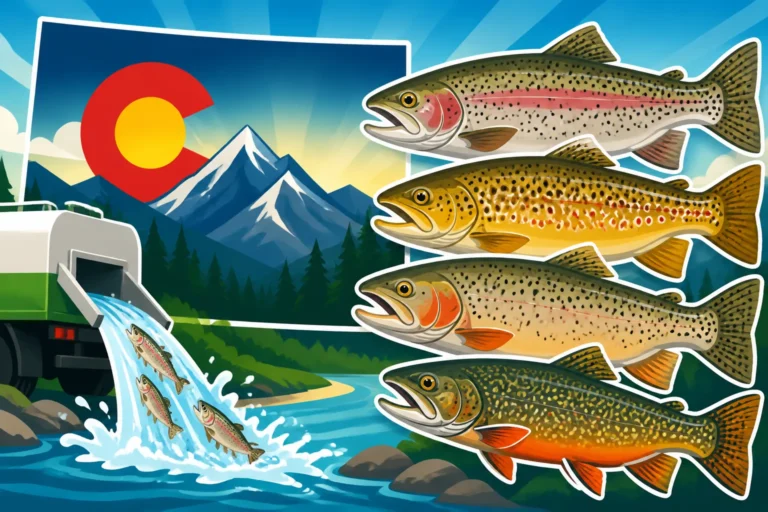
Here's where things get really muddy, but it's incredibly important to understand. Hybridization is a significant threat to native trout populations, and it can make identification maddeningly difficult. The most common hybrid you'll encounter is the "Cutbow" – a cross between a Cutthroat Trout (often any subspecies) and a Rainbow Trout.
Cutbows can display a confusing mix of characteristics from both parent species. They might have a faint cutthroat slash under the jaw, but it's often much less pronounced and paler than on a pure cutthroat. Simultaneously, they might have the more extensive spotting pattern of a rainbow trout, covering their entire body, and a visible pink lateral stripe. Essentially, they're a mosaic, inheriting traits from both sides. This makes them incredibly hard to definitively identify in the field.
| Feature | Rio Grande Cutthroat Trout | Rainbow Trout | Cutbow (Hybrid) |
|---|---|---|---|
| Cutthroat Mark | Prominent, distinct red/orange slash under jaw | Absent | Faint, incomplete, or pale slash |
| Spotting Pattern | Small, irregular spots, mostly concentrated towards tail | Numerous, small spots, evenly distributed head to tail, below lateral line | Variable, mix of both, often more extensive than pure cutthroat |
| Lateral Stripe | Generally absent, sometimes faint pinkish tint | Prominent, iridescent pink/red stripe | Variable, often present but can be less vibrant |
| Maxillary Length | Often extends noticeably beyond the eye | Typically ends around the rear of the eye | Variable, can be intermediate |
| Body Color | Yellowish-tan/olive back, golden/silvery sides, creamy belly | Often silvery, can be olive-green, strong pink stripe | Mix of colors from both parents |
| Fin Color | Subdued, plain yellow/olive, matching body | Can have red or orange hues, especially on lower fins | Variable |
When you catch a fish that looks like "half a rainbow and half a cutthroat," chances are you've got a cutbow. For an in-depth look, check out Telling a Cutbow From a Pure Cutthroat. These hybrids pose a conservation challenge because they can dilute the genetic purity of native cutthroat populations. This is why knowing Telling a Rainbow From a Cutthroat Trout is so vital for anglers who want to help protect Colorado's native fish.
Why Accurate Identification Matters for Conservation and Anglers
Fishing in Colorado isn't just about catching fish; it's about connecting with nature, respecting the environment, and understanding the delicate ecosystems we're privileged to explore. Knowing your fish, especially native species like the Rio Grande Cutthroat, plays a much larger role than you might initially think.
Protecting a Native Treasure
The Rio Grande Cutthroat Trout is more than just another fish; it's a living relic, a testament to Colorado's wild past. As one of the state's native trout species, along with the Colorado River Cutthroat and Greenback Cutthroat, its preservation is a high priority. These fish have evolved over millennia to thrive in our unique mountain environments, and they play a critical role in the health of their ecosystems.
Unfortunately, due to historical overfishing, habitat degradation, and especially hybridization with non-native trout (like rainbows), pure strains of Rio Grande Cutthroat are now much rarer and confined to isolated, high-elevation streams. Every time a pure Rio Grande Cutthroat is caught and released unharmed, we're contributing to the survival of that genetic lineage. Conversely, misidentifying a cutthroat as a rainbow and harvesting it when it should have been released, or failing to report a catch where specific data is requested, can inadvertently harm conservation efforts. Learning to identify these fish is a direct way you, as an angler, can become a steward of Colorado's natural resources. Organizations and state agencies work tirelessly on projects aimed at restoring these populations to their historical ranges, and anglers are on the front lines, acting as the eyes and ears of conservation. A good waterproof field guide to Colorado fish species can be an invaluable tool, and you can find many comprehensive options on Amazon that will fit right into your pack.
Adhering to Specific Regulations
This is where accurate identification moves from interesting trivia to absolute necessity. Colorado Parks and Wildlife (CPW) implements highly specific fishing regulations designed to protect vulnerable species and manage fish populations. These regulations can vary significantly depending on the species, the specific body of water, and even the time of year.
For native cutthroat populations, including the Rio Grande Cutthroat, regulations are often much stricter than for stocked rainbow trout. You might find "catch-and-release only" rules in certain waters known to hold pure strains, or very low bag limits (sometimes just one or two fish, with specific length restrictions) in others. Some areas might even have special restrictions on bait or tackle (e.g., barbless hooks only) to minimize harm to these delicate fish. If you misidentify a Rio Grande Cutthroat as a more common rainbow, you could inadvertently violate these rules, leading to fines or other penalties. Always consult Colorado Fishing Regulations Every Angler Should Know and the specific regulations for the water you're fishing before you cast a line. The Colorado Parks and Wildlife website is an excellent resource, and their annual Reading Colorado's Fishing Regulations Brochure is a must-have for every angler. It's truly eye-opening how many nuanced rules there are for different species and waterways, especially when it comes to Catch-and-Release Rules on Colorado's Cutthroat Waters.
Enhancing Your Angling Experience
Beyond the legal and conservation aspects, there's a profound satisfaction that comes with truly knowing the fish you catch. Imagine casting a line into a remote, crystal-clear stream high in the San Juan Mountains. You feel a tug, and after a skillful fight, you land a beautiful trout. Instead of just thinking, "Oh, another trout," you can confidently say, "Wow, this is a stunning pure Rio Grande Cutthroat!" This level of understanding deepens your connection to the sport and to the wilderness around you.
It allows you to appreciate the specific adaptations of that fish, its place in the ecosystem, and the journey it's taken to survive in its pristine habitat. You start to notice the subtle variations in spotting, the intensity of the cutthroat slash, and the overall vigor of the fish. This knowledge transforms fishing from a simple recreational activity into an educational and enriching experience. It inspires you to learn more about Colorado's Trout Species, A Field Guide and Identifying Colorado's Native vs Stocked Trout, and perhaps even to seek out those special waters where native fish thrive. The more you know, the more you appreciate, and the more rewarding your time on the water becomes. And remember, if you ever accidentally catch a fish that looks like Colorado's Endangered and Threatened Fish or any other protected species, knowing What to Do If You Catch an Endangered Fish by Accident is crucial for its survival and your legal compliance.
Disclaimer
This article is for general informational purposes only and does not constitute professional advice. Laws, prices and regulations vary by location and change over time. Consult a qualified professional for guidance on your specific situation.