Is It Legal to Catch a Colorado Pikeminnow?
You're out on one of Colorado's magnificent rivers, perhaps the mighty Colorado itself or the wild Yampa, casting for trout or bass, when suddenly you hook into something that feels… substantial. You reel it in, and as it breaks the surface, you realize it looks distinctly different from any common game fish. It’s long, sleek, and kind of prehistoric-looking. Could it be that elusive, protected fish you've heard whispers about – the Colorado Pikeminnow? It's a very real and understandable concern for anglers to accidentally catch a protected species, and knowing exactly what to do in that moment is not just good practice, it's a legal obligation. This guide is here to clarify the rules around the Colorado Pikeminnow, help you identify it, and ensure you're fishing legally and responsibly on our beautiful waters.
Understanding the Colorado Pikeminnow's Protected Status
The Colorado Pikeminnow, once known as the Colorado River Salmon by early settlers for its impressive size and migratory habits, is a truly unique creature. It's an integral part of the natural heritage of the Colorado River basin, having evolved here for millions of years. Today, however, it holds a critical, albeit vulnerable, place in our ecosystem.
Why the Colorado Pikeminnow is Endangered
The story of the Colorado Pikeminnow's decline is a stark reminder of human impact on our natural world. Historically, these fish thrived in the vast, free-flowing waters of the Colorado River and its major tributaries, undertaking long migrations for spawning. They were once abundant, ranging through thousands of miles of river in Colorado, Utah, Arizona, and New Mexico.
However, the rapid development of the American West brought immense changes to their habitat. The construction of massive dams like Glen Canyon Dam and Flaming Gorge Dam fragmented their historical migration routes, altering water temperatures, flow regimes, and sediment transport. These dams turned vast stretches of their ancestral river into cold, deep reservoirs, completely unsuitable for their survival. Imagine a fish that needs miles of warm, silty river to spawn, suddenly faced with an impassable concrete wall and icy, still water. It's a death sentence for a species adapted to a very specific, dynamic environment.
Adding to this, the introduction of non-native fish species has been devastating. Largemouth bass, channel catfish, northern pike, and various trout species were stocked extensively for sport fishing and food. Many of these non-native predators thrive in the altered river conditions and aggressively compete with or prey upon the juvenile pikeminnow, which are slow-growing and vulnerable. They simply weren't equipped to deal with these new, aggressive neighbors. This combination of habitat destruction and invasive species competition has pushed the Colorado Pikeminnow to the brink, making it one of the most critically endangered fish in North America. This is why you'll often hear it discussed when talking about Colorado's Endangered and Threatened Fish. It truly is a flagship species for river conservation in our state and across the basin.
Where They Live: Critical Habitat in Colorado
While their historical range was vast, today the Colorado Pikeminnow is primarily found in only four remaining river segments within the upper Colorado River basin. In Colorado, you're most likely to encounter them, or be fishing in their critical habitat, on stretches of the mainstem Colorado River, particularly from Rifle downstream, and the Yampa River, especially in the Yampa Canyon downstream of Maybell. They also exist in parts of the Green River (which flows into Utah from Colorado) and the San Juan River in the southwest corner of the state, though the latter two are more associated with other states' recovery efforts.
These specific river sections are designated as critical habitat because they still possess some of the essential characteristics the pikeminnow needs: warmer water temperatures during summer, appropriate flow regimes for spawning, and suitable nursery areas for juveniles. They tend to favor slower, warmer sections of the river, often with braided channels, eddies, and backwaters, especially during their spawning season in late spring and early summer. When you're fishing rivers like the Colorado River Fishing From Glenwood Canyon to Kremmling, especially the downstream portions, or even the Fishing Colorado's Gunnison River and the Black Canyon (though less common there), it's crucial to be aware that you might be in their territory. These remaining habitats are protected under federal law to aid in the species' recovery.
The Strict Rules: Legality of Catching and Keeping
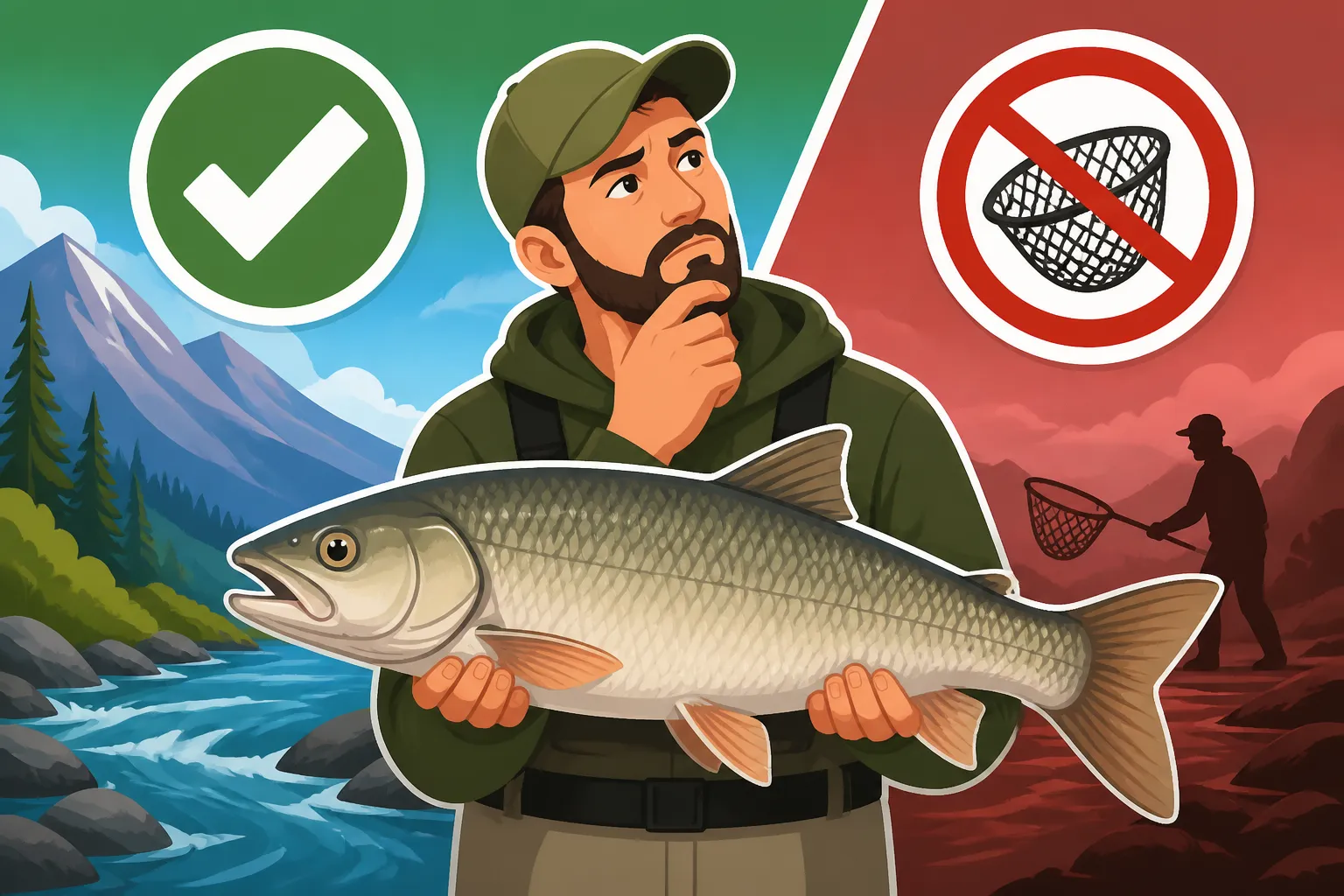
This brings us directly to the core question: Is it legal to catch a Colorado Pikeminnow? The answer is a resounding no, and this applies universally. The Colorado Pikeminnow is a federally endangered species, protected under the Endangered Species Act. This means it is illegal to catch, possess, harm, harass, or attempt to take a Colorado Pikeminnow. There is no open season, no bag limit, and absolutely no scenario where you can legally keep one, even if you caught it accidentally.
The penalties for violating the Endangered Species Act can be severe, ranging from hefty fines that can reach tens of thousands of dollars to potential jail time. While an accidental catch followed by an immediate, careful release (which we'll cover next) is generally understood and not penalized, any intentional harm, possession, or negligence that leads to the fish's death can have serious legal consequences. Colorado Parks and Wildlife (CPW) and federal agencies take the protection of this species very seriously, and for good reason. It's not just a regulation; it's about safeguarding a unique and irreplaceable part of our natural heritage. Always consult the most current Colorado Fishing Regulations Every Angler Should Know brochure, available from CPW, to stay informed, as specific rules for certain areas can sometimes have additional nuances.
Identifying a Colorado Pikeminnow in Your Catch
Okay, so the rules are clear: you cannot keep a Colorado Pikeminnow. But how do you know if that long, slender fish on the end of your line actually is one? This is where many anglers feel a pang of anxiety. Mistaken identity can happen, especially with other native or non-native fish that share some superficial similarities. Knowing the key features is your best defense.
Key ID Features: What to Look For
The Colorado Pikeminnow has several distinctive characteristics that set it apart. When you pull in an unfamiliar fish in the Colorado River basin, quickly run through this checklist:
- Body Shape: This is usually the first clue. It has a very long, slender, torpedo-shaped body. Think of it as built for speed in river currents. It's not deep-bodied like a bass, nor short and stout like some suckers.
- Mouth: Look for a large, terminal mouth (meaning it's at the very end of its snout, not downturned) that extends back to or past the middle of its eye. Its jaw is powerful, indicating its predatory nature. Inside, you won't find teeth on its tongue, which helps distinguish it from some other predatory fish.
- Dorsal Fin: The dorsal fin is prominent and located relatively far back on its body, typically above or slightly behind its pelvic fins.
- Coloration: Generally, they are olive-green to brownish on their back, fading to silvery sides and a white belly. There are no prominent spots or patterns like you'd see on a trout.
- No Adipose Fin: This is a critical distinction from trout. Trout (rainbows, browns, cutthroats, brookies, etc.) all have a small, fleshy fin on their back between the dorsal fin and the tail fin – that's the adipose fin. Pikeminnow do not have one. If the fish has an adipose fin, it's not a pikeminnow.
- Scales: Their scales are fine and smooth, not particularly rough.
Here's a quick comparison to help differentiate the Colorado Pikeminnow from some other fish you might encounter in its habitat:
| Feature | Colorado Pikeminnow | White Sucker (Common Look-Alike) | Common Carp (Often Present) | Rainbow Trout (Common Game Fish) |
|---|---|---|---|---|
| Body Shape | Long, slender, torpedo-shaped | Cylindrical, but tapers quickly, often chubbier | Deep-bodied, stocky, often humped back | Streamlined, but typically deeper than pikeminnow |
| Mouth | Large, terminal (end of snout), jaw extends far back | Small, downturned (subterminal), fleshy lips with barbels | Small, downturned (subterminal), fleshy lips with two pairs of barbels | Terminal, moderate size, no barbels |
| Adipose Fin | Absent | Absent | Absent | Present (small, fleshy fin near tail) |
| Color | Olive-brown to silvery, white belly, no spots | Dark olive to brownish back, lighter belly | Gold/bronze to olive-brown, lighter belly | Silver with red/pink lateral band, dark spots on body and fins |
| Dorsal Fin | Prominent, typically further back | Shorter, often with a slight curve | Long base, serrated spine | Well-defined, no serrated spine |
It's important to be familiar with How to Identify a Longnose Sucker and What the Humpback Chub Is and Where It Lives, as these are other native fish that can sometimes be mistaken for the pikeminnow, though the pikeminnow's overall predatory appearance and large mouth are usually good indicators.
Size and Growth: How Big Do They Get?
One of the most awe-inspiring aspects of the Colorado Pikeminnow is its potential size. These aren't your average creek minnows. They are, in fact, the largest native minnow species in North America! Historically, they could reach lengths of up to 6 feet and weigh over 80 pounds, truly earning their "salmon of the Colorado" nickname. Imagine hooking into a fish that big on a trout rod!
Today, while such giants are rare, mature pikeminnow still regularly reach lengths of 2 to 3 feet, and sometimes even larger, especially in the healthier, more remote sections of their habitat. They are slow-growing and can live for many years, sometimes up to 40 years. This long lifespan means every adult fish is incredibly valuable to the recovery of the species.
Distinguishing From Other Native Fish
While the Colorado Pikeminnow is fairly distinct, other native fish in the Colorado River basin can cause confusion. For instance, various sucker species (like the Flannelmouth Sucker or Bluehead Sucker) are also native and commonly encountered. However, suckers universally have subterminal, fleshy mouths adapted for scraping algae and invertebrates from river bottoms, totally different from the pikeminnow's predatory, terminal mouth.
Chubs, like the Bonytail Chub or Humpback Chub (themselves endangered or threatened), are also native minnows. While some chubs might have more terminal mouths than suckers, their body shape is typically thicker or more compact, and they lack the sheer length and predatory "gator-like" appearance of a pikeminnow. Always focus on the mouth, overall body profile, and the absence of an adipose fin when trying to make a quick identification.
What to Do If You Accidentally Catch One
So, you're pretty sure you've hooked a Colorado Pikeminnow. Don't panic! The key here is quick, responsible action. An accidental catch, followed by an immediate and careful release, is not an offense. It's what you do next that matters most.
Immediate Actions for a Safe Release
The absolute priority is the fish's well-being. Time is of the essence to minimize stress and ensure its survival. Here’s a step-by-step guide on what to do:
- Keep the Fish in the Water: This is paramount. Do not pull the fish out of the water onto the bank or into your boat unless absolutely necessary for hook removal and immediate release. The air can be damaging to their gills and cause undue stress.
- Handle Gently and Quickly: If you must handle the fish, wet your hands thoroughly first to protect its delicate slime coat. Cradle the fish gently, supporting its body. Avoid squeezing it, especially around its belly or gills.
- Remove the Hook Promptly: Use needle-nose pliers or a de-hooking tool to quickly and carefully remove the hook. If the fish is deeply hooked and removing the hook would cause significant injury, cut your line as close to the hook as possible. The hook will eventually rust away, and this is far better than tearing vital organs. This is why many anglers opt for Barbless Hook Rules on Colorado Rivers in sensitive areas, as barbless hooks make removal much easier.
- Avoid Gills and Eyes: Never touch the fish's gills or put your fingers in its eyes. These are extremely sensitive areas.
- Revive and Release: Once the hook is out, continue to hold the fish gently in the water, facing upstream into the current. Allow water to flow over its gills. When the fish starts to kick and show signs of being able to swim on its own, gently let it go. Don't just toss it back; ensure it has regained its strength. It should swim away strongly.
Remember, the goal is to get the fish back into its environment as quickly and unharmed as possible. For more general guidance on this, check out What to Do If You Catch an Endangered Fish by Accident.
Reporting an Accidental Catch (When and How)
You might wonder if you need to report every accidental catch. Generally, if you've followed the steps for a safe, immediate release and the fish swam away vigorously, a formal report isn't always strictly necessary. The primary directive is to ensure the fish's survival.
However, there are situations where reporting is important:
- Injury or Mortality: If the fish is severely injured, appears to be dying, or does not survive the release, you should report it to Colorado Parks and Wildlife (CPW) as soon as possible. This information is vital for their monitoring and recovery efforts. Do not try to keep the dead fish; leave it in the water or where you found it.
- Uncertain Identification: If you are truly unsure whether the fish was a Colorado Pikeminnow, but suspect it might have been, a quick call to CPW can provide valuable information and help you learn. They are there to educate, not just enforce.
- Unique Observations: If you notice something unusual about the fish or its location (e.g., an unusually large specimen, or one in an area not typically known for them), reporting it can contribute to scientific understanding.
To report, you can typically call your local CPW office or their main non-emergency dispatch line. It's always a good idea to have their contact information saved in your phone if you plan on fishing in known pikeminnow habitat. Provide details like the approximate location (river, nearest landmark), the time of day, and a description of the fish and its condition. They appreciate responsible anglers who care about the resource.
Fishing Smart in Pikeminnow Habitat
Being a responsible angler goes beyond knowing the regulations; it's about making conscious choices when you're on the water, especially in sensitive areas. If you know you're fishing in a river or stretch of river that is designated critical habitat for the Colorado Pikeminnow (or any other threatened or endangered species), here are some smart fishing practices:
- Use Single, Barbless Hooks: This is perhaps the easiest and most impactful adjustment you can make. Barbless hooks greatly reduce the time and trauma involved in hook removal, increasing the chances of survival for any fish, especially protected ones. You can crimp down the barbs on your existing hooks with pliers.
- Consider Lure Choice: While bait fishing can be effective, certain baits might be more likely to result in deep hooking. If you're targeting other species in pikeminnow habitat, artificial lures that are less likely to be swallowed whole (like spinners, spoons, or flies) might be a more responsible choice. Always check Colorado Bait Restrictions and Where They Apply for specific water bodies, as some areas have stricter rules.
- Be Prepared for Release: Have your pliers or de-hooking tool easily accessible. Don't wait until you've caught a fish to dig through your bag.
- Know Your Location: Utilize tools like Colorado's Fishing Atlas to Plan a Trip to understand which river stretches are known to host endangered species. This awareness allows you to adjust your approach accordingly.
- Read the Regulations: Seriously, take the time to read the annual Colorado Fishing Regulations Brochure from cover to cover, especially the sections pertaining to the specific waters you plan to fish. Regulations for sensitive areas can sometimes have additional rules, such as catch-and-release only, gear restrictions, or even seasonal closures to protect spawning fish.
By understanding the Colorado Pikeminnow's protected status, learning to identify it, and being prepared to act responsibly, you can enjoy Colorado's fishing opportunities while doing your part to protect our unique native fish. It’s a privilege to share these waters with such incredible creatures, and our actions ensure they have a future.
Disclaimer
This article is for general informational purposes only and does not constitute professional advice. Laws, prices and regulations vary by location and change over time. Consult a qualified professional for guidance on your specific situation.