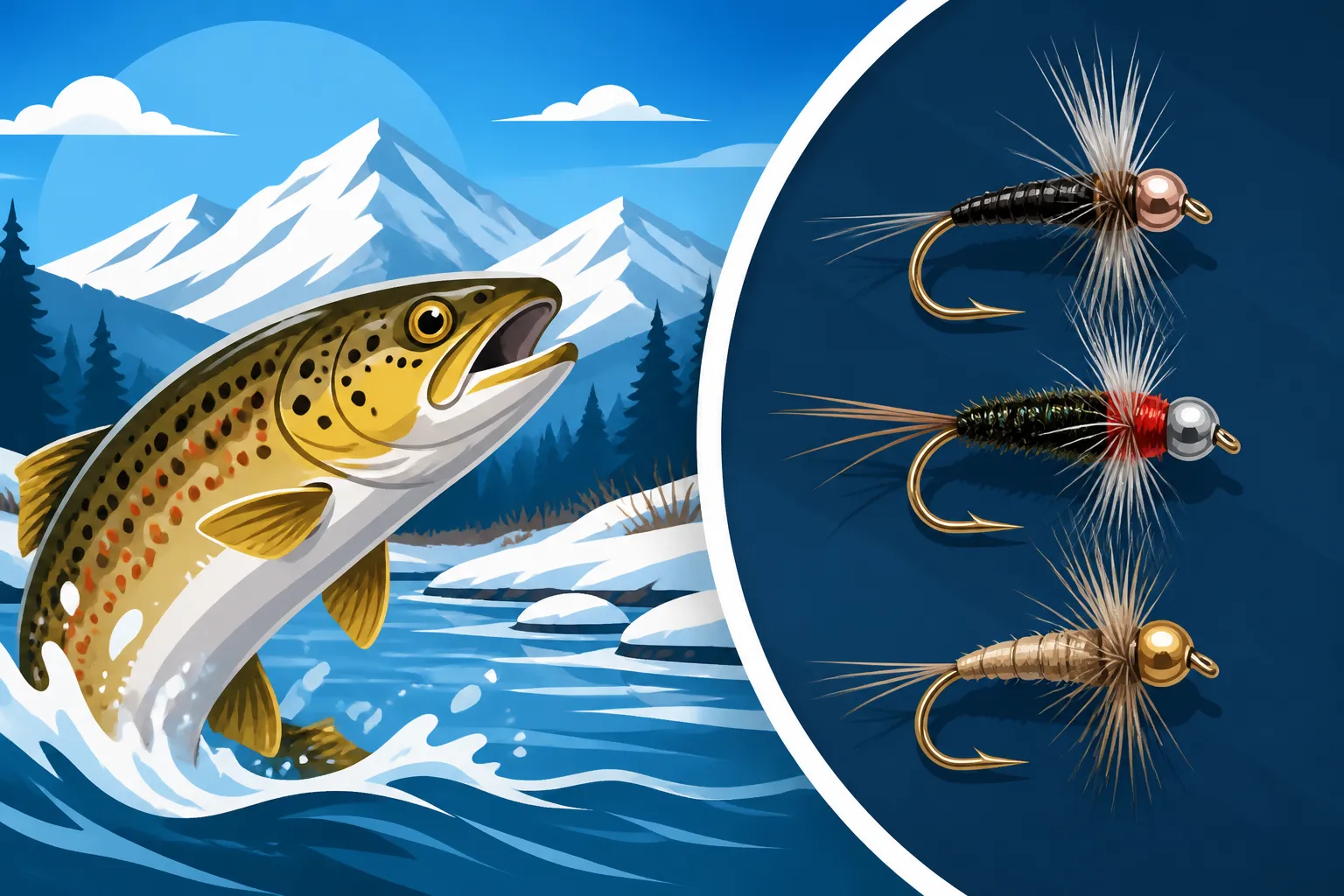
Best Midge Patterns for Colorado Winter Fishing
When the Colorado winter really sets in, many anglers pack away their rods, thinking the fishing is too tough. But those in the know understand that winter can offer some of the most rewarding, albeit challenging, fly fishing of the year. The trick often comes down to mastering the subtle art of midge fishing, because these tiny insects become the primary food source for trout when other hatches are scarce. This guide will walk you through the best midge patterns to tie on for success on Colorado's cold-weather waters.
Why Midges are King in Colorado Winter
As the air temperature drops and water cools significantly, the insect world slows down dramatically. Gone are the prolific stonefly and caddis hatches of summer, and even the larger mayflies become less common. But midges, those tiny, often overlooked dipterans, thrive. They are incredibly resilient and can complete their life cycle even in frigid water, making them a consistent and abundant food source for hungry trout throughout the coldest months.
Understanding the Midge Life Cycle in Winter
To effectively fish midges, you need to appreciate their full life cycle and how trout interact with each stage. Unlike many insects with distinct, short-lived hatches, midges are almost always present in the water column.
- Larval Stage: Midge larvae are worm-like and typically reside in the substrate. They come in a variety of colors, from pale white to olive, brown, and the famously effective "blood red" (hemoglobin-rich larvae). These are slow-moving and represent an easy meal for trout hunkered down on the bottom. Fishing these deep and slow is key.
- Pupal Stage: As they prepare to emerge, midge larvae transform into pupae, which are much more active. They ascend slowly through the water column, often suspended, making them highly vulnerable. This stage is crucial, as trout frequently key in on these rising insects. Pupae typically have distinct segmented bodies and often a small "shuck" or wing case developing on their backs.
- Adult Stage: Once they reach the surface, pupae shed their shucks and emerge as tiny adult midges. These often gather in dense clusters on the water's surface, especially on calmer, sunnier days. Trout will sip these adults, often with incredibly subtle rises, making them a challenge to spot and present to. Sometimes, dead or "crippled" adults that couldn't quite escape their shuck also become easy targets.
Understanding these stages allows you to select the right pattern and present it in a way that mimics the natural insect's behavior, drastically improving your chances of success.
How Trout Key In on Tiny Winter Food
In winter, trout metabolism slows down considerably due to the cold water. They become less inclined to chase large, fast-moving prey. Instead, they conserve energy and prefer a steady diet of easily digestible, readily available food. Midges fit this bill perfectly. Their small size means trout don't have to expend much energy to consume them, and their constant presence ensures a reliable food source.
Trout often congregate in deeper, slower pools and runs during winter, seeking thermal refuge and areas where food drifts directly to them. This is where midge patterns truly shine. A trout might not move far for a single, large nymph, but it will often gently sip or subtly shift to intercept a steady stream of tiny midge larvae or pupae drifting right into its feeding lane. This behavior means your presentation needs to be impeccable, with dead drifts and precise depth control, especially in tailwaters where trout can become incredibly selective. If you're looking for more comprehensive details on how trout behave and how to approach them, our guide on Reading Water on a Colorado Freestone River can offer valuable insights.
Essential Midge Larva and Pupa Patterns
When it comes to winter fishing in Colorado, subsurface midge patterns are often your bread and butter. Trout spend most of their time feeding on larvae and pupae in the water column or along the bottom.
Classic Larva Imitations
These patterns are designed to mimic the early stages of the midge's life cycle, which are usually found near the riverbed. They are often simple in construction but incredibly effective.
- Blood Midge Larva: This pattern, often tied with red thread or wire over a thin body, is a dead ringer for the hemoglobin-rich midge larvae sometimes called "bloodworms." These worms are a staple for trout in many tailwaters, especially where there's plenty of organic matter in the substrate. Fish them in sizes #18 to #24, sometimes even smaller, and focus on getting them deep into slow-moving water. The key is to mimic their slow, almost static drift. You can find pre-tied patterns or the essential tying materials, like small wire and hooks, on platforms like Amazon if your local fly shop is out of stock.
- Zebra Midge: Perhaps the most famous and effective midge pattern out there, the Zebra Midge is a must-have in every Colorado angler's box. It's typically tied with a tungsten or brass bead head, a black or red thread body, and fine silver wire wrapped to create segmentation. The bead helps it sink quickly, which is crucial for reaching deeper feeding lanes. Common sizes range from #16 down to #26. While black and silver/black and red are classics, don't shy away from olive, brown, or even purple variations. Rigging these in a tandem nymph setup, with one heavier and one lighter, is a common and productive strategy. For more on these setups, check out our piece on Nymphing Techniques for Colorado Tailwaters.
- Discreet Larva/Simple Wire Patterns: Sometimes, the less "busy" the fly, the better. Patterns that simply feature a wire body (copper, silver, gold, black, red) wrapped on a hook, perhaps with a small bead, can be deadly. These imitate the natural, understated look of midge larvae. Experiment with different colors and sizes. Often, an unexpected color like a hot pink or chartreuse wire pattern can sometimes illicit a strike when traditional colors fail, possibly mimicking a stressed or injured midge.
Emerger and Pupa Go-Tos
As midges begin their journey from the bottom to the surface, they enter the pupal and emerger stages. These are prime targets for trout, as the insects are vulnerable and often struggling.
- JuJuBee Midge: This pattern is a fantastic imitation of a midge pupa. It often features a thin, segmented body (sometimes bi-colored) and a small, often clear or grey, wing pad to suggest emergence. The JuJuBee Midge is usually tied on a curved hook, mimicking the natural arch of a pupa. Popular colors include black, red, olive, and brown, in sizes #18 to #24. Fishing this as your trailing fly in a two-nymph rig, just above a heavier larva pattern, can be incredibly effective.
- Top Secret Midge: Similar to the JuJuBee in its effectiveness, the Top Secret Midge often has a black biot body for segmentation and a flash of peacock herl for the thorax, giving it a subtle buggy look. It’s a very clean, realistic imitation of a midge pupa. This pattern is particularly useful in clear, slow-moving water where trout have ample time to inspect your fly. Sizes #20 to #26 are common, and often an even smaller pattern will entice a wary fish.
- Brassies and Mercury Midges: These are simple, yet highly effective pupa patterns. A Brassie is essentially a wire-bodied fly, often with a hint of thread or dubbing for a thorax. The Mercury Midge adds a small, clear or colored bead (often glass or plastic) at the head, mimicking the gas bubble that helps pupae rise to the surface. Both are great "search patterns" when you're not sure exactly what color or stage the fish are keying on. They offer a strong profile and good sink rate. For insights on appropriate leader and tippet for these tiny flies, our article on How Fine a Tippet You Need for Selective Tailwater Trout is highly recommended.
- RS2 (Rimrock Scud 2): While not exclusively a midge pattern, the RS2 (especially in black, grey, or olive) excels at imitating midge emergers and cripples. It has a sparse hackle and often a small tuft of CDC or antron for a wing, suggesting an insect struggling to break free from the surface film. It’s versatile and a proven fish-catcher, especially when suspended just below the surface in calmer water. Sizes #18 to #24 are standard.
Top Midge Dry Fly and Cripple Patterns
While most winter midge fishing is subsurface, don't dismiss the possibility of dry fly action, especially on those rare, warm, sunny winter days or in very calm sections of water.
Tiny Adult Midge Dries
When a steady stream of adult midges gathers on the surface, or when a dense "midge ball" is forming, trout will often rise to them. These rises can be maddeningly subtle – sometimes just a dimple or a slight swirl – but they present an exciting challenge.
- Griffith's Gnat: This classic pattern, tied with peacock herl and grizzly hackle, is designed to imitate a cluster of adult midges. Trout often prefer to eat a ball of tiny insects rather than expend energy on individual ones. The Griffith's Gnat floats well and has a buggy profile that can fool selective fish. Sizes #18 to #24 are typical, but carrying a few in #16 can imitate particularly dense clusters.
- Parachute Adams (small sizes): While primarily a mayfly imitation, a Parachute Adams in sizes #20 or #22 can effectively mimic a single adult midge, especially one with a broken wing. Its upright white parachute post makes it surprisingly easy to track on the water, which is a huge advantage when fishing tiny dry flies in low light or glare.
- CDC Midge Adults: Patterns tied almost exclusively with CDC (Cul de Canard) feathers are incredibly buoyant and realistic, riding low in the surface film. These flies, often tied sparsely in black or grey, provide a very natural imitation of a single adult midge. They can be incredibly effective for selective fish but require delicate casting and presentation.
Cripples and Stillwater Specialties
Sometimes trout key in on midges that aren't fully emerged or are struggling in the surface film. These "cripples" are easy meals and excellent patterns to present in slower pools or stillwater environments.
- Mole Fly/Bubble Back Midge: These patterns feature a clear or translucent "bubble" or "shuck" of material over the back, imitating the gas bubble that helps the pupa rise and the discarded shuck of an emerger. They often have a sparse wing or hackle to suggest a struggling adult. These are best fished in the surface film or just below it, often on a long, fine leader.
- Snowshoe Midge: Similar to the Griffith's Gnat but often tied with snowshoe rabbit fur, this pattern is designed to imitate either a single large adult midge or a small cluster. The snowshoe rabbit fur offers great buoyancy and a natural texture.
- Puff Daddy/Barr Emerger: These are often tied with a segmented body and a large, visible white or light-colored wing bud of antron or Z-lon. They are fantastic at imitating midges that are actively emerging. Fish these just below the surface, often as the lead fly in a two-fly dry-dropper rig, with a tiny larva hanging off it.
Rigging and Presentation for Winter Midges
Having the right patterns is only half the battle. Your rigging and presentation in cold winter water are just as, if not more, critical. Trout are lethargic and easily spooked, so subtlety is paramount.
Nymphing Rigs for Deep Runs
For most winter midge fishing, especially on rivers and tailwaters like the Fryingpan River below Ruedi Reservoir, a nymphing rig will be your most productive setup.
- Indicator Nymphing: This is the most common method. You'll typically use a strike indicator (small, sensitive, and lightweight is best) set about 1.5 to 2 times the water depth from your first fly. Your leader should be long and thin. Starting with a 9-foot, 5X or 6X leader, then adding 2-3 feet of 6X or 7X fluorocarbon tippet is a good baseline. Many anglers find success using a combination of a heavier point fly (like a larger Zebra Midge or a small stonefly pattern, if allowed) and a lighter, smaller midge pattern (like a JuJuBee or Blood Midge) trailing 12-18 inches behind it. This ensures your flies get down quickly and stay in the feeding zone. For detailed guidance on setting up these rigs, refer to our article on How to Set Up a Nymph Rig for a Deep Tailwater Run.
- Weighting: Small split shot or tin putty is often necessary to get your flies down. Place it 6-12 inches above your first fly. Adjust the amount of weight until your indicator drifts naturally without dragging but still ticks the bottom occasionally. The goal is a completely drag-free drift that mimics a natural insect. Keep your flies close to the bottom where trout are holding.
- Tippet Size: This cannot be overstressed for winter midges. Trout in clear, cold water are incredibly line-shy. Using 6X or even 7X fluorocarbon tippet is usually essential. Fluorocarbon is less visible in water and sinks, helping your tiny flies get down. While delicate, it also has good abrasion resistance. For more on this, check out Best Leader Length for Clear Tailwater Water.
Dry Fly Presentation in Winter
If you're lucky enough to encounter rising fish on a calm, sunny winter day, your dry fly presentation needs to be flawless.
- Delicate Casts: Cast upstream and slightly across, allowing your fly to drift naturally over the rising fish. Avoid splashing the water or creating false casts over the fish.
- Long Leaders: A 12-foot 6X or 7X leader is often necessary to minimize drag and keep your fly floating naturally for as long as possible.
- Reading Subtle Takes: Winter rises to midges can be incredibly soft. Look for a dimple, a subtle swirl, or even just a brief disappearance of your fly. Set the hook gently with a lift of the rod, rather than a strong strip-set. Patience and sharp eyesight are key. You'll also want to consider the overall conditions that affect these delicate takes, which you can learn more about in Midge Fishing in Colorado Winters.
Matching Size and Color to the Hatch
Observation is your most powerful tool. Before you even tie on a fly, take some time to watch the water.
- Look for Natural Activity: Are there any adult midges flying around? Do you see small rises on the water? If so, what do the rings look like? Small, gentle sips indicate tiny adults.
- Check Rocks and Stream Banks: Pick up a few rocks or sweep a net through the water to see what larvae or pupae are present. This will give you clues about dominant colors and sizes.
- Start Small and Simple: When in doubt, start with a black or red Zebra Midge in a size #20 or #22, fished deep. This covers a large percentage of winter midge situations. If that's not working, switch up your colors (olive, brown, purple) and sizes, going both smaller and slightly larger.
- Adjust to Conditions: On bright, sunny days, sometimes flashier patterns (like a Mercury Midge with a shiny bead) can attract attention. On cloudy days, more subdued or translucent patterns might be better. And don't forget that even subtle changes in water temperature can drastically affect trout feeding, as explained in What Water Temperature Affects Trout Feeding.
| Midge Pattern | Life Cycle Stage Imitated | Common Colors | Recommended Sizes | Notes |
|---|---|---|---|---|
| Zebra Midge | Larva, Pupa | Black, Red, Olive | #16 – #26 | Bead-head for depth; staple for all winter nymphing. |
| Blood Midge Larva | Larva | Red, Burgundy | #18 – #26 | Effective in slow, deep water, especially tailwaters. |
| JuJuBee Midge | Pupa, Emerger | Black, Red, Olive | #18 – #24 | Often tied on a curved hook, great trailing nymph. |
| Top Secret Midge | Pupa, Emerger | Black, Grey, Olive | #20 – #26 | Realistic, sparse, good for clear water and selective trout. |
| Brassie / Mercury Midge | Pupa | Copper, Silver, Gold | #18 – #24 | Simple, heavy, good search pattern, Mercury adds "bubble" effect. |
| RS2 | Emerger, Cripple | Black, Grey, Olive | #18 – #24 | Versatile, can be fished subsurface or in the film. |
| Griffith's Gnat | Adult Cluster | Black/Grizzly | #16 – #24 | Best for mimicking clusters of adults on the surface. |
| CDC Midge Adult | Single Adult | Black, Grey | #20 – #26 | Highly realistic, low-floating, for very selective risers. |
Ultimately, successful winter midge fishing in Colorado is a game of patience, observation, and meticulous presentation. Don't be afraid to experiment with different patterns, depths, and weights. Keep your tippet fine, your drifts natural, and your eyes peeled for those subtle takes. Winter fishing offers a unique beauty and a rewarding challenge that makes those hard-earned fish all the more satisfying.
Disclaimer
Fishing conditions and regulations in Colorado can change. Always consult the most current Colorado Parks and Wildlife (CPW) regulations before heading out to fish. This guide provides general information and recommendations, but it is your responsibility to be aware of and adhere to all local rules and laws.