Best Technique for Fishing Deep Reservoir Structure
There's nothing quite like the immense beauty of Colorado's reservoirs, with their vast, often crystal-clear waters stretching for miles, but that sheer size can also be incredibly intimidating for anglers. When the fish aren't cruising the shallows or chasing surface flies, they've often retreated to the hidden world of deep reservoir structure. This guide is here to unravel the mystery of those depths, helping you understand where fish hide and how to effectively present your offerings to them in these challenging, yet incredibly rewarding, environments.
Decoding Colorado's Deep Reservoir Structures
Fishing deep reservoirs in Colorado can feel like searching for a needle in a haystack if you don't understand the "haystack" itself. These aren't just big bathtubs; they're complex underwater landscapes with contours, features, and hidden zones that attract and hold fish. Knowing what to look for is the first step to success.
What Exactly is "Deep Structure"?
When we talk about deep structure in a reservoir, we're not just talking about the bottom. We're referring to any irregularity on the lakebed that provides cover, ambush points, or transitions in depth. Think of it like an underwater cityscape. This can include a wide array of features, both natural and man-made.
Naturally, you'll find submerged rock piles, ledges, drop-offs, and old creek channels that wound their way through the valley before it was flooded. These features offer fish changes in depth and current, places to hide from predators, or areas where baitfish might congregate. For instance, a steep bank that continues underwater as a sharp drop-off can be a highway for cruising fish. On the other hand, the remnants of old trees, often called standing timber or brush piles, provide critical overhead cover and oxygenation points that attract many species.
Man-made structures are equally important. These often include old roadbeds, submerged building foundations, fence lines, and even old stock ponds or farm equipment that were left behind when the reservoir was created. These hard edges and artificial features can be absolute magnets for fish, especially predatory species looking for an easy meal. Imagine an old barn foundation with submerged walls; those walls create perfect ambushing opportunities for a big lake trout or walleye. Exploring different types of underwater features can dramatically increase your chances of finding fish, and understanding How to Find Drop-Offs on a Colorado Reservoir can give you a significant advantage.
Why Fish Hold to Deep Structure
Fish are creatures of habit and efficiency. They gravitate towards deep structure for several key reasons, all centered around survival and sustenance. First and foremost, structure provides cover and protection. In clear Colorado waters, fish need places to hide from overhead predators like eagles and ospreys, and from anglers, too! The shadows and physical barriers offered by rock piles or submerged timber give them a sense of security.
Secondly, deep structure often concentrates baitfish. Smaller fish, in turn, seek refuge or food sources associated with these underwater features, creating a ready buffet for larger predatory species like lake trout, walleye, and even big brown trout. When you find a school of baitfish suspended over a submerged creek channel, you can bet there are bigger fish lurking nearby, waiting for an opportunity to strike.
Water temperature and oxygen levels also play a crucial role. During the warmer summer months, the surface water of many reservoirs heats up significantly, and the oxygen content can decrease. Fish, being cold-blooded, will seek out deeper, cooler water where oxygen levels are more stable and comfortable. Structure in these deeper zones becomes prime real estate. Conversely, during colder months or at certain times of the year, specific structures might retain heat or provide current breaks that make them more appealing. Understanding How Water Temperature Affects Trout Feeding is critical for year-round success.
Equipping for the Deep: Gear and Electronics
Tackling deep reservoir structure requires a specialized approach, and that starts with your gear. You can't just use your lightweight stream setup and expect to be successful. We're talking about heavier lines, sensitive rods, and, crucially, electronics that act as your eyes below the surface.
Rods, Reels, and Line for Depth
When fishing deep, you need gear that can handle the increased weight of heavy lures, resist the drag of deeper water, and still transmit subtle bites. For rods, a medium-heavy to heavy power rod with a fast or extra-fast action is usually ideal. This allows for powerful hook sets at depth and the backbone to fight larger fish that might be holding tight to structure. Length can vary, but typically 7 to 8 feet is a good range, offering good casting distance and leverage. Brands like St. Croix or Fenwick offer excellent options that you can often find on Amazon.
Your reel needs to be robust and have a good drag system. A baitcasting reel is often preferred for precision drops and better line control, especially when using heavier jigs or large spoons. For spinning setups, look for a larger spool and a strong retrieve ratio. You'll be reeling in a lot of line, sometimes with a heavy load, so durability is key.
Line choice is paramount. Braided line is almost always the go-to for deep water. Its lack of stretch provides unparalleled sensitivity, allowing you to feel every bump, rock, and subtle bite, even hundreds of feet down. It also cuts through the water better than mono, reducing resistance. A 20-30lb test braid is a good starting point, often paired with a fluorocarbon leader of 10-20lb test. The fluorocarbon leader offers invisibility in clear water and a bit of abrasion resistance against structure. Remember to periodically check your leader for nicks and re-tie as needed.
Lures and Baits Designed for Deep Water
The lures you choose for deep water need to get down to the fish efficiently and mimic the forage found in those depths. Heavy jigs are a staple. Think about vertical jigs designed for lake trout, or football jigs for walleye and bass, often weighing from 1/2 ounce up to several ounces depending on depth and current. These jigs are designed to be worked directly over the structure, imitating baitfish or crawfish. Pairing them with soft plastic trailers, grub bodies, or even dead bait can make them even more enticing.
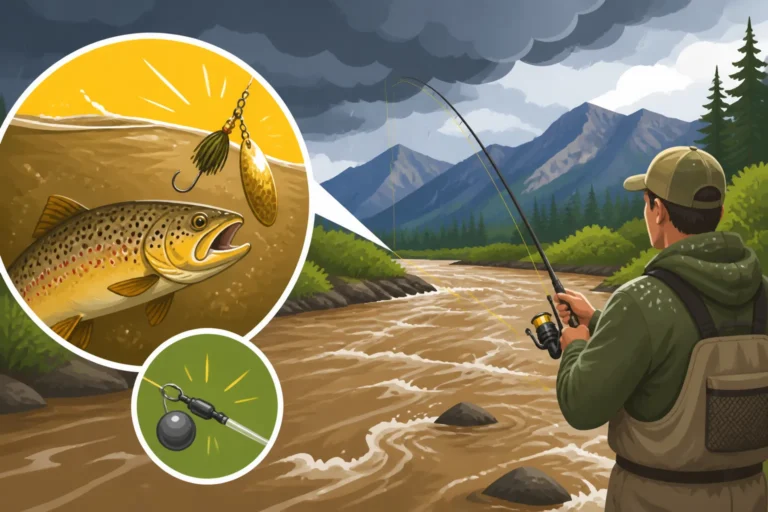
Spoons, especially slab spoons or flutter spoons, are incredibly effective. Their erratic fall often triggers reaction strikes from suspended fish or those tucked tight to structure. Colors vary, but natural baitfish patterns, white, silver, and gold are often good starting points. Brands like Luhr-Jensen or Northland Tackle make excellent deep-water spoons that you can readily find at most tackle shops or even on Amazon.
Deep-diving crankbaits are another excellent option, especially for covering broad areas of structure. These lures are designed to dive quickly and run at specific depths, allowing you to "crash" them into submerged rock piles or ledges, often triggering strikes. Look for models with long bills and heavy bodies. When trolling, these can be especially effective. If you're targeting specific depths, understanding How Deep to Troll for Kokanee at Blue Mesa or lake trout will guide your selection.
Lastly, live bait, such as shiners, sucker meat, or nightcrawlers, fished on a drop shot rig or a three-way swivel rig, can be deadly when fish are finicky. The natural scent and movement are often irresistible.
Electronics: Your Eyes Beneath the Surface
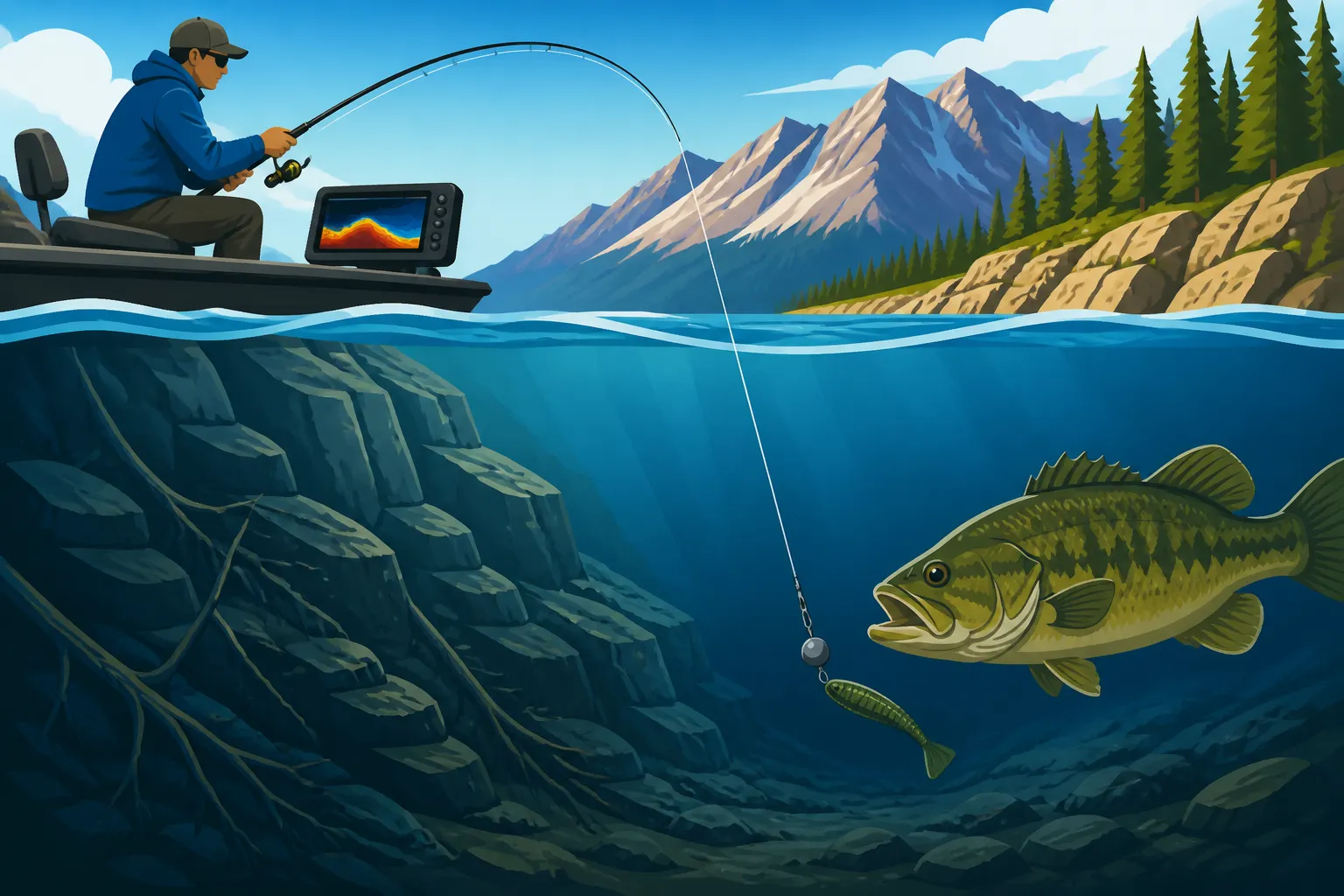
This is arguably the most crucial piece of gear for deep reservoir structure fishing. Without a reliable fish finder or sonar unit, you're truly fishing blind. Modern units offer incredible capabilities, from down imaging and side imaging to high-definition 2D sonar.
Your fish finder allows you to:
- Locate Structure: Identify those submerged creek beds, rock piles, ledges, and timber that fish relate to.
- Mark Fish: See individual fish or schools of baitfish, often distinguishing between larger and smaller targets.
- Gauge Depth and Bottom Composition: Understand how deep you are and whether the bottom is soft mud, hard rock, or gravel.
- Monitor Water Temperature: Crucial for finding the comfortable zone for specific species.
- Track Your Lure: With good enough sensitivity, you can often see your lure descend and even watch how fish react to it.
Brands like Lowrance, Humminbird, and Garmin offer a range of units suitable for different budgets and needs. When you're out there, you'll want to adjust your Best Sonar Settings for Locating Lake Trout or other species to get the clearest picture. High-definition mapping with contour lines is also invaluable; many units come pre-loaded or allow you to download detailed lake maps, which can reveal structure before you even get on the water.
Mastering Deep Water Techniques
Once you've identified the structure and have your gear ready, it's time to put some techniques into action. Fishing deep isn't about aimless casting; it's a methodical process of presenting your lure precisely where the fish are holding.
Vertical Jigging: A Direct Approach
Vertical jigging is perhaps the most direct and effective way to target fish holding tightly to deep structure. It involves positioning your boat directly over the desired structure, dropping your jig or spoon straight down, and working it with a series of lifts, drops, and pauses.
The key here is boat control. Using a trolling motor with GPS Spot-Lock capabilities is a game-changer, allowing you to stay precisely on top of a submerged rock pile or a specific point on a ledge, even in windy conditions. Without it, you'll be constantly correcting your drift.
Once your lure is at the desired depth (which your fish finder will confirm), use subtle rod movements. A typical jigging cadence might involve a sharp lift of the rod tip, followed by a controlled fall, letting the lure flutter or glide back down. Many bites occur on the fall, so pay close attention to any slack in your line or unusual taps. Vary your retrieve speed and intensity until you find what triggers a strike. This technique is particularly deadly for species like lake trout and walleye that ambush prey from below. For specific species, Jigging for Lake Trout Through the Ice uses similar principles, just in a different medium.
Drop Shotting: Finesse in the Depths
When fish are finicky, or when you need a more subtle presentation, drop shotting is an incredible deep-water finesse technique. The drop shot rig allows your bait to be presented horizontally at a specific depth, just off the bottom or suspended over structure, while a weight keeps it in place.
To set up a drop shot, tie your hook (often an Octopus or wide-gap hook) directly to your main line or leader, leaving a tag end of line below it. Then, tie a specialized drop shot weight to that tag end. The length of the tag end determines how high your bait sits off the bottom. If fish are suspended 5 feet off a ledge, you can adjust your weight accordingly.
The beauty of the drop shot is that your bait stays in the strike zone longer, and you can impart subtle movements to it with minimal rod tip twitches, making it appear very natural. This is fantastic for pressured fish or when dealing with clear water. For instance, if you mark trout hugging the bottom of a deep channel at 60 feet, a drop-shotted minnow or soft plastic bait presented just above them can often tempt a bite when other methods fail. You can buy pre-tied drop shot leaders or the components on Amazon to build your own.
Deep Trolling: Covering Water
Deep trolling is an effective strategy for covering large areas of a reservoir and finding active fish, particularly suspended ones, or those cruising along vast deep structures like old roadbeds or extended ledges. This involves slowly moving your boat while trailing lures at specific depths.
Various tools can help you achieve depth while trolling:
- Downriggers: These are mechanical devices that use a heavy weight (cannonball) to carry your fishing line and lure down to a precise depth. When a fish bites, the line releases from a clip, allowing you to fight the fish directly.
- Diving Planers or Discs: These attach to your line and dive to a set depth depending on their size and retrieve speed, taking your lure with them.
- Lead Core Line: This specialized line has a lead core wrapped in a braided sheath. Each color segment (typically 10 yards) adds a certain amount of depth when trolled, allowing you to estimate your lure's running depth.
- Deep-Diving Crankbaits: As mentioned, these lures are designed to get deep on their own.
Trolling speed, lure type, and how much line you let out all influence the running depth of your presentation. Experimentation is key. For example, when Trolling for Kokanee Salmon in Colorado at a reservoir like Blue Mesa, you'll often use downriggers to get small kokanee dodgers and hoochies down to their preferred depth, sometimes 50-80 feet or more. Keep an eye on your fish finder to identify suspended schools of baitfish or predators, and then adjust your trolling depth accordingly. More general information on Trolling Techniques for Colorado Reservoirs can help fine-tune your approach.
Casting and Retrieving for Structure
While vertical jigging and trolling are highly effective, don't underestimate the power of casting and retrieving, especially when working specific points, submerged islands, or along the edges of steep drop-offs. This technique allows for a more varied presentation and can be less intimidating for anglers without advanced boat control.
Use lures that cast well and sink relatively quickly, such as heavy spoons, swimbaits rigged on jig heads, or even large spinnerbaits. Cast beyond your target structure and allow the lure to sink, counting it down to estimate depth. As you retrieve, try to maintain contact with the bottom or bounce the lure off the structure. The idea is to trigger a reaction strike as your lure appears to be fleeing or feeding.
This method works well when you want to explore the contours of a submerged point or a rocky reef. You can fan-cast around the feature, varying your retrieve direction and depth, until you find where the fish are holding. This can be particularly effective for brown trout and rainbow trout that might be cruising the edges of structure in slightly shallower deep water.
Reading the Signs: Interpreting Electronics and Water Conditions
Even with the best gear and techniques, deep water fishing success hinges on your ability to interpret what's happening beneath the surface. Your fish finder isn't just showing you squiggles; it's telling a story about the underwater world.
Interpreting Sonar and Fish Finders
Understanding your fish finder display is paramount. Here's a quick rundown of what to look for:
- Bottom Contour: Look at the shape of the bottom. Are there sudden drops, humps, or gradual slopes? These are your structures. A hard, jagged bottom usually indicates rock, while a softer, smoother bottom is likely mud.
- Arches vs. Lines: On 2D sonar, fish often show up as arches. A strong, well-formed arch typically indicates a larger fish directly under your transducer. Smaller arches or lines might be smaller fish or fish that are on the edge of the sonar cone.
- Suspended Fish: Don't always look at the bottom. Fish, especially kokanee salmon, rainbow trout, and even lake trout, will often suspend in the water column, often relating to baitfish schools or thermoclines. Look for those arches or blobs away from the bottom.
- Baitfish Schools: These usually appear as dense clouds or balls on your sonar. Where there's bait, there are usually predators.
- Thermocline: Some advanced units will show you the thermocline, which is a layer of water where the temperature changes rapidly. This is often where fish, particularly in summer, will stack up, as it represents a comfortable temperature and oxygen zone.
Spend time learning what different readouts mean. Many units have a simulator mode you can play with at home. The more you use it, the better you'll become at translating those signals into actionable fishing intelligence. For a deeper dive into this, check out How to Read Colorado's Fishing Regulations Brochure, which often includes tips on using technology.
Understanding Thermoclines and Oxygen Levels
The thermocline is a critical concept for deep water fishing, especially during the warmer months. As reservoirs stratify (form layers) in summer, a distinct band forms where warm, oxygen-rich surface water meets colder, denser deep water. Below this thermocline, oxygen levels often drop significantly.
Fish need oxygen, so they will typically be found at or above the thermocline. Even if your sonar shows fish below it, they might be lethargic or just passing through. Knowing the depth of the thermocline tells you the lowest comfortable depth for most fish species. You can sometimes detect the thermocline as a distinct band on your sonar where fish tend to stack up. This knowledge helps you focus your efforts on the productive depths rather than wasting time in oxygen-depleted zones.
Understanding these underlying water conditions adds another layer to your strategy. If you're fishing a deep reservoir like Fishing Colorado's Blue Mesa Reservoir, for instance, knowing the thermocline depth can be the difference between a slow day and landing a trophy Lake Trout Fishing in Colorado.
Here's a quick comparison of popular deep-water techniques:
| Technique | Primary Target Species | Key Gear | Ideal Conditions | Pros | Cons |
|---|---|---|---|---|---|
| Vertical Jigging | Lake Trout, Walleye, Bass, Brown Trout | Heavy Jigs/Spoons, Braided Line | Directly over structure, calmer winds | Precise presentation, excellent for active fish | Requires good boat control, limited coverage |
| Drop Shotting | Finicky Trout, Walleye, Bass | Finesse Baits, Light Weights, Fluorocarbon | Clear water, pressured fish | Natural presentation, bait stays in strike zone | Slower retrieve, can be tedious for covering ground |
| Deep Trolling | Kokanee Salmon, Lake Trout, Walleye, Pike | Downriggers, Diving Planers, Deep Crankbaits | Large open water, searching for suspended fish | Covers vast areas, good for finding active schools | Less direct "feel" for bites, requires specialized boat gear |
| Casting & Retrieve | Trout, Bass, Walleye, Pike | Heavy Spoons, Swimbaits, Deep Crankbaits | Structure edges, points, varied depths | Versatile, good for exploring unknown structure | Can snag easily in heavy cover, less depth control |
Deep reservoir structure fishing can be challenging, but it's also incredibly rewarding. By understanding the underwater landscape, equipping yourself with the right tools, and applying these proven techniques, you'll unlock a whole new dimension of fishing in Colorado's stunning reservoirs. Good luck out there!
Disclaimer
This article is for general informational purposes only and does not constitute professional advice. Laws, prices and regulations vary by location and change over time. Consult a qualified professional for guidance on your specific situation.