Best Way to Fish a Foam Hopper Pattern in Late Summer
Late summer in Colorado can be a tricky time for anglers. The spring runoff has long subsided, the rivers are often running clearer and lower, and the fish, particularly our wily trout, have seen just about every fly pattern under the sun. It’s easy to get frustrated when your usual go-to flies aren't producing. But fear not, because this is precisely when the foam hopper pattern becomes your secret weapon, offering a tantalizing, high-protein meal that trout just can't resist. This guide will walk you through the nuances of effectively fishing foam hoppers to make your late summer trips a resounding success.
Why Hoppers Dominate Late Summer Fishing
As the long, hot days of July fade into August and September, a subtle but significant shift occurs in the Colorado high country and along our beloved rivers. The water temperatures, while still warm, begin their slow descent, and the landscape around the rivers bustles with life. This is prime time for terrestrials, especially grasshoppers. They become a primary food source for trout, which have spent all summer growing fat and sassy on various aquatic insect hatches.
The Annual Grasshopper Migration
Imagine it: the sun beats down on the dry banks, the grass is tall and inviting, and hundreds, if not thousands, of grasshoppers are buzzing, jumping, and often, accidentally, launching themselves into the cool river below. Trout, being opportunistic predators, quickly key into this readily available protein source. They know that a big, juicy hopper falling from the bank represents a substantial meal, much more so than a tiny mayfly. This phenomenon is often referred to as a "terrestrial bite" or "hopper season," and it's a window of opportunity you don't want to miss.
Unlike aquatic insects, whose hatches are often specific to certain times of day or conditions, grasshoppers are prevalent throughout the warmer parts of the day. This means trout are frequently looking up, scanning the surface for their next crunchy snack. When you know When Grasshopper Season Peaks on Colorado Rivers, you can really dial in your approach. This behavior makes dry fly fishing with a hopper incredibly exciting, as strikes are often explosive and visually thrilling. The fish are less subtle in their takes, crashing the surface with an enthusiasm you might not see with smaller, more delicate patterns.
Trout Behavior in Warmer Water
During late summer, river temperatures tend to be higher than in spring or fall. While not usually critically high in our mountain streams, these warmer conditions can make trout a bit more lethargic in the deeper, slower sections. However, the edges and faster riffles, especially those with good bankside cover, become prime holding lies. This is where trout can find cooler, oxygenated water, and critically, where they expect to see terrestrials falling in.
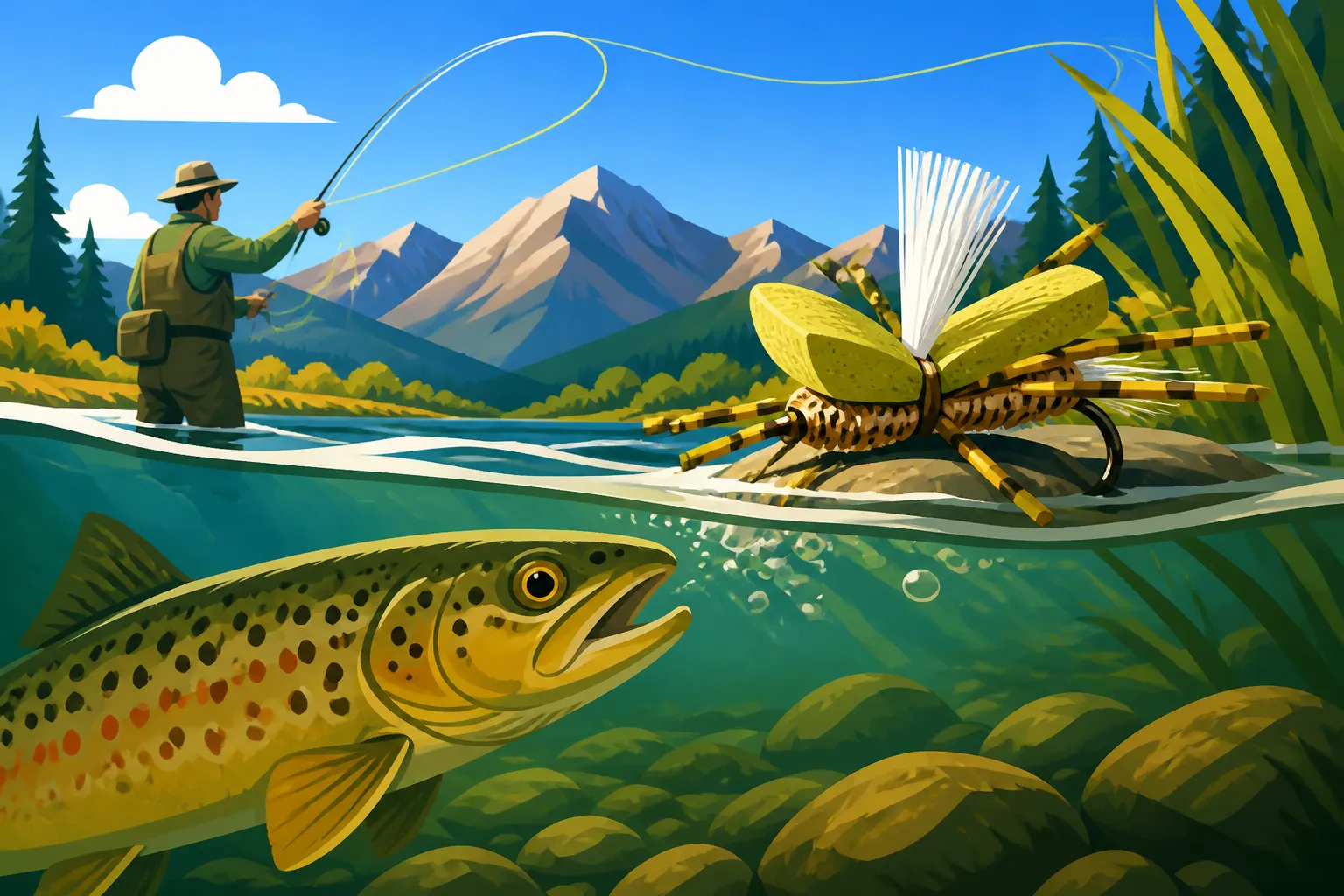
This change in behavior plays right into the foam hopper's strengths. Trout will often move into the shallower, faster water near the banks specifically to feed on hoppers. This allows you to target them in areas that might be less productive during other times of the year. Think about those beautiful, shaded undercut banks or the turbulent water where a willow branch hangs low – these are absolute hotspots for hopper-hungry trout. Your goal is to deliver that irresistible meal right into their strike zone, mimicking a natural, albeit accidental, fall from the bank.
Choosing and Rigging Your Hopper Pattern
When it comes to foam hoppers, variety is key. There's no single "best" pattern, as different rivers, light conditions, and even individual trout preferences can dictate success. However, understanding the characteristics of various foam hoppers and how to rig them properly will significantly increase your chances.
Popular Foam Hopper Patterns and Their Characteristics
Foam hoppers are designed for buoyancy and durability, making them excellent choices for rough water, windy conditions, and holding up to multiple fish. Here are a few staples you'll want in your fly box:
- The Charlie Boy Hopper: This pattern is a workhorse, known for its excellent flotation due to its dense foam body and prominent post. It's a great choice for faster water or when you want to hang a heavy dropper nymph underneath. Its profile is realistic enough to fool wary trout, and it comes in various colors, with tan and yellow being particularly effective.
- Amy's Ant: While technically a "stonefly" or "ant" imitation, Amy's Ant has a bulky foam body and rubber legs that perfectly mimic a large terrestrial, including a hopper. It sits high on the water and creates a significant disturbance, which can be exactly what you need to grab a trout's attention on a bright, sunny day. The rubber legs provide lifelike movement in the current, adding to its appeal.
- Morrish Hopper: This pattern is renowned for its realistic profile and excellent fish-catching ability. It often features a segmented foam body and carefully placed legs that give it a very natural look. It's a fantastic pattern for clearer, slower water where trout might be a bit more discerning, but it still maintains enough buoyancy for a dropper.
- Chubby Chernobyl: This is the big daddy of foam terrestrials. While often thought of as a stonefly, its large, buggy profile and incredible buoyancy make it a fantastic hopper imitation, especially when you want to present a substantial meal or fish a very heavy dropper. It creates a huge splash, which can sometimes attract fish from surprising distances.
| Foam Hopper Pattern | Key Features | Ideal Conditions | Why Anglers Love It |
|---|---|---|---|
| Charlie Boy | Dense foam body, upright wing/post, rubber legs | Fast water, high-wind, heavy droppers | Excellent flotation, highly visible, durable |
| Amy's Ant | Bulky foam body, rubber legs, realistic profile | Choppy water, clear water (realistic movement) | Significant surface disturbance, lifelike leg action |
| Morrish Hopper | Segmented foam body, realistic legs, natural look | Clearer, slower water, picky trout | Realistic profile, good buoyancy, consistently effective |
| Chubby Chernobyl | Large, bulky foam, often with flashy materials | Big water, strong currents, very heavy droppers | Maximum buoyancy, attracts aggressive takes, highly visible |
When it comes to size, generally, #8 to #12 hooks are a good starting point for Colorado hoppers, but don't shy away from a #6 if you know there are larger fish and larger hoppers in the area. Smaller hoppers, like a #14, can be effective on very clear, low-water streams or for smaller trout. Color-wise, tan, yellow, olive, and even pink or purple (yes, purple!) can be effective. I always make sure I have a good selection in my fly box, often ordered from places like Amazon to make sure I'm stocked up.
The Hopper-Dropper Rig: Your Best Friend
While fishing a foam hopper on its own can be incredibly productive, especially when fish are actively looking up, the "hopper-dropper" rig is often the most consistent and effective approach during late summer. This setup maximizes your chances by presenting two potential food items simultaneously.
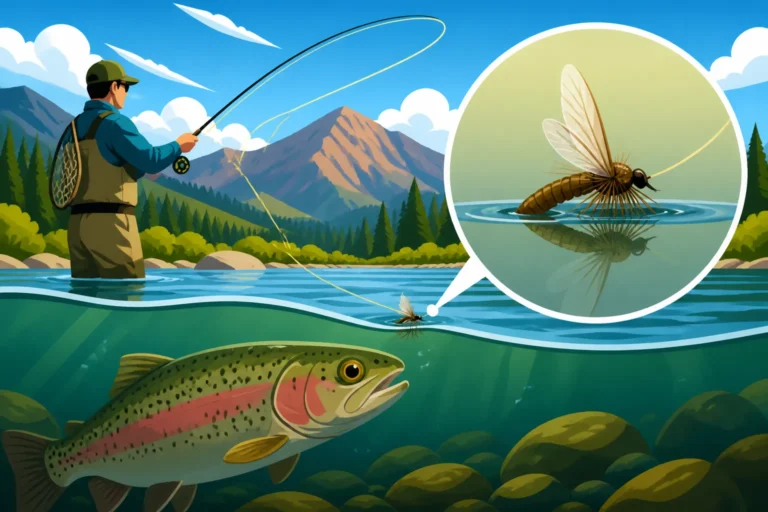
The idea is simple: your buoyant foam hopper acts as your strike indicator, floating high on the surface. Trailing behind it, on a piece of fluorocarbon tippet, is a subsurface nymph that mimics another common food source. This allows you to cover two feeding zones – the surface and the subsurface – with one cast. This is especially useful because even when trout are keying in on hoppers, they often don't pass up an easy nymph. For those learning How to Tie a Dry-Dropper Rig for a Freestone River, it's a fundamental technique.
For your dropper, consider small, general-purpose nymphs that imitate common aquatic insects. Good choices include:
- Pheasant Tail Nymph: A classic imitation of mayfly nymphs. Sizes #16-#20 work well.
- Hare's Ear Nymph: Another versatile pattern that can imitate a variety of aquatic insects. Sizes #16-#20.
- Caddis Larva/Pupa Patterns: Green Rock Worms or LaFontaine's Sparkle Pupa in sizes #14-#18 are excellent, especially in rivers with healthy caddis populations.
- Small Copper John: A flashy attractor nymph that often provokes a strike even when fish aren't actively feeding on anything specific. Sizes #16-#20.
Attach your dropper nymph to the bend of the hopper hook using a clinch knot or an improved clinch knot. The length of your dropper tippet can vary, but generally, 12 to 24 inches is a good starting point. On deeper runs, you might extend it to 36 inches, but remember, the longer the dropper, the harder it is to cast. Your main leader should be sturdy enough to turn over the large hopper, typically a 7.5 to 9-foot leader tapering to 3X or 4X. Then, for the dropper, use a finer fluorocarbon tippet, like 5X or 6X, which is less visible to the fish and helps the nymph sink quickly. This is where understanding Best Leader Length for Clear Tailwater Water can be adapted to freestone river conditions.
Presenting Your Hopper Like a Pro
Now that you've got your perfect foam hopper selected and rigged up, it's time to talk about presentation. This is where many anglers fall short, and it's often the difference between a day of frustration and a day of screaming reels.
Targeted Casting and Landing
Unlike delicate dry fly presentations where you're trying to land a tiny fly feather-lightly, a hopper often benefits from a little "splat." Think about a real grasshopper accidentally falling into the water – it usually makes a bit of a commotion. This splash can actually get a trout's attention, triggering an instinctual predatory response.
Your primary targets should be areas close to the bank, especially where there's overhanging vegetation, undercut banks, or shaded pockets. These are the places where real hoppers fall in, and where opportunistic trout will be waiting. Cast your hopper-dropper rig so that the hopper lands within inches of the bank. Don't be afraid to put it right up against the grass or under those low-hanging branches. Sometimes, the tighter you cast, the better.
- Under Overhangs: Trout love the safety and shade of overhanging willows and bushes. A hopper dropped gently (or with a slight plop) right into these zones is often met with an immediate strike.
- Undercut Banks: These provide perfect ambush points for trout. They can sit in the dark, cool pocket and dart out to intercept anything that floats by.
- Seams and Eddies: Look for the transition lines between fast and slow water, especially near banks. Hoppers that fall into fast water often get swept into these calmer seams where trout hold.
The Art of the Dead Drift and the Subtle Twitch
Once your hopper is on the water, the most important thing is a drag-free drift. This means your fly should float at the same speed as the current, without being pulled unnaturally by your fly line. Drag is the quickest way to put off a wary trout. Learn to Reading Water on a Colorado Freestone River to understand current speeds and how to manage your line.
- Mending: To achieve a dead drift, you'll need to learn how to mend your line. This involves flipping a curve of slack line upstream or downstream to counteract the forces of different current speeds. A good mend allows your hopper to float naturally for longer, increasing its time in the strike zone.
- Watching the Hopper (and the Dropper): Your foam hopper acts as your strike indicator. Any sudden movement, a hesitation, or disappearing act means a fish has likely taken it. Set the hook! But don't forget your dropper. Sometimes, trout will take the nymph, and the only indication will be a slight twitch or dip of your hopper. Be vigilant. If you're using a subsurface nymph, you might also want to understand How to Fish a Nymph Under an Indicator as a separate skill set, but with the hopper, it's all about that top fly.
- The Subtle Twitch: While a dead drift is usually paramount, hoppers can sometimes benefit from a subtle twitch. After a few feet of dead drift, give your rod tip a tiny flick, just enough to make the hopper "shiver" or "jump" slightly on the surface. This can imitate a struggling insect and often triggers an aggressive take from a hesitant trout. Don't overdo it – a gentle twitch is all that's needed. This is particularly effective in slower pools or when you're trying to entice a fish that might be looking but not committing.
Reading the Water and Troubleshooting Your Hopper Strategy
Successfully fishing foam hoppers in late summer isn't just about the fly; it's about understanding the water, adapting to conditions, and knowing when to make a change.
Where to Focus Your Efforts
Colorado's diverse rivers offer a variety of habitats, and knowing where to cast your hopper can make all the difference.
- Freestone Rivers: These are your classic mountain rivers, characterized by rocky bottoms, riffles, runs, and pools. On freestones, focus your efforts on the edges, especially where fast water meets slower seams, or around large rocks and boulders that break up the current. Shaded banks are prime real estate, as are the turbulent pockets below small falls or rapids. The South Platte River near Deckers, or sections of the Arkansas River, are prime examples where hoppers can excel.
- Tailwaters: Rivers that flow out of a dam, like the Fryingpan or the Blue River below Dillon Reservoir, often have more consistent flows and colder water. While hoppers can still be effective, especially if there are grassy banks, the fish here can be more selective due to constant pressure. Here, a more realistic hopper pattern and a longer, more delicate leader might be necessary. However, the hopper-dropper is still a very strong option.
- High Mountain Lakes: Many of Colorado's alpine lakes have grassy edges where hoppers and other terrestrials are abundant. Casting hoppers along these shorelines, especially on a windy day when insects are being blown into the water, can be incredibly productive. Focus on rocky points and inlets.
Always pay attention to the wind. A strong wind blowing towards a particular bank will often concentrate terrestrials there, making it a hotspot. Conversely, if the wind is blowing upstream, casting can become a real challenge. For general safety when moving around, remember to consider How to Stay Safe Wading Fast Colorado Currents.
When the Bite Slows Down: Troubleshooting Tips
Even with the best hopper patterns and perfect presentation, there will be times when the fish just aren't biting. Don't get discouraged – it's a part of fishing! Here are some troubleshooting tips:
- Change Your Dropper: If the trout aren't hitting the surface, they might be more interested in what's below. Try changing the size or pattern of your nymph. Sometimes a slight change in color or profile is all it takes. Experiment with smaller patterns like a #20 midge or a larger stonefly nymph if the conditions warrant it.
- Adjust Dropper Length: If you suspect the fish are holding deeper, lengthen your dropper tippet. If they seem to be just under the surface, shorten it.
- Vary Your Presentation: If a dead drift isn't working, try adding more twitches or even a subtle drag to mimic a struggling insect. Sometimes an aggressive fish will react to the disturbance. Conversely, if the water is very clear and the fish are spooky, try for a softer, more delicate landing.
- Check Your Leader/Tippet: Ensure your leader and tippet are fresh and free of wind knots or abrasions. Too thick of a tippet can also put off finicky fish in clear water, so be willing to size down slightly if necessary, while still maintaining enough strength to handle the hopper.
- Move to a New Spot: If you've thoroughly fished a section and haven't had any luck, move on. Trout are often concentrated in specific areas during terrestrial season, and a short walk upstream or downstream can put you into a pod of actively feeding fish.
- Consider the Time of Day: While hoppers are active throughout the day, the bite can sometimes be best during certain hours. Early morning or late evening, as the sun is lower and shadows are longer, can be particularly productive as trout feel more secure moving into shallower water.
- Look for Natural Hoppers: Pay attention to the banks as you walk. If you see plenty of grasshoppers jumping and flying, you're in the right place. If you're not seeing any, the trout might not be keyed into them either. Keep an eye out for other signs of life.
Remember, fishing is all about adapting and experimenting. Keep a positive attitude, enjoy the stunning Colorado scenery, and eventually, that foam hopper will get crunched! And when it does, make sure you know How to Handle Trout for a Safe Release to ensure the health of our fisheries for years to come.
Disclaimer
This article is for general informational purposes only and does not constitute professional advice. Laws, prices and regulations vary by location and change over time. Consult a qualified professional for guidance on your specific situation.