How to Tell a Cutthroat From a Rainbow Trout
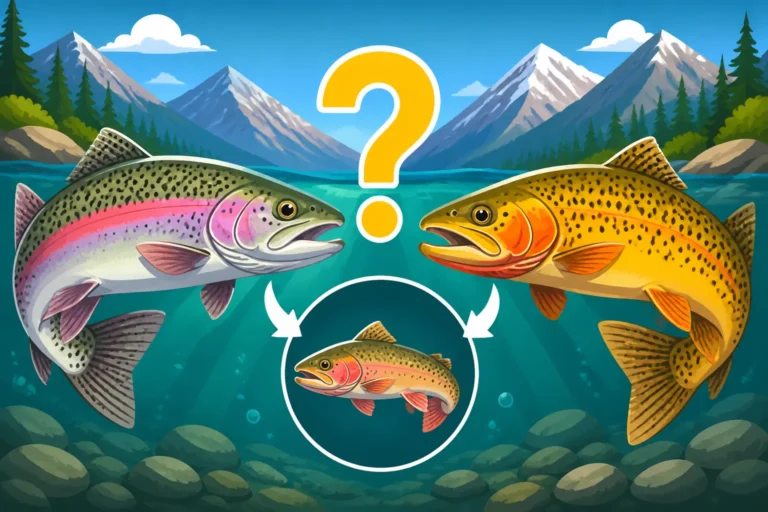
It's happened to all of us: you're out on a beautiful Colorado stream, hook into a gorgeous trout, and as you bring it in, a nagging question starts to creep into your mind. Is this a rainbow? Or is it a cutthroat? The truth is, these two species can look incredibly similar, especially to the untrained eye, leading to confusion and sometimes even regulatory concerns. This guide is here to help you confidently distinguish between a cutthroat and a rainbow trout, ensuring you can appreciate your catch and adhere to local fishing regulations.
The Core Challenge: Why They Look So Similar
Before we dive into the nitty-gritty of identification, let's acknowledge why this is such a common source of angler confusion. You're not alone if you struggle with this! Colorado's waters are home to a diverse array of fish, and the lines between some species can indeed feel a little blurry.
Shared Habitats and Stocking Practices
One of the biggest reasons for the identification challenge is that rainbow trout and cutthroat trout often inhabit the same waters. Rainbows are incredibly popular sport fish and are widely stocked across Colorado, frequently sharing rivers and lakes with native or restored cutthroat populations. This overlap means you're almost always fishing in an environment where both are a possibility. Imagine pulling a fish from a high-country lake where cutthroats are thriving, only to wonder if that pink stripe means it's a stocked rainbow that found its way upstream. It can be a real head-scratcher. Understanding Colorado's Trout Species, A Field Guide can give you a broader context for what you might encounter.
The "Cutbow" Conundrum
To complicate matters further, rainbow trout and cutthroat trout can, and often do, hybridize. These hybrids are affectionately (or frustratingly) known as "cutbows." A cutbow possesses a blend of characteristics from both parent species, making precise identification even trickier. It might have a faint cutthroat mark alongside a more prominent rainbow stripe, or a spotting pattern that seems to defy categorization. These genetic mixtures are a natural consequence of two closely related species sharing a habitat, but they certainly don't make an angler's job any easier. Knowing Why Interbreeding Threatens Native Cutthroat Populations helps to underscore the importance of accurate identification, especially when managing native populations.
Key Distinguishing Features of a Cutthroat Trout
When you're trying to identify a cutthroat, remember that while they vary across their native subspecies in Colorado—the Greenback, Colorado River, and Rio Grande cutthroat—they share several core traits that set them apart from rainbows. It's about looking for a combination of these markers, not just one definitive sign.
The Iconic "Cut" Mark
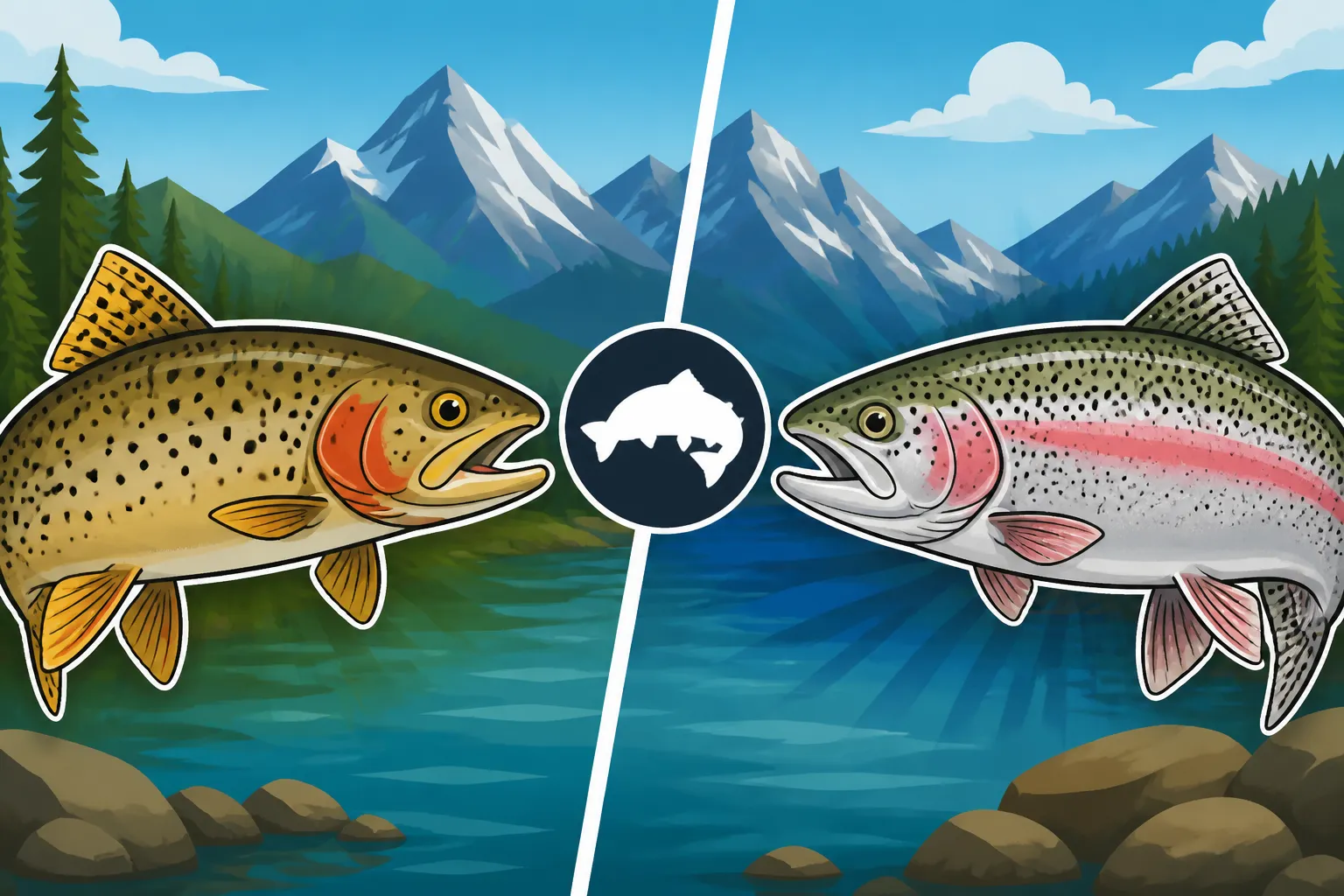
This is the absolute most reliable distinguishing feature and, indeed, how the cutthroat gets its name. Look closely under the lower jaw, on the underside of the gill plate area. You'll often find a distinct, vivid red, orange, or sometimes even yellow slash or "cut" on each side. It literally looks like someone took a razor blade and made a small, colorful incision. The intensity of this mark can vary, sometimes being very bright and obvious, especially on vibrant, healthy fish, and other times appearing a bit duller on less colorful individuals or in certain lighting conditions. However, if it's there, even faintly, you're almost certainly looking at a cutthroat or a cutbow.
Jawline and Maxillary Length
Another subtle, but often very telling, feature lies in the fish's mouth and jaw structure. Cutthroat trout typically have a maxillary (the upper jaw bone) that extends noticeably past the rear edge of the eye. If you gently close the fish's mouth and trace the jawline back, it will extend quite a bit further back than the eye socket. In contrast, a rainbow trout's maxillary usually reaches only to the middle or rear of the eye, but rarely significantly beyond it. This might seem like a minor detail, but once you train your eye to see it, it becomes a very useful indicator, especially if that "cut" mark is a bit ambiguous.
Spotting Patterns
While both rainbows and cutthroats are spotted, the nature of those spots can offer clues. Cutthroat trout tend to have spots that are more concentrated and slightly larger towards the tail, often appearing as a denser peppering on their caudal fin (tail fin) and the rear portion of their body. These spots can sometimes be a bit more irregular in shape compared to a rainbow's. They generally lack the uniform, widespread spotting that you typically see on a rainbow. Think of a cutthroat as having a bit of a "tail-heavy" spotting pattern.
Native Subspecies Variations
It's also worth noting that Colorado is home to specific native cutthroat subspecies, each with slightly different appearances and preferred habitats. Colorado's Native Cutthroat Trout Subspecies delves into these in much more detail.
- Greenback Cutthroat Trout: Historically found on the eastern plains, they tend to have fewer, smaller spots often concentrated dorsally. The "cut" might be a softer orange. They are extremely rare, and identifying one can be an extraordinary experience. Knowing Where to Legally Catch Greenback Cutthroat Trout is vital, as they are a protected species.
- Colorado River Cutthroat Trout: As their name suggests, these are found in the Colorado River basin. Their spotting is often heavier and more evenly distributed than Greenbacks, but still concentrated more towards the tail than a rainbow.
- Rio Grande Cutthroat Trout: Found in the Rio Grande basin in southern Colorado, these fish often exhibit a deep, rich coloration and a distinct spotting pattern, sometimes with a more pronounced "cut."
| Feature | Cutthroat Trout | Rainbow Trout |
|---|---|---|
| "Cut" Mark | Distinct red, orange, or yellow slash under jaw | Absent (no "cut" mark) |
| Lateral Stripe | Absent or faint, dull pinkish wash | Pronounced, iridescent pink/red stripe |
| Maxillary (Upper Jaw) | Extends noticeably past the rear edge of the eye | Usually to the middle or rear of the eye, rarely past |
| Spotting Pattern | More concentrated, sometimes larger, towards the tail | Smaller, more uniform, widespread over body & fins |
| Overall Body Coloration | Varies, often olive-green, bronze, or yellowish | Silvery, olive-green back, white belly |
| Dorsal Fin | Often rounded or blunt | Generally more pointed |
Key Distinguishing Features of a Rainbow Trout
Rainbow trout are perhaps the most recognizable trout species for many anglers, thanks to their widespread distribution and distinctive coloring. While they're beautiful, their features are often subtly different from those of a cutthroat.
The Pink Lateral Stripe
This is the most iconic feature of a rainbow trout. Running along the lateral line (the visible sensory line along the side of the fish) from the gill plate to the tail, you'll find a prominent, iridescent pink or reddish stripe. This stripe can be incredibly vibrant and unmistakable, especially on healthy, wild fish, or it might appear as a softer, yet still noticeable, rosy band. Unlike the cutthroat's sub-jaw slash, this is a distinct band along the flank of the fish. If you see this strong, continuous stripe, it’s a strong indicator you’ve got a rainbow. Rainbow Trout in Colorado, Where They're Stocked can provide more insight into where you're most likely to encounter these beauties.
Spotting Patterns
Rainbow trout are typically covered in numerous small, dark spots. These spots are usually fairly uniform in size and are distributed evenly across the entire body, including the head, dorsal fin, and caudal fin. There isn't the same concentration towards the tail that you often see on a cutthroat. Think of a rainbow as having a finely peppered appearance from head to tail, with no particular area having significantly larger or denser spots than another. This uniform spotting contrasts with the cutthroat's tendency for spots to be more pronounced on the posterior.
Mouth and Gill Plate
As mentioned with cutthroats, pay attention to the mouth. A rainbow trout's maxillary typically extends to about the middle or rear edge of its eye, but it doesn't generally go much beyond it. This is a subtle point, but if you're ever in doubt about the "cut" mark, examining the maxillary length can give you a secondary clue. The gill plate itself on a rainbow is usually a uniform color without any significant markings beneath the jaw.
Fin Coloration
While not always a definitive marker, the fins of a rainbow trout can sometimes offer additional hints. Their fins, especially the dorsal and caudal, will typically have the same uniform spotting as their body. The pectoral, pelvic, and anal fins may be a bit clearer or have fewer spots, but they won't typically show any distinct coloration like the "cut" under the jaw.
Practical Tips for On-the-Water Identification
Even with all this knowledge, identifying fish in the field can be challenging. Fish move, water is murky, and the sun might be glinting just wrong. Here are some practical tips to help you make a positive ID when it matters most.
Handle with Care
First and foremost, whether you think you have a cutthroat or a rainbow, always handle the fish gently and minimally. Many areas in Colorado, especially Colorado Gold Medal Water Regulations Explained and waters designated for native species recovery, have strict Catch-and-Release Rules on Colorado's Cutthroat Waters. Proper handling is critical for the fish's survival. Wet your hands before touching the fish to protect its slime coat, keep it in the water as much as possible, and support its full body weight. Take your photos quickly and release it gently. Learning How to Handle Trout for a Safe Release is paramount, regardless of species.
Field Guides and Apps
Don't be afraid to bring aids with you. A good, waterproof field guide specifically for Colorado fish can be an invaluable tool. You can find excellent waterproof field guides, even digital versions compatible with apps, on platforms like Amazon. These guides often have detailed illustrations or photos that highlight the exact features we've discussed. Some anglers even use fishing identification apps on their smartphones, though be mindful of signal in remote areas. Having a quick reference at your fingertips can make all the difference in a tricky situation. Another great resource is the official Reading Colorado's Fishing Regulations Brochure, which often includes fish identification guides.
When in Doubt, Release
This is the golden rule, especially in Colorado. If you've examined the fish carefully, considered all the distinguishing features, and you're still not 100% sure if it's a cutthroat or a rainbow—especially if you suspect it might be one of Colorado's native cutthroat subspecies—the safest and most responsible course of action is to release it immediately. Many cutthroat populations, particularly the Greenback, are critically important to conserve, and they often have very specific regulations regarding possession, or even catch-and-release only rules. Playing it safe protects our precious native fish populations for future generations and ensures you're always on the right side of Colorado Fishing Regulations Every Angler Should Know.
Disclaimer
This article is for general informational purposes only and does not constitute professional advice. Laws, prices and regulations vary by location and change over time. Consult a qualified professional for guidance on your specific situation.