What Colorado’s Native Fish Looked Like Before Trout Were Introduced
When you think about fishing in Colorado, your mind probably jumps straight to trout: rainbows, browns, brookies, maybe a cutthroat or two. And honestly, who can blame you? Our rivers and reservoirs are famous for them! But here’s a little secret that might surprise many anglers, even seasoned ones: Colorado's waters weren't always dominated by these well-known species. Before the widespread introduction of non-native trout, our aquatic ecosystems supported a fascinating and diverse array of fish, many of which looked drastically different from the streamlined, speckled beauties we chase today. This guide will take you on a journey back in time, revealing the rich tapestry of native fish that once thrived in Colorado's pristine waters and helping us appreciate the past to better protect the future.
The Pre-Trout Landscape: A Completely Different Aquatic World
It's easy to assume that Colorado's rivers and lakes were always brimming with the trout we know and love. After all, they seem so perfectly at home here, don't they? But the truth is, the aquatic environment of Colorado before the mid-1800s, and certainly before the widespread stocking efforts of the late 19th and early 20th centuries, was a vastly different place. Imagine rivers that flowed slower, often warmer, and with more varied habitats than many of today's straightened, dammed, or diverted channels. These conditions fostered unique communities of fish, perfectly adapted to their surroundings, most of which would look completely unfamiliar to the modern angler.
The Myth of a Trout-Only Past
Many anglers, through no fault of their own, grow up with the idea that "fishing in Colorado" has always meant "trout fishing." Our state's marketing, its reputation, and the sheer abundance of introduced trout species reinforce this notion. It's a perception that overshadows the incredible diversity that once existed. When someone asks what kind of fish live in a Colorado river, the immediate answer is usually trout. Few would think to mention suckers, chubs, dace, or minnows, yet these were the dominant players in many of our waterways for millennia.
This perception isn't just an innocent misunderstanding; it sometimes leads to an undervaluation of our true native species. If it's not a trout, many anglers assume it's a "trash fish" or something "undesirable." This couldn't be further from the truth. These native species were, and in many places still are, vital components of the ecosystem, playing crucial roles in nutrient cycling, prey bases for other wildlife, and indicators of water quality. Understanding their historical presence helps us appreciate the full scope of Colorado's natural heritage, rather than just a segment of it.
Colorado's Original Fish Communities
Before the arrival of European settlers and the subsequent introduction of countless non-native species, Colorado's aquatic systems supported a complex web of native fish. The state's diverse geography, from the high alpine lakes to the slow, meandering rivers of the eastern plains and the powerful canyons of the Colorado River system, meant that different regions hosted different fish communities.
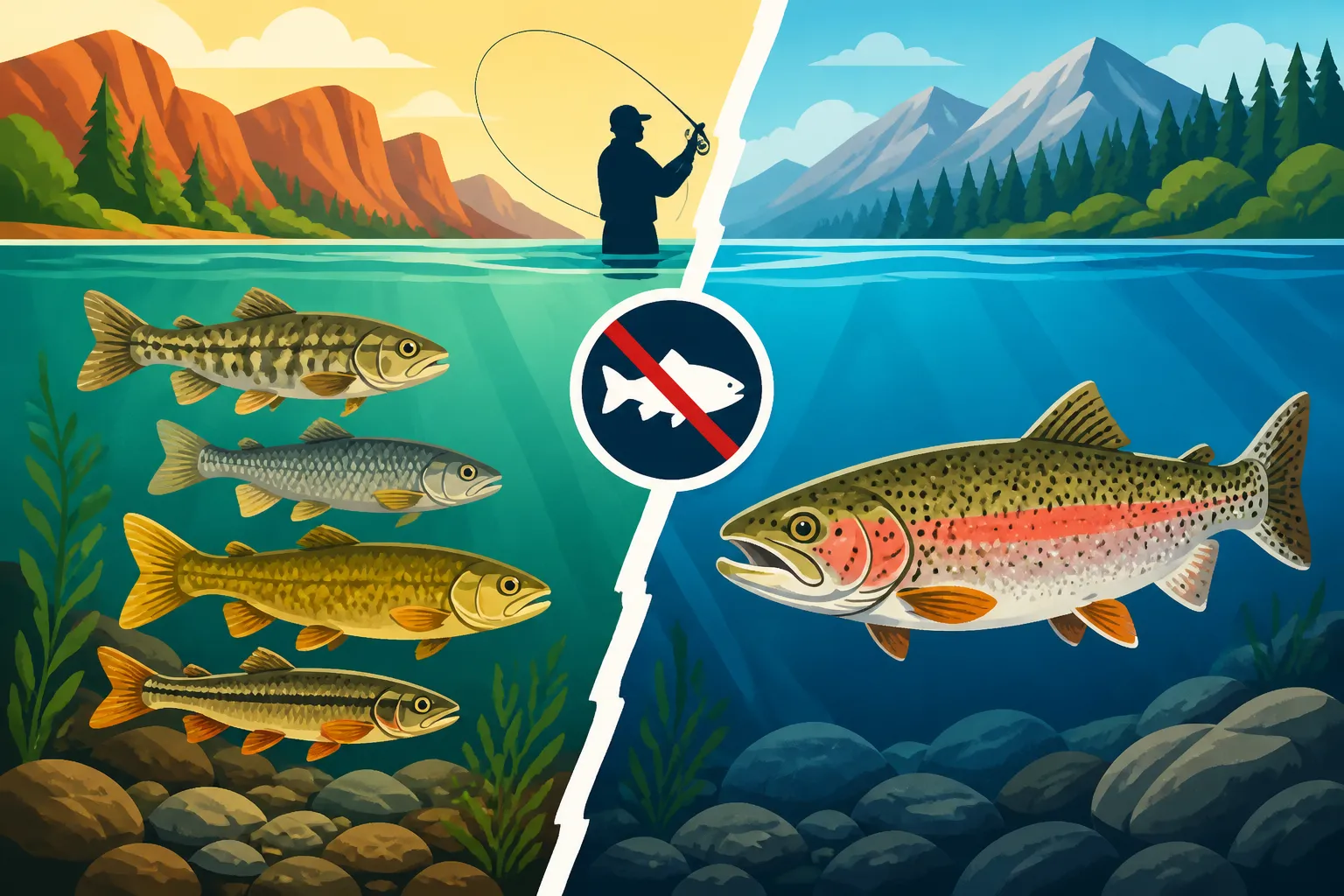
In the higher, colder mountain streams and lakes, a few species of native cutthroat trout were indeed present – hardy, adaptable fish that had evolved over millennia to thrive in these challenging environments. But even here, they weren't always alone. Lower down, as streams widened and warmed, other species began to appear, forming mixed communities. The vast majority of these were what we now often call "rough fish" or "nongame fish"—species like suckers, chubs, minnows, and dace. These fish were typically more robust, often having larger scales, different mouth structures for bottom feeding or grazing algae, and generally a less "trout-like" appearance. They were the backbone of the aquatic food web, consuming detritus, algae, and insects, and in turn, becoming food for larger predators like otters, eagles, and even the occasional native cutthroat.
Meet Colorado's True Natives: Beyond the Famous Trout
Diving into the historical record, you uncover a rich cast of characters that called Colorado home long before rainbow trout or brown trout were swimming in our streams. These fish are often overlooked today, sometimes to their detriment, but they represent the authentic aquatic heritage of our state. Colorado's Endangered and Threatened Fish is a topic that often brings these species into the spotlight, reminding us how precious they are.
The Underrated Suckers and Chubs
When we talk about Colorado's native fish, the suckers and chubs are often the first to come to mind for biologists, even if they're not always popular with recreational anglers. These fish, far from being "trash fish," are incredibly important and represent a significant portion of our historical aquatic biodiversity.
The Flannelmouth Sucker (Catostomus latipinnis) is a prime example. This large, handsome fish, often exceeding 20 inches, was once widespread in the Colorado River basin. They have thick, leathery lips (hence "flannelmouth") that they use to suck algae and invertebrates from rocks. Their coloring is usually a drab olive or brown, allowing them to blend seamlessly with river bottoms.
The Bluehead Sucker (Catostomus discobolus), similarly, has a distinct appearance with a bluish head and a generally stockier body than the flannelmouth. They are agile swimmers, adapted to the faster currents of canyon rivers.
The Roundtail Chub (Gila robusta) is another fascinating native, more streamlined and predatory than the suckers. They are often found in warmer, larger rivers and can grow quite large, preying on insects and smaller fish.
Then there are the critically endangered species of the Colorado River basin, like the Bonytail Chub (Gila elegans) and the Humpback Chub (Gila cypha). The bonytail is slender and elegant, once widespread but now incredibly rare. The humpback chub, true to its name, has a distinctive bony hump behind its head, an adaptation for living in the turbulent, often silty waters of deep canyons. These fish are true survivors, relics of a time when the Colorado River system was a wild, untamed river of rapids and floods. For those interested in their conservation, What the Bonytail Chub Is and Why It's Protected offers a deeper look into their struggles. What the Humpback Chub Is and Where It Lives provides further insight into another remarkable native.
And let's not forget the majestic Colorado Pikeminnow (Ptychocheilus lucius), once known as the "Colorado River Salmon" by early settlers due to its large size and migratory habits. This fish is North America's largest native minnow, capable of reaching lengths of over six feet! It was the apex predator of the Colorado River system, an impressive, torpedo-shaped fish that once patrolled vast stretches of river, preying on other fish. Today, it is critically endangered, and its protection is a major focus for conservationists. You can learn more about its plight in Why the Colorado Pikeminnow Is Protected.
These native "nongame" fish, often called Suckers and Chubs, Colorado's Overlooked Native Fish, are not just curiosities; they are a testament to the incredible adaptations required to survive in Colorado's original, often harsh, aquatic environments.
Native Cutthroat: The Original Trout of Colorado
While many trout species are introduced, Colorado does have its own native trout: the various subspecies of cutthroat. These are the true original trout of our high-country lakes and mountain streams, and they offer a glimpse into what a trout-focused fishery would have looked like hundreds of years ago. Distinguishing these from their introduced cousins is a skill every Colorado angler should strive for, and How to Tell a Cutthroat From a Rainbow Trout can be a great starting point.
The Greenback Cutthroat Trout (Oncorhynchus clarkii stomias) is perhaps the most famous, being Colorado's state fish. Historically found on the eastern side of the Continental Divide in the Arkansas and South Platte River drainages, its population was devastated by overfishing, habitat loss, and hybridization with introduced rainbow trout. They are generally smaller, often with distinct parr marks (vertical bars) on their sides, and the characteristic red or orange "cutthroat" slash under their jaw. The story of Greenback Cutthroat Trout Recovery in Colorado is one of persistence and hope.
On the western slope, primarily in the Colorado River basin, we have the Colorado River Cutthroat Trout (Oncorhynchus clarkii pleuriticus). These fish were once widespread throughout the headwaters and tributaries of the Colorado River and its major branches. They are typically a bit more robust than Greenbacks, often with more scattered, larger spots. Finding pure strains of these fish is a reward in itself, often requiring treks into remote, protected drainages. Colorado River Cutthroat Trout, Where to Find Them details some of these special places.
And down in the San Luis Valley, particularly in the Rio Grande basin, you'll find the Rio Grande Cutthroat Trout (Oncorhynchus clarkii virginalis). These cutthroat are generally a bit more heavily spotted than their northern counterparts and have adapted to the unique, high-desert river systems of the southern part of the state. Preserving these unique genetic lineages is critical for the future of native trout in Colorado. Rio Grande Cutthroat Trout in the San Luis Valley offers more insight into these beautiful fish.
These native cutthroat trout, while sharing a family resemblance with the rainbows and browns we now commonly encounter, were perfectly adapted to Colorado's specific conditions. Their appearance, behavior, and even their genetic makeup reflect a long history intertwined with our state's wild landscapes. They represent the "original trout" in a state now famous for its trout fishing, offering a tangible link to our aquatic past. Learning to identify them is part of truly appreciating Colorado's Native Cutthroat Trout Subspecies.
Other Surprising Natives
Beyond the charismatic cutthroat and the often-misunderstood suckers and chubs, Colorado's original waters were home to a host of smaller, often overlooked species. These little fish, while perhaps not the giants of the river, played incredibly important roles in the ecosystem, forming the base of many food chains and acting as indicators of healthy aquatic environments.
Consider the various species of dace, such as the longnose dace or the speckled dace. These small, bottom-dwelling minnows are perfectly camouflaged, darting among rocks and gravel to feed on small invertebrates and algae. They are incredibly hardy and can often tolerate a range of water conditions, making them important survivors in systems that have undergone significant change.
Then there are the minnows themselves, a broad family that includes more than just the "baitfish" you might think of. Native minnow species, like the fathead minnow or the plains minnow, were once abundant in many of Colorado's warmer, slower-moving waters, particularly on the eastern plains. They are small, schooling fish that are vital prey for larger fish and birds.
The sculpins, like the mottled sculpin, are another fascinating group. These bizarre-looking, camouflaged fish have large heads and pectoral fins, and they hug the bottom of cold, clear mountain streams. They are ambush predators, feeding on insects and small invertebrates, and are a good indicator of excellent water quality. You might mistake them for some kind of salamander or aquatic creature rather than a fish, but they are perfectly adapted to life on the streambed.
These smaller native fish may not inspire the same trophy-hunting excitement as a giant lake trout, but their intricate presence was, and where they still persist, remains fundamental to the health and balance of Colorado's aquatic ecosystems. Their unique shapes, colors, and behaviors reveal a side of Colorado fishing that extends far beyond the typical lure of a catch.
Why So Many Changes? The Impact of Introductions
So, if Colorado had this rich tapestry of native fish, why is it that today, most anglers are primarily chasing species that didn't originate here? The answer lies in a complex history of human settlement, resource management, and changing perceptions about what constitutes a "desirable" fish. This shift fundamentally altered Colorado's Trout Species, A Field Guide, moving from a few native cutthroat to a diverse, but largely introduced, trout population.
The Lure of "Game Fish"
The mid-19th and early 20th centuries saw a massive push across the United States, and particularly in the West, to introduce "desirable" game fish into new waters. Trout, specifically rainbow trout and brown trout, were seen as superior for sport fishing and food. They grew larger, were considered more aggressive biters, and were often more tolerant of a wider range of conditions than some of the more specialized native species.
Early settlers and state agencies, eager to promote sport fishing and provide a food source, actively stocked these non-native trout into countless rivers, lakes, and reservoirs. The prevailing sentiment was that if a water body didn't have trout, it was "empty" or "underutilized." This led to a massive, often indiscriminate, stocking program that fundamentally reshaped aquatic ecosystems. Rainbow trout, native to the Pacific Northwest, and brown trout, hailing from Europe, were brought in by the literal train carload and distributed across the state. They quickly established wild populations in many areas, particularly in the cold, clear waters that perfectly mimicked their native habitats.
The desire for specific "game fish" wasn't limited to trout. Walleye, smallmouth bass, largemouth bass, and northern pike were also introduced into various warmwater reservoirs and lakes, often to create new sportfishing opportunities where native warmwater species might not have been as numerous or appealing to anglers. This drive to create recreational fisheries had profound and often unintended consequences for the existing native inhabitants.
Challenges for Native Species
The introduction of non-native fish created an uphill battle for Colorado's original inhabitants. The challenges were multifaceted and often overwhelming.
Firstly, there was direct competition for food and habitat. Non-native trout, often stocked in large numbers, were highly efficient predators and consumers. They outcompeted native cutthroat for insect larvae and other food sources, and their sheer numbers could overwhelm smaller native fish. Similarly, introduced warmwater species competed with native suckers, chubs, and minnows in the lower elevation rivers and lakes.
Secondly, predation became a major issue. Many of the introduced species, particularly brown trout and northern pike, are voracious predators. They fed on the eggs, fry, and even adult forms of native fish, which had often evolved without such efficient predators in their ecosystem. This was especially devastating for slower-growing or less aggressive native species.
Thirdly, and perhaps most insidiously, was hybridization. This was a particular problem for Colorado's native cutthroat trout. When rainbow trout were introduced into streams inhabited by cutthroat, the two species, being genetically similar, often interbred. The resulting "cutbows" are sterile or produce less viable offspring, slowly diluting and eventually erasing the unique genetic purity of the native cutthroat populations. This is a primary reason why today, pure strains of Greenback, Colorado River, and Rio Grande cutthroat are so rare and precious, often confined to isolated headwater streams where rainbows were never introduced. Telling a Cutbow From a Pure Cutthroat highlights the importance of this distinction.
Finally, habitat alteration exacerbated these issues. Dams, diversions, and channelization projects changed river flows, temperatures, and sediment loads, creating conditions that often favored the generalist, introduced species over the specialized natives. For example, large, slow-moving sections of river became ideal for certain introduced species, while disrupting the long migratory pathways needed by native pikeminnow or suckers. It was a perfect storm that pushed many native species to the brink, leading to their listing as endangered or threatened.
Recognizing the Past to Protect the Future
Understanding what Colorado's native fish looked like before trout were introduced isn't just an academic exercise; it's a critical step in becoming a more informed and responsible angler. It helps us appreciate the delicate balance of our aquatic ecosystems and informs our conservation efforts today. By learning about these unique species, we can become advocates for their protection and better stewards of Colorado's natural resources. Identifying Colorado's Native vs Stocked Trout is a skill that directly contributes to these efforts.
Learning to Identify Natives
For most anglers, the primary focus is often on identifying the fish they want to catch. But taking the time to learn about and identify Colorado's lesser-known native fish can be incredibly rewarding. It opens up a whole new world of appreciation for the intricate beauty and ecological importance of these species.
One of the best ways to start is by investing in a good field guide specific to Colorado or the Rocky Mountain region. Many excellent ones are available, and a quick search on Amazon or a visit to your local independent bookstore can get you started. These guides often feature detailed illustrations or photographs, descriptions of physical characteristics, and information on habitat and range. Keep it in your tackle box or backpack and refer to it when you catch something unfamiliar. You'll be surprised how quickly you start noticing the subtle differences between a flannelmouth sucker and a white sucker, or a dace from a juvenile trout.
Another invaluable tool is Colorado Parks and Wildlife's (CPW) online resources. They have extensive information on native species, including identification guides and conservation updates. Familiarizing yourself with these resources is not only educational but also helps you understand specific regulations regarding protected native fish. For example, knowing What to Do If You Catch an Endangered Fish by Accident is crucial for any responsible angler.
Finally, spending time on the water with a curious mind is the best teacher. Observe the fish you see, not just the ones you target. Look at the streamside environment. How clear is the water? How fast is the current? What kind of bugs are hatching? All these factors contribute to the presence of certain fish species. If you're really diving deep into the ichthyology of the region, specialized guides are also often available on Amazon which offer scientific classifications and more detailed physiological descriptions.
| Native Fish Species | General Appearance Notes | Historical Range in CO | Conservation Status (General) |
|---|---|---|---|
| Greenback Cutthroat Trout | Olive-green back, yellow-orange belly, large spots, red "slash" | Eastern Slope (South Platte, Arkansas) | Endangered |
| Colorado River Cutthroat | Olive-green to silvery, variable spotting, red "slash" | Western Slope (Colorado River Basin) | Sensitive, declining |
| Rio Grande Cutthroat Trout | Heavily spotted, silvery-gold, prominent red "slash" | Southern CO (Rio Grande Basin) | Sensitive, declining |
| Colorado Pikeminnow | Large, torpedo-shaped, dark green back, silvery sides | Colorado River and major tributaries | Critically Endangered |
| Bonytail Chub | Slender, dark back, light belly, small head, pointed snout | Colorado River and major tributaries | Critically Endangered |
| Humpback Chub | Distinctive bony hump behind head, large fins, small eyes | Deep canyons of Colorado River | Critically Endangered |
| Flannelmouth Sucker | Large, cylindrical, thick leathery lips, dark olive-brown | Colorado River Basin | Common but threatened by habitat loss |
| Bluehead Sucker | Stocky, bluish head, silvery body, large fleshy lips | Colorado River Basin | Common but threatened by habitat loss |
| Roundtail Chub | Streamlined, large scales, brownish-green, terminal mouth | Colorado River Basin | Declining |
| Mottled Sculpin | Large head, broad pectoral fins, camouflaged, no scales | Cold mountain streams | Stable |
| Longnose Dace | Small, slender, long snout, olive-brown, bottom-dweller | Widespread in various rivers | Stable |
Conservation Efforts Today
The good news is that there are significant efforts underway to protect and restore Colorado's native fish populations. Colorado Parks and Wildlife, in partnership with federal agencies and conservation groups, is actively working on habitat restoration, removal of barriers to fish passage, and management of non-native species to create safe havens for native fish.
For native cutthroat trout, this often involves identifying and protecting genetically pure populations in high-elevation headwater streams. In some cases, non-native trout are removed from these streams to allow native cutthroat to thrive without competition or hybridization. Stocking of pure native cutthroat into restored habitats is also a key strategy. The recovery of the Greenback Cutthroat, for example, is a long-term, ongoing project that requires careful monitoring and management. For more on this, check out Greenback Cutthroat Trout Recovery in Colorado.
For the endangered species of the Colorado River, like the pikeminnow and chubs, conservation is a much larger-scale endeavor, involving complex river management strategies, dam modifications, and breeding programs. These efforts are often challenging due to the vast scale of the rivers and the many competing demands for water resources. However, without these dedicated efforts, these unique fish, which are found nowhere else in the world, would undoubtedly vanish. Understanding the historical context of what Colorado's waters looked like helps us champion these vital, ongoing conservation initiatives. Supporting organizations dedicated to native fish recovery, even through simple awareness, makes a big difference. If you're looking for books or documentaries to deepen your understanding of these crucial efforts, you can find a wealth of resources on Amazon covering Western water issues and native fish conservation.
The journey into Colorado's pre-trout past reminds us that our state's aquatic history is far richer and more complex than a simple focus on recreational trout fishing might suggest. By learning about and appreciating the native suckers, chubs, pikeminnows, and original cutthroat trout, we gain a deeper connection to the true wildness of Colorado and become better stewards for its future.
Disclaimer
This article is for general informational purposes only and does not constitute professional advice. Laws, prices and regulations vary by location and change over time. Consult a qualified professional for guidance on your specific situation.