Colorado Fishing License Rules on Reservoirs That Cross County Lines
It's a common headache for anglers in Colorado: you're out on a beautiful reservoir, reeling in trout, and suddenly a thought sparks – "Am I even in the right county for this license?" The confusion around reservoirs that span multiple county lines is real, and it often leaves people wondering if they need different paperwork or if their standard Colorado fishing license is still valid. This guide will clear up that worry, explaining precisely how Colorado's statewide licensing system handles these unique geographical situations.
Understanding Colorado's State-Level Licensing System
The thought of needing different permits just because you've crossed an invisible line on the water can be truly daunting, especially when you're focused on the fishing itself. Many states have complex local rules, so it's understandable to assume Colorado might too. However, when it comes to your fundamental right to fish, Colorado keeps things refreshingly simple.
Why County Lines Don't Matter for Your License
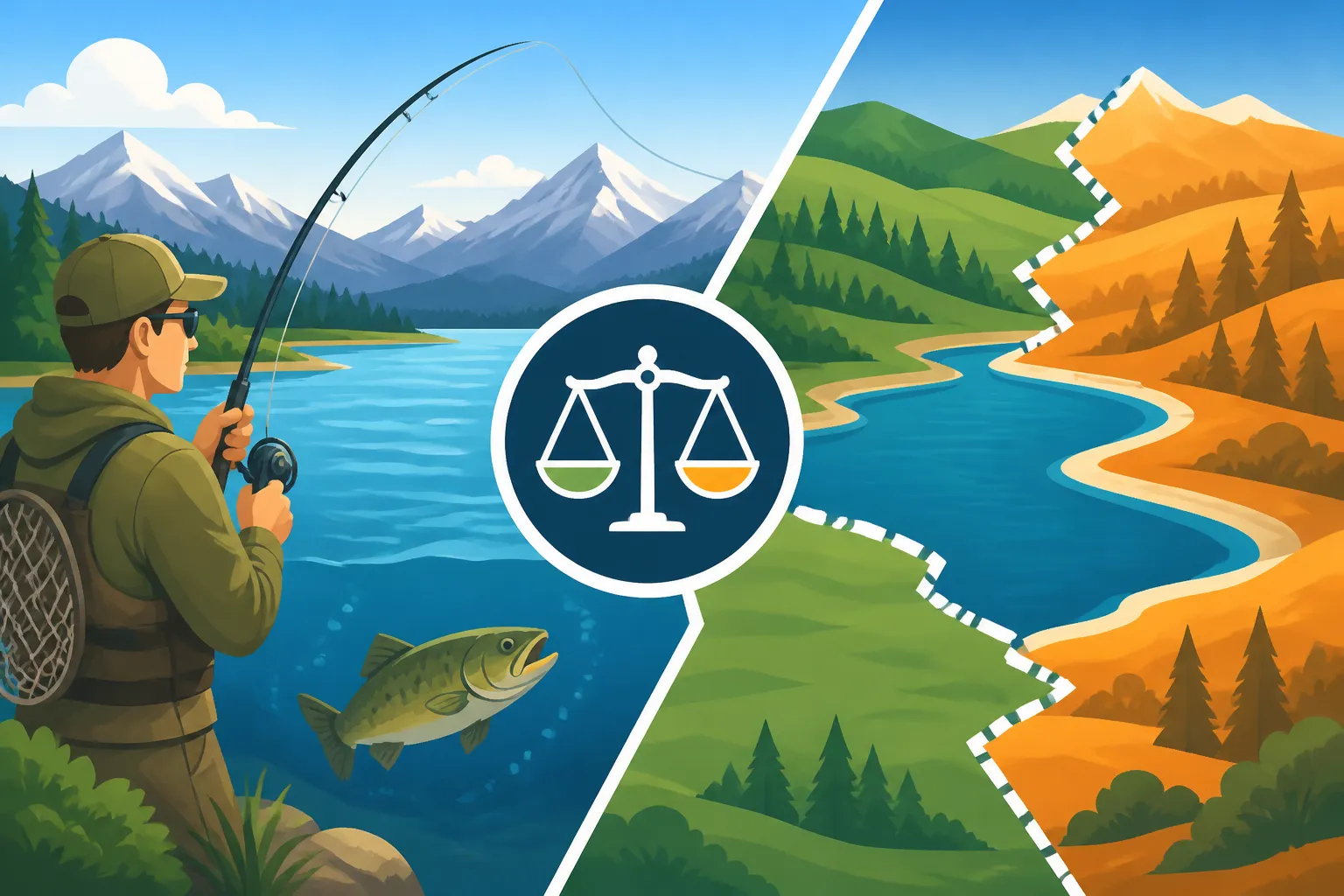
Let's cut right to the chase: your Colorado fishing license is issued by the state, not by any individual county. This means that once you have a valid license, it's good to go for public fishing waters anywhere within Colorado's borders. Whether you purchased your Colorado Fishing License Guide for Residents and Nonresidents in Fort Collins, Pueblo, or Grand Junction, that piece of paper (or digital display on your phone) grants you permission to fish statewide. The concept of "statewide" is critical here; it means the exact same rules apply whether you're casting into a small alpine lake or a massive reservoir, irrespective of the county or counties it happens to touch. You won't need to check a county map or worry about where you are in relation to county lines while you're focused on the water.
This uniform approach by Colorado Parks and Wildlife (CPW) is a huge relief for anglers. Imagine the administrative nightmare if you had to buy a separate license every time you traversed a county boundary on a large lake or river! Thankfully, that's simply not how it works here. Your license covers you for the act of fishing, pure and simple, from the South Platte River to Blue Mesa Reservoir. While local municipalities might have ordinances regarding things like noise, litter, or even specific boating speed limits, these are separate from your fishing license requirements, which are solely governed by the state.
The Jurisdiction of Colorado Parks and Wildlife
Colorado Parks and Wildlife (CPW) is the ultimate authority when it comes to managing fishing licenses and regulations across the entire state. They oversee all public fishing waters, from the tiniest mountain stream to the sprawling bodies of water that might span several counties. Their uniform system ensures that an angler fishing in Larimer County follows the same core licensing rules as someone fishing in Saguache County, even if the specific fishing regulations for those individual bodies of water might differ.
CPW's statewide jurisdiction is what truly simplifies things for anglers. They don't delineate their authority by county lines; rather, they manage fisheries and wildlife across the broader ecosystem of Colorado. This includes all the designation of Colorado Gold Medal Water Regulations Explained, which are renowned for their trout populations. These Gold Medal stretches are identified based on ecological criteria and fish numbers, not where county lines are drawn, and your state fishing license is valid for all of them, provided you adhere to the specific Gold Medal rules for that particular stretch.
Before heading out, make sure you've properly acquired your license and any necessary stamps. You can't just pick one up on Amazon, for instance; it must be through official CPW channels, whether that's online, by phone, or at an authorized vendor. While you might find gear and general fishing books on Amazon, remember that for official, up-to-date Colorado fishing license information and regulations, the Colorado Parks and Wildlife website is your absolute go-to.
Common Reservoirs Crossing County Lines and What It Means
It's natural to question your license's validity when you're fishing a vast body of water that you know stretches across different geographical areas. After all, county lines are real administrative divisions. But in Colorado, for fishing license purposes, these lines are essentially invisible on the water.
Examples of Multi-County Reservoirs
Colorado is home to several large reservoirs that gracefully cross county lines, offering expansive fishing opportunities. Take, for instance, Blue Mesa Reservoir, Colorado's largest body of water, which straddles both Gunnison and Montrose counties. You could be trolling for Kokanee Salmon Fishing in Colorado near the Lake City bridge and technically be in Montrose County one moment, then drift east towards the dam and find yourself in Gunnison County the next. Your single Colorado fishing license covers you for the entirety of Blue Mesa. No need for a Montrose-specific or Gunnison-specific permit!
Another great example is Pueblo Reservoir, an angler's paradise that lies partially in Pueblo County and partially in Fremont County. Anglers targeting walleye, bass, or trout there can move freely across the reservoir's waters, knowing their statewide license is valid no matter which side of the county line they happen to be on. The same principle applies to other large lakes like Horsetooth Reservoir in Larimer County, which, while primarily in one county, might have access points or surrounding lands that brush up against others. The fishing itself, however, remains under the consistent umbrella of your state license. For information on specific types of licenses, whether you're a Resident vs Nonresident Fishing Licenses in Colorado, you can check CPW's guides.
How to Identify a Reservoir's Primary Authority
While your fishing license is always statewide, it's crucial to understand that other aspects of reservoir management might still be under local or specific park authority. For instance, a reservoir might be managed by Colorado State Parks (like Eleven Mile State Park or Chatfield State Park), by the Bureau of Reclamation (a federal agency), or even by a local water utility. These entities often oversee things like park entrance fees, boat launch fees, camping regulations, and specific rules about swimming or paddleboarding.
What this means for you, the angler, is that while your Colorado Fishing Regulations Every Angler Should Know are set by CPW and your license is valid everywhere, you might still encounter other fees or rules that are specific to the particular location. For example, to access fishing at a state park, you’ll likely need a Colorado State Parks Pass in addition to your fishing license. It’s important to distinguish these access fees from your fishing license itself. Your best bet is always to check the specific reservoir's website or consult the Reading Colorado's Fishing Regulations Brochure for details on access points, required park passes, or any local boating rules that aren't directly related to fishing but impact your visit.
Essential Documents Beyond Your Basic Fishing License
Getting your basic Colorado fishing license is the critical first step, but depending on your age and fishing style, there are a couple of other crucial stamps you'll need to make sure you're fully compliant across all of Colorado's waters. These, too, are statewide requirements, completely independent of county lines.
The Importance of the Habitat Stamp
For nearly all adult anglers in Colorado, your fishing license isn't the only piece of paper you need. If you're between the ages of 18 and 64, whether you're a What Counts as Colorado Residency for Licensing or a nonresident, you'll also need a Habitat Stamp. This is a non-negotiable requirement for nearly all hunting and fishing activities in the state. The only common exemptions are for youth under 18 or seniors aged 65 and over, and those who purchase an annual fishing license often find the Habitat Stamp is automatically included in the price.
The Habitat Stamp isn't just another fee; it's a vital contribution to Colorado's conservation efforts. The funds generated by these stamps directly support habitat improvement projects, land acquisitions for public access, and wildlife management programs across the entire state. These efforts benefit wildlife and enhance recreational opportunities in every corner of Colorado, not just specific counties. So, while you might be browsing for tackle on Amazon for your trip to a large body of water like Blue Mesa, always prioritize confirming you have this stamp in addition to your license directly from CPW. You can easily add the Colorado's Habitat Stamp, Explained when you purchase your main license online, by phone, or at any authorized vendor.
Considering a Second-Rod Stamp
Have you ever wished you could cast out two lines at once, perhaps one with bait for bottom feeders and another with a lure for active predators? In Colorado, you can, but it requires an additional stamp. If you plan on fishing with two rods simultaneously, you'll need to purchase a Colorado's Second-Rod Stamp and Who Needs One. This stamp allows you to double your chances and cover more water, which can be particularly effective on larger reservoirs where fish might be spread out.
Like your primary fishing license and the Habitat Stamp, the Second-Rod Stamp is a statewide endorsement. It doesn't matter if you're fishing on a reservoir that crosses multiple counties or a small pond entirely within one; the rule for using two rods is consistent across all eligible public waters in Colorado. It's an add-on to your regular fishing license, not a replacement for it, and it's essential for staying within the bounds of the law. You can purchase this stamp when you buy your Colorado's Annual, One-Day and Five-Day License Options or any other license option, ensuring you're fully prepared to make the most of your time on the water.
Ensuring Compliance and Avoiding Misunderstandings
Even with the statewide nature of your Colorado fishing license, staying compliant and informed is key. The last thing any angler wants is a run-in with a game warden or a fine for something that could have easily been avoided.
Always Carry Your License
This might seem obvious, but it's astonishing how often anglers forget this simple, yet critical, step. When you're out on the water, whether in a boat on Cherry Creek Reservoir or wading a stream in Cheesman Canyon, it is a legal requirement to have your valid Colorado fishing license on your person. This can be your physical license, a printout from the CPW website, or a digital copy displayed on your smartphone. Showing Your Colorado Fishing License in the Field is not just good practice; it's the law.
Colorado Parks and Wildlife officers, often referred to as Game Wardens, patrol all public waters across the state. They are trained to enforce state wildlife and fishing regulations, and they have the authority to ask to see your license at any time. They won't be asking which county line you've crossed; they'll simply be verifying that you have a valid, unexpired state license and any necessary stamps. What Happens If You Fish in Colorado Without a License can range from a warning to significant fines, confiscation of your gear, and even legal action. It's a wholly avoidable headache, so make it a habit to check for your license before you even leave the house.
Consulting the Official CPW Regulations
While your fishing license is valid statewide, it's absolutely vital to remember that specific bodies of water can, and often do, have unique regulations. These are typically set by CPW based on species management goals, ecological factors, and angler pressure for that particular lake, reservoir, or river section. These specific rules, like length limits for trout, daily bag limits for certain species, or bait restrictions, are often what cause the most confusion, not county lines.
For example, a reservoir might have a special limit on walleye, or a specific river section might be designated "flies and lures only" or "catch-and-release." These nuanced rules are detailed in the official Colorado Fishing Regulations brochure, which CPW publishes annually. You can pick up a physical copy at most license vendors or find an updated PDF version on the CPW website. It’s highly recommended to download this PDF to your phone for quick reference – perhaps even stored conveniently on your phone alongside your Amazon shopping list for new lures! Even if you know your license is valid, taking a few minutes to review the specific regulations for your chosen fishing spot can prevent accidental violations and ensure you're fishing responsibly and legally. Remember, even if you’re fishing Do You Need a License to Fish Private Water in Colorado?, if it’s publicly stocked or accessible, state rules apply.
| Regulation/Requirement | Jurisdiction Level | Notes |
|---|---|---|
| Fishing License | State | Valid anywhere in Colorado. |
| Habitat Stamp | State | Required for most anglers 18-64. |
| Second-Rod Stamp | State | Required to use two lines, statewide. |
| Bag & Possession Limits | State/Water Body | Set by CPW, often specific to a lake/river, not county. |
| Bait & Lure Restrictions | State/Water Body | Set by CPW, often specific to a lake/river, not county. |
| State Park Passes/Entry Fees | Local/State Park | Can be site-specific, separate from fishing license. |
| Boating Regulations | Local/State Park | Can vary by water body or local authority, separate from fishing. |
Disclaimer
Please note that fishing regulations can change. While this guide provides general information, always consult the current Colorado Parks and Wildlife (CPW) fishing regulations brochure or their official website before heading out to fish.