How a Tiger Trout Gets Its Pattern
Have you ever reeled in a trout in Colorado and found yourself staring at a wild, labyrinthine pattern unlike any other? You might have just met a tiger trout, a striking fish whose distinctive markings often leave anglers scratching their heads, wondering how such a beautiful, almost artistic design could naturally occur. It's a truly fascinating display of nature's artistry, and understanding its origins helps you appreciate these unique fish even more. This guide will dive deep into the biological marvel that creates the tiger trout's unmistakable pattern, exploring the genetic blend and pigment interplay that makes it so special.
The Genesis of the Tiger Trout: A Unique Hybrid Story
The tiger trout isn't a naturally occurring species in the traditional sense; it's a sterile hybrid, meaning it's the result of a cross between two different species of fish. Think of it like a mule – a cross between a horse and a donkey – inheriting traits from both parents but unable to reproduce on its own. In the case of the tiger trout, the parents are a male brown trout (Salmo trutta) and a female brook trout (Salvelinus fontinalis). This pairing, while rare in the wild due to habitat and spawning differences, is intentionally performed in hatcheries to create a fish with some truly remarkable characteristics, not least of which is its stunning camouflage.
This hybridization is relatively uncommon for many species, but brown trout and brook trout are close enough genetically to produce viable offspring, even if those offspring are sterile. The magic happens during the early developmental stages, where the genetic blueprints from both parent fish combine in a way that dictates the formation of pigment cells. It's not a simple blending of colors, but rather a complex interaction that gives rise to something entirely new and visually captivating.
The Parental Influence: Brown Trout and Brook Trout Markings
To truly appreciate the tiger trout's pattern, we first need to look at its parents. Each brings distinct genetic information that contributes to the tiger trout's unique look.
The brown trout is known for its relatively subtle, irregular dark spots, often ringed with a lighter halo, scattered over a golden-brown or olive body. Some individuals might have red or orange spots, particularly along their lateral line, but the overall impression is one of speckles and spots rather than intricate patterns. They are incredibly adaptable fish, found in a wide range of Colorado waters, from rushing rivers to still lakes. Their markings are generally designed to blend with gravelly riverbeds and woody debris.
The brook trout, on the other hand, is a showstopper in its own right, famed for its mesmerizing vermiculations – those squiggly, worm-like patterns – on its back and dorsal fin. These creamy, labyrinthine lines create a marbled effect over a darker, often olive-green background. Brook trout also boast vibrant red or orange spots, typically edged with blue halos, along their sides, and their lower fins often have a striking white leading edge backed by black. Their coloration is perfect for camouflaging among the mossy rocks and shaded pools of high-alpine streams and lakes.
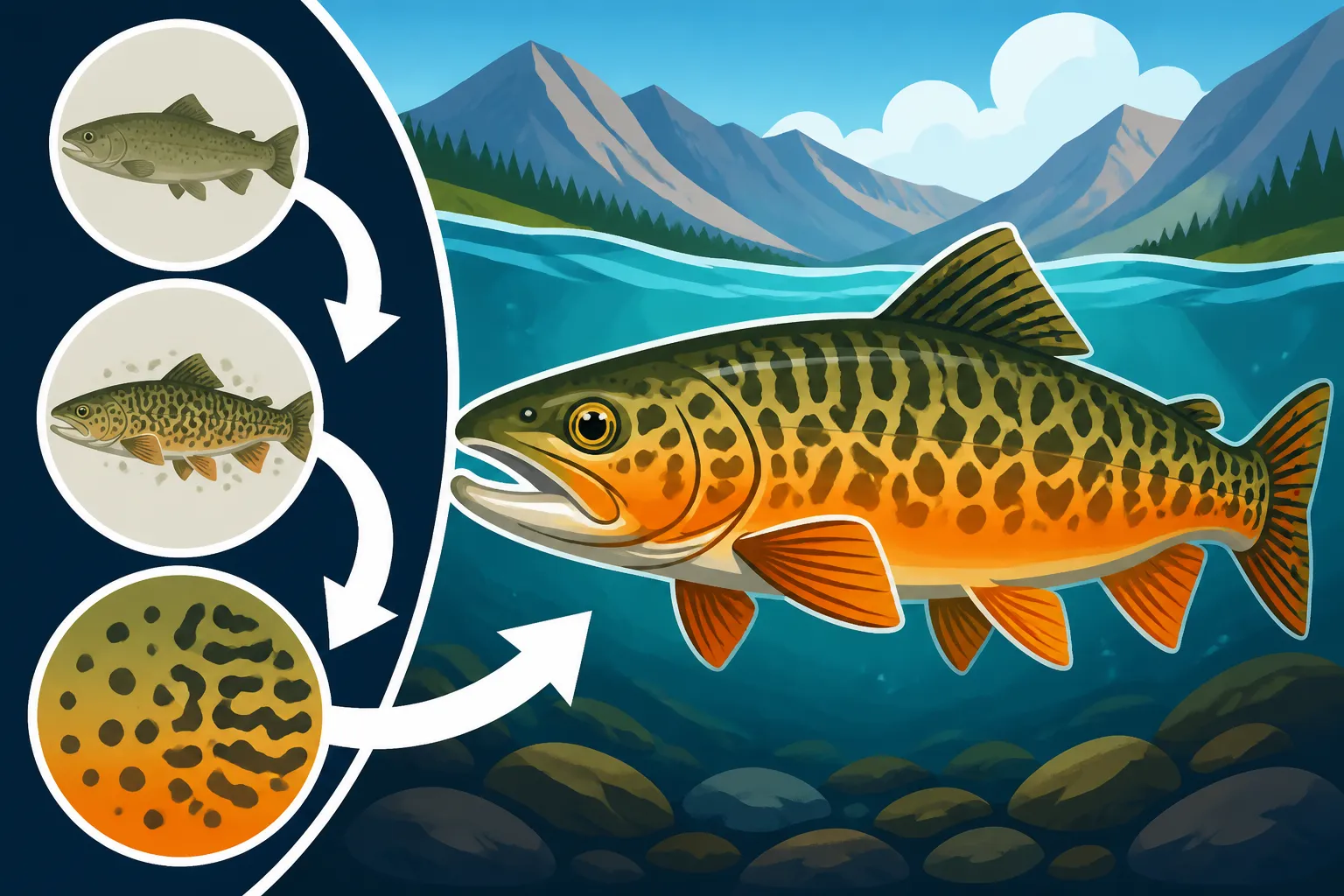
When these two distinct sets of genetic instructions combine in the tiger trout, it’s not a 50/50 mix where you see half brown spots and half brook vermiculations. Instead, the genetic interaction results in a pattern that is unique, yet clearly derived from its heritage. You can often find excellent field guides and identification books on Amazon that illustrate these distinct patterns, which can be super helpful for anglers trying to identify their catch.
The Genetic Recipe for Stripes and Marbling
The tiger trout's pattern is primarily a result of the genetic coding for pigmentation and how those pigment cells develop and distribute across the fish's skin. The intricate, wavy, and often interconnected dark patterns that resemble a tiger's stripes or an intricate maze are a direct manifestation of this genetic cross. It's often referred to as a "vermiculated" pattern, much like the brook trout, but with a bolder, more pronounced appearance that spreads across the entire body, from head to tail, rather than being confined mostly to the back.
This distinctive pattern typically consists of dark, irregular stripes and spots over a lighter, often greenish-gray or silvery-brown background. The dark markings can range from black to dark brown, and they often form interlocking bars and blotches that truly evoke the stripes of a tiger. What's particularly interesting is the variability; while all tiger trout share this general "tiger" look, no two patterns are exactly alike, much like human fingerprints. This individuality makes each catch a truly unique experience.
At a cellular level, fish coloration comes from specialized pigment cells called chromatophores. These cells contain different pigments:
- Melanophores: Produce black and brown pigments.
- Xanthophores: Produce yellow pigments.
- Erythrophores: Produce red pigments.
- Iridophores: Contain reflective crystals that create iridescence.
In the tiger trout, the genetic interaction appears to amplify and modify the melanophore distribution, creating those dominant dark, worm-like patterns. The lighter background coloration, often a dull yellow or olive, comes from the interplay of xanthophores and other pigments, providing the perfect canvas for the dark "stripes" to stand out. The red and blue spots characteristic of brook trout are usually absent or severely muted in tiger trout, further emphasizing the unique dark patterning. This combination creates a fish that is not only beautiful but also incredibly well-camouflaged in varied aquatic environments.
Visual Appeal and Ecological Role in Colorado Waters
The striking pattern of the tiger trout isn't just for show; it serves an important purpose in its natural (or semi-natural) environment. Their intricate camouflage helps them blend seamlessly with rocky streambeds, aquatic vegetation, and the dappled light filtering through the water. This provides them with an advantage both as predators, allowing them to ambush prey, and as prey themselves, helping them avoid larger fish and birds of prey.
In Colorado, where diverse aquatic habitats exist, from crystal-clear mountain streams to larger reservoirs, the tiger trout's pattern gives it a chameleon-like ability to adapt visually to its surroundings. Anglers often report that these fish are incredibly wary, and their camouflage certainly plays a role in making them harder to spot. They're a true challenge to target, and that's part of their allure.
Where Tiger Trout Thrive and Are Stocked
Due to their sterility, tiger trout do not naturally reproduce in significant numbers and are primarily stocked by wildlife agencies like Colorado Parks and Wildlife (CPW) to achieve specific fisheries management goals. They're often introduced into waters where traditional trout species might struggle with competition or overpopulation, or where managers want a predatory fish that won't overpopulate itself.
You'll often find tiger trout in smaller, high-elevation lakes and reservoirs, as well as some select river systems across Colorado. They're particularly effective at controlling populations of other smaller, undesirable fish species because they grow quickly and are aggressive predators. This makes them a valuable tool in maintaining ecological balance in certain fisheries. For instance, some lakes with an abundance of suckers or chubs might see tiger trout introduced to help keep those numbers in check.
Many anglers seek them out not just for their beauty, but for their fighting prowess. When hooked, tiger trout are known for their strong runs and acrobatic leaps, making them a thrilling catch. Knowing about their unique genetic background adds another layer of appreciation to the experience. If you're looking for where Colorado stocks them, checking the weekly stocking reports or the Colorado's Fishing Atlas to Plan a Trip can be invaluable resources.
Distinguishing a Tiger Trout from Its Relatives
While the tiger trout's pattern is typically quite obvious, sometimes anglers, especially beginners, might confuse them with heavily marked brown trout or even large brook trout. Here’s a quick guide to help you tell the difference:
| Feature | Brown Trout | Brook Trout | Tiger Trout |
|---|---|---|---|
| Body Pattern | Irregular dark spots, often with light halos. | Light, worm-like "vermiculations" on dark back/dorsal. | Bold, dark, labyrinthine vermiculations all over body. |
| Spotting | Dark spots, some red/orange spots with halos. | Red/orange spots with blue halos on sides. | Typically lacks red or blue spots; pattern is mostly dark on light. |
| Tail Fin | Little to no spotting, sometimes faintly forked. | Slightly forked, no spotting. | Slightly forked, often heavily vermiculated with dark patterns. |
| Lower Fins | Yellowish, often with a white leading edge. | Distinctive white leading edge, then black, then red/orange. | May have faint white edge, but less pronounced than brook trout. |
| Overall Color | Golden-brown to olive, sometimes silvery. | Dark olive to green, often with red/orange belly. | Greenish-gray to silvery-brown, with striking dark patterns. |
Paying attention to the overall coverage of the worm-like pattern is key. If the intricate, dark, wavy lines cover the entire body, from head to tail, not just the back, you’ve almost certainly got a tiger trout. This table helps to understand the nuances, but a good physical fish identification guide, which you can often find on platforms like Amazon, can be a fantastic tool to keep in your tackle box or reference on your phone.
The Angler's Perspective: Why Tiger Trout Are So Prized
Beyond their stunning looks, tiger trout hold a special place in many Colorado anglers' hearts. They are known for their voracious appetites, aggressive strikes, and formidable fighting spirit. These traits make them an exciting target, whether you're fly fishing, spin fishing, or even ice fishing. Their relative rarity compared to common rainbow or brown trout also adds to their mystique and desirability.
For many, catching a tiger trout is a bucket-list item. It represents a unique achievement, a moment to marvel at nature's unexpected artistry. Plus, because they are sterile, they put all their energy into growing larger and stronger rather than reproducing. This means that if conditions are right, they can grow to impressive sizes, offering the chance for a truly trophy-worthy catch.
Tackling the Tiger: Tips for Success
If you're heading out to specifically target these striped beauties, here are a few considerations:
- Lure Selection: Tiger trout are opportunistic predators. They'll often hit a wide variety of lures and flies. Think about what a brook or brown trout would eat, but perhaps go a bit more aggressive. Streamers that mimic baitfish, spoons, spinners, and even traditional dry flies or nymphs can all be effective. Their predatory nature means they're often attracted to movement and flash.
- Stealth is Key: Their keen eyesight and natural camouflage make them wary. Approach potential holding spots carefully, minimize shadows, and make accurate casts to avoid spooking them. This is especially true in clearer waters.
- Location, Location, Location: As mentioned, they're typically stocked by CPW. Your best bet for finding them is to consult official stocking reports and fishing regulation brochures. Areas with good structure – submerged logs, rock piles, drop-offs – are often productive. In rivers, look for deeper pools and runs where they can hide and ambush prey. For specific tips on fishing reservoirs, you might find some useful information in Trolling Techniques for Colorado Reservoirs.
Catching a tiger trout is more than just landing a fish; it’s an encounter with a biological anomaly, a striking hybrid that embodies the best traits of its parents in a truly unique package. It’s a reminder that even in managed fisheries, nature always finds a way to surprise and delight us with its incredible diversity and beauty. When you next pick up a fishing identification book, maybe from Amazon, take a moment to really study the distinct patterns and appreciate the wonder of these incredible fish. You might also want to learn about Tiger Trout in Colorado, a Hatchery Hybrid for more context on their creation and role.
Conservation and Management of Colorado's Tiger Trout
While tiger trout are not a native species to Colorado, their introduction and management play a calculated role in the state's diverse fisheries. CPW strategically stocks these fish to fulfill specific ecological niches and enhance angling opportunities. Because they are sterile, there is no concern about them outcompeting native trout populations through reproduction. This is a critical factor in their management.
In some waters, tiger trout help reduce numbers of undesirable or overpopulated species, improving the overall health of the aquatic ecosystem. For example, if a reservoir has an explosion of stunted suckers that are monopolizing food resources, introducing tiger trout can provide a natural check on that population, leaving more food for other desirable game fish. This makes them a valuable tool in balancing delicate aquatic environments without introducing a self-sustaining invasive species. Understanding Why Colorado Stocks Sterile Tiger Trout sheds more light on this approach.
Furthermore, their aggressive nature and rapid growth rate mean they offer exciting angling experiences without posing a long-term threat to the genetic integrity of Colorado's precious native trout, such as the Colorado River Cutthroat Trout, Where to Find Them or the Greenback Cutthroat Trout Recovery in Colorado. This careful balance is a testament to thoughtful fisheries management that aims to provide diverse recreational opportunities while protecting indigenous fish populations.
It’s important for anglers to be aware of local regulations concerning tiger trout, as bag and possession limits can vary by water. Always consult the most current Colorado Fishing Regulations Every Angler Should Know before heading out. Sometimes, due to their predatory nature, special regulations might encourage keeping certain numbers of tiger trout to help manage an ecosystem.
In essence, the tiger trout, with its captivating pattern, is a living example of how science and nature can intersect to create something truly remarkable for both ecological balance and recreational enjoyment. The next time you see one, take a moment to appreciate the complex genetic journey that led to its distinctive stripes.
Disclaimer
This article is for general informational purposes only and does not constitute professional advice. Laws, prices and regulations vary by location and change over time. Consult a qualified professional for guidance on your specific situation.