How Deep Lake Trout Hold in Summer
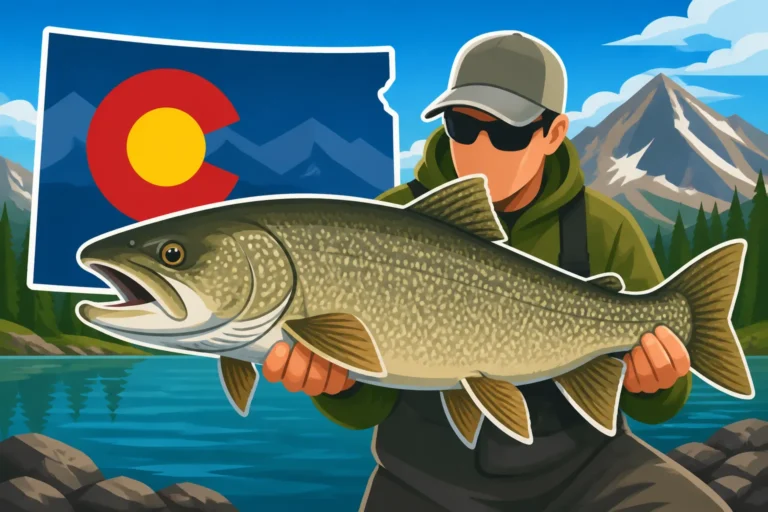
Summer in Colorado is absolutely stunning, with sparkling reservoirs reflecting the clear blue skies. But if you've ever tried to chase those big lake trout when the weather warms up, you know the frustration: they seem to vanish, leaving you scratching your head with an empty stringer. It's not that they're gone; they've simply retreated to their preferred deep-water haunts. This guide will help you understand why lake trout go deep in summer and, more importantly, how to find and catch them when they do.
Understanding Lake Trout Behavior in Summer
When those long, sunny Colorado days really settle in, most anglers are out enjoying the warmth, but for lake trout, it's a different story. These magnificent fish are cold-water predators, perfectly adapted to chilly, oxygen-rich environments. As surface water temperatures climb into the 60s and 70s Fahrenheit, the upper layers of our reservoirs become uncomfortable and even dangerous for them.
The Retreat to Deeper, Cooler Water
Think of it like us trying to escape the midday summer sun. We head for the shade, or better yet, air conditioning. Lake trout do the same, but their "air conditioning" is the deep, dark, cool water found far below the surface. This instinctual drive to find their comfort zone is the primary reason they move out of the shallows you might have fished earlier in the spring or later in the fall. They're not just looking for cooler water, though; they're also seeking out stable conditions where their metabolism can operate efficiently. This is a crucial piece of the puzzle when you're trying to figure out how to locate them.
Feeding Patterns Shift with the Seasons
It's not just about temperature; their feeding patterns change, too. In the spring, lake trout might be more aggressive, chasing baitfish in shallower zones as the water warms up after ice-out. But by summer, with less light penetrating the depths and a need to conserve energy in a more stable environment, their feeding can become more opportunistic and less frenetic. They're still eating, of course, but you'll often find them lurking near structures or schools of baitfish, waiting for an easy meal rather than expending a lot of energy in a prolonged chase. Understanding this subtle shift in behavior is key to adapting your angling approach. If you're looking for where these fish live, check out our guide on Lake Trout Fishing in Colorado.
The Science of Summer Depths: Thermoclines and Oxygen
To truly understand where lake trout hold in summer, we need a quick dip into limnology – the study of inland waters. Don't worry, no textbooks here, just practical knowledge for finding fish!
The Importance of the Thermocline
As the summer sun bakes the surface of our large reservoirs like Blue Mesa or Eleven Mile, a distinct layering of water temperatures begins to form. This phenomenon is called thermal stratification.
- Epilimnion: This is the uppermost layer, warm and well-mixed by wind and waves. It's great for swimmers and sunbathers, but too warm for lake trout.
- Hypolimnion: This is the bottom layer, consistently cold and dense. It's where the lake trout want to be.
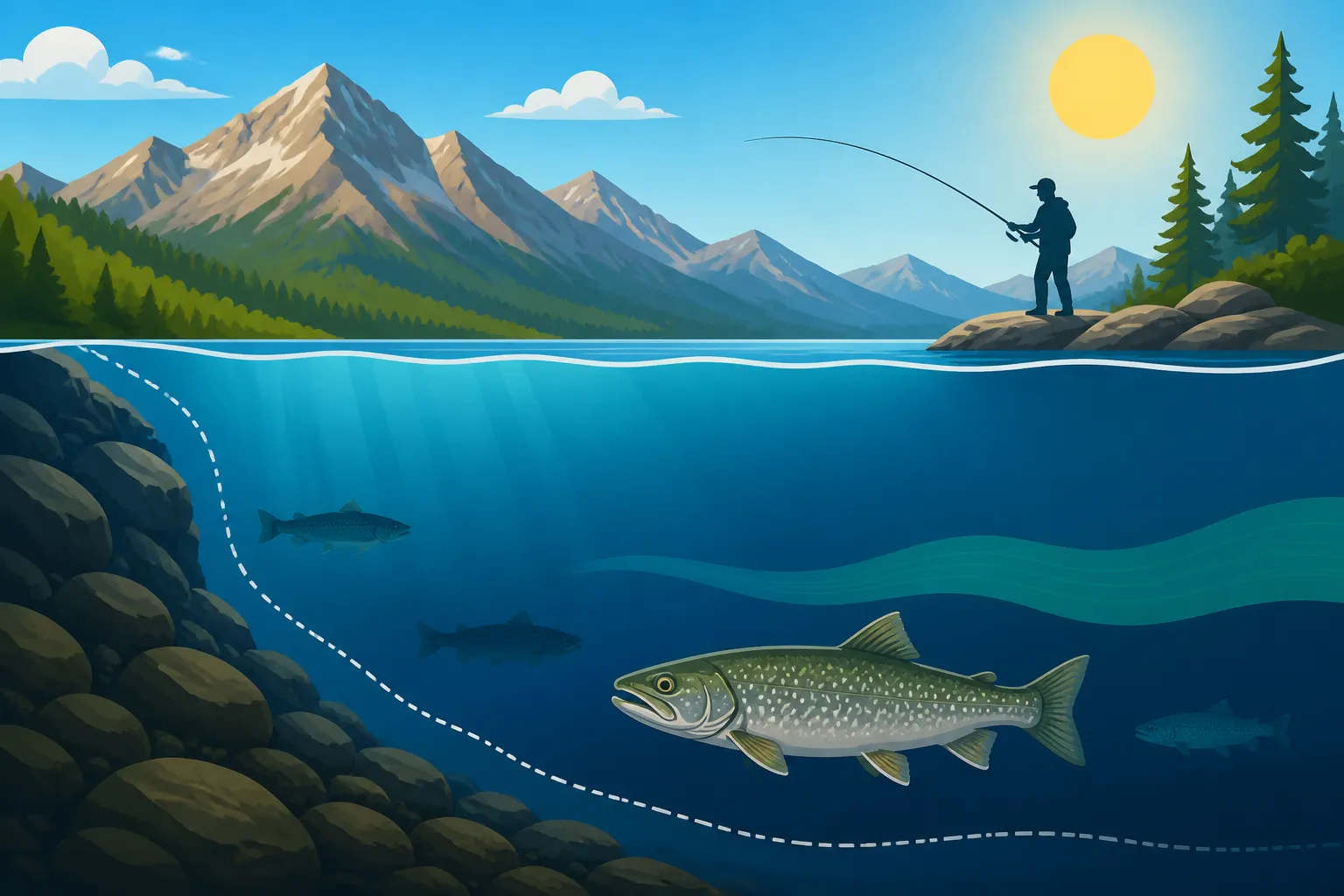
- Thermocline: This is the magic zone, a relatively thin layer of water between the epilimnion and hypolimnion where the temperature drops rapidly. This is often the prime real estate for summer lake trout. They're looking for that sweet spot where the water is cold enough to be comfortable but still has enough dissolved oxygen to support them and their prey.
Imagine dropping a thermometer through the water column; you'd feel that distinct change as you pass through the thermocline. For many Colorado reservoirs, this thermocline might set up anywhere from 20 to 60 feet deep, but it can vary wildly depending on the reservoir's size, depth, and even how windy the summer has been. Knowing its depth is like finding the front door to the lake trout's summer home.
Dissolved Oxygen Levels in Deeper Water
While temperature is a huge factor, dissolved oxygen (DO) is equally vital. Cold water holds more oxygen than warm water. However, as decomposition occurs at the bottom of a lake, oxygen can be consumed. In very deep, stagnant pockets of the hypolimnion, oxygen levels can sometimes deplete. Lake trout, like all fish, need oxygen to survive.
Therefore, the ideal summer holding depth for lake trout isn't just the coldest water, but the coldest water with sufficient dissolved oxygen. This often puts them right around or just below the thermocline. They're not going to stay in an oxygen-depleted zone, no matter how cold it is. This is why a good fish finder is invaluable. Modern units can often display water temperature at various depths, and some even provide dissolved oxygen readings, giving you an unparalleled advantage. You can find excellent portable fish finders on platforms like Amazon that are perfect for boat or kayak use, helping you pinpoint these thermal layers.
Colorado's Deep Water Havens: Where to Find Summer Lakers
Colorado is blessed with several deep, cold reservoirs that are prime habitat for lake trout, especially in the summer months. These aren't your typical shallow ponds; we're talking about massive bodies of water that can hold fish at incredible depths.
Notable Lake Trout Reservoirs
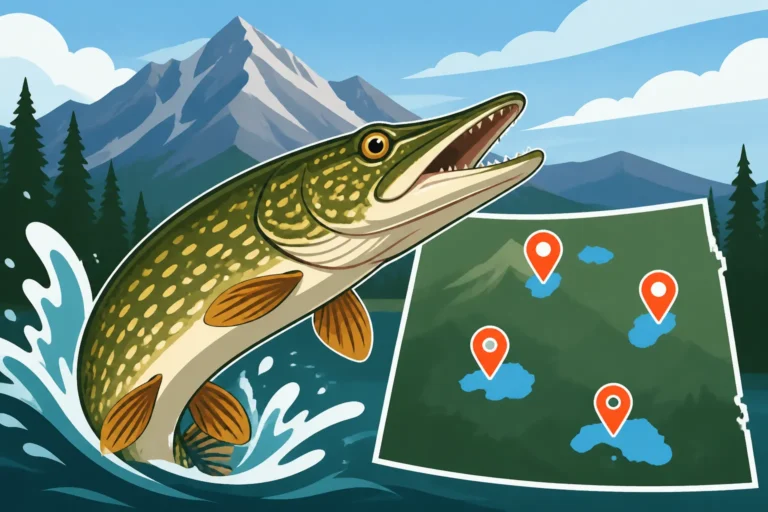
When you're looking for lake trout in Colorado during summer, you'll want to focus on our larger, deeper reservoirs. Here are a few standout spots:
- Blue Mesa Reservoir: This is arguably the most famous lake trout fishery in Colorado. Fishing Blue Mesa Reservoir for Lake Trout is a pursuit many anglers dedicate themselves to. Its vast size and incredible depth mean it maintains excellent cold-water habitat throughout the summer. Lake trout here will migrate to the deepest sections, often holding on or near structure in the old river channel or along steep drop-offs.
- Granby Reservoir: Another large, deep reservoir in Grand County, Granby holds a strong population of lake trout. Similar to Blue Mesa, the summer strategy here involves finding the thermocline and keying in on submerged features.
- Twin Lakes: Near Leadville, these historic lakes are not quite as massive as Blue Mesa or Granby, but they are deep and cold, providing good summer habitat for lake trout, including some real trophy fish.
- Ruedi Reservoir: Up near Basalt, Ruedi is known for its incredible trout fishing, and while it's often overlooked for lake trout compared to its larger cousins, some impressive lakers are caught here, especially in the summer depths.
These reservoirs offer the consistent cold water and deep structure that lake trout crave when the surface warms up. They are also home to abundant prey fish, which the lake trout will follow.
Following the Forage Fish
Lake trout are apex predators, and their summer movements are intrinsically linked to their food source. In Colorado, this often means Kokanee salmon, chub, or even smaller trout. These baitfish also prefer cooler water and will similarly migrate to deeper parts of the reservoir during summer.
If you can locate schools of baitfish on your sonar, you're halfway to finding lake trout. The lakers won't be far behind. They'll position themselves below or around these schools, waiting for an easy opportunity to ambush a straggler. This often puts them at specific depths, which might shift throughout the day depending on light levels and the movement of the bait. So, while the thermocline provides the general depth range, the presence of baitfish will give you the precise strike zone. Sometimes, these deep-dwelling baitfish are Best Lures for Trolling Kokanee Salmon, which are a favorite meal for lakers.
| Factor | Shallow Water (Spring/Fall) | Deep Water (Summer) |
|---|---|---|
| Water Temp | Moderate, warming or cooling | Cold, stable below thermocline |
| Depth Range | 10-40 feet, near shore/structure | 40-100+ feet, offshore structure/channels |
| Oxygen Levels | High, well-mixed | High, but can decrease in deepest, stagnant zones |
| Prey Location | More scattered, shallower | Concentrated near thermocline or deep structure |
| Light Levels | Bright, surface visibility good | Low, dark, less light penetration |
| Angling Tech | Casting, jigging, some trolling | Deep trolling, vertical jigging, downriggers |
Tactics for Targeting Deep Summer Lake Trout
Now that we understand why and where lake trout go deep, let's talk about how to catch them. This isn't shallow-water casting, so you'll need specialized gear and techniques.
Trolling with Downriggers or Lead Core
Trolling is hands-down one of the most effective ways to cover water and present lures at specific depths for summer lake trout. Given the depths we're talking about, you'll need gear to get your lures down there.
- Downriggers: These are essential tools for precision depth control. A downrigger uses a heavy cannonball weight to pull your fishing line down to a precise depth, usually indicated by a counter. Your line is held by a release clip, and when a fish strikes, the line pops free, allowing you to fight the fish directly without the weight. This is fantastic for targeting fish holding tightly to a specific depth, say right at the thermocline. Many anglers consider a good set of downriggers a worthy investment for Trolling Techniques for Colorado Reservoirs.
- Lead Core Line: If downriggers aren't in your budget or boat setup, lead core line is a great alternative. This specialized line has a lead filament braided into its core, causing it to sink. The general rule of thumb is that one color (usually 10 yards) of lead core will get your lure down about 5 feet at a moderate trolling speed. So, if you're targeting 50 feet, you'd let out 10 colors. This takes some practice to get precise, but it's effective. You can often find spools of lead core line readily available on Amazon.
- Optimal Speed and Lures: Slower trolling speeds (1.5-2.5 mph) are generally best for lake trout, mimicking the slower, deeper movements of their prey. Large spoons, stickbaits, and even dodger/flasher setups with a trailing fly or bait are popular choices. Experiment with colors, but natural baitfish patterns often excel. For specific depth advice, you might want to read Best Downrigger Depth for Lake Trout in Summer.
Vertical Jigging Deep Structure
Another highly effective technique, especially once you've located a concentration of fish on your sonar, is vertical jigging. This involves dropping a heavy jig directly down to the depth where you're seeing fish and working it with an erratic motion.
- Jig Selection: Heavy jigs, often 1-4 ounces, are necessary to get down quickly in deep water and maintain contact. Think about flutter spoons, tube jigs, or heavy bucktail jigs. Tipping these jigs with a piece of sucker meat, chub, or even a specialized scent can significantly increase your strike rate. The flash and vibration of the jig, combined with the natural scent, is often irresistible to a lurking lake trout.
- Sonar is King: Vertical jigging absolutely requires a good fish finder. You need to see the bottom, any structure, and most importantly, the fish themselves. You'll be watching your jig on the screen, trying to present it right in front of the fish's nose. It's a bit like playing a video game! If you're interested in alternative jigging methods, consider Jigging for Lake Trout Through the Ice, as some of those tactics can transfer to open water.
- Rod and Reel Setup: A stout baitcasting or spinning setup with braided line is ideal. Braided line has very little stretch, giving you excellent sensitivity for feeling subtle bites in deep water and powerful hooksets. A medium-heavy to heavy power rod with a fast action will give you the backbone to fight big fish from the depths.
Using Electronics for Precision Targeting
Modern fishing electronics have revolutionized deepwater fishing. Don't leave home without your fish finder, and know how to use it.
- Mapping and GPS: Many deep reservoirs have detailed contour maps available on modern GPS units. These maps will show you submerged islands, old river channels, and steep drop-offs – all prime lake trout habitat. Marking waypoints where you catch fish or see concentrations of bait is crucial for repeating success.
- Side Imaging and Down Imaging: These advanced sonar technologies allow you to see what's directly to the sides or directly below your boat with photo-like clarity. This helps you identify submerged trees, rock piles, or even individual fish that might be off to the side of your traditional sonar cone. Seeing a school of baitfish with larger arcs (lake trout) nearby on your screen is the ultimate sign you're in the right zone.
- Understanding Sonar Returns: Learning to interpret the different marks on your screen takes practice. Baitfish often appear as clouds or dense clusters, while lake trout will show up as distinct, often elongated arcs. Pay attention to the depth at which these marks appear – that's your target zone. Remember, every angler needs to be familiar with Colorado Fishing Regulations Every Angler Should Know regardless of their target species or technique.
By combining an understanding of lake trout behavior, the science of their deep-water habitat, and the right angling techniques, you can turn those frustrating summer days into incredible fishing experiences. It takes a bit more effort to get down to them, but the reward of a big Colorado lake trout pulling hard from the depths is absolutely worth it.
Disclaimer
This article is for general informational purposes only and does not constitute professional advice. Laws, prices and regulations vary by location and change over time. Consult a qualified professional for guidance on your specific situation.