How Deep to Troll for Kokanee at Blue Mesa
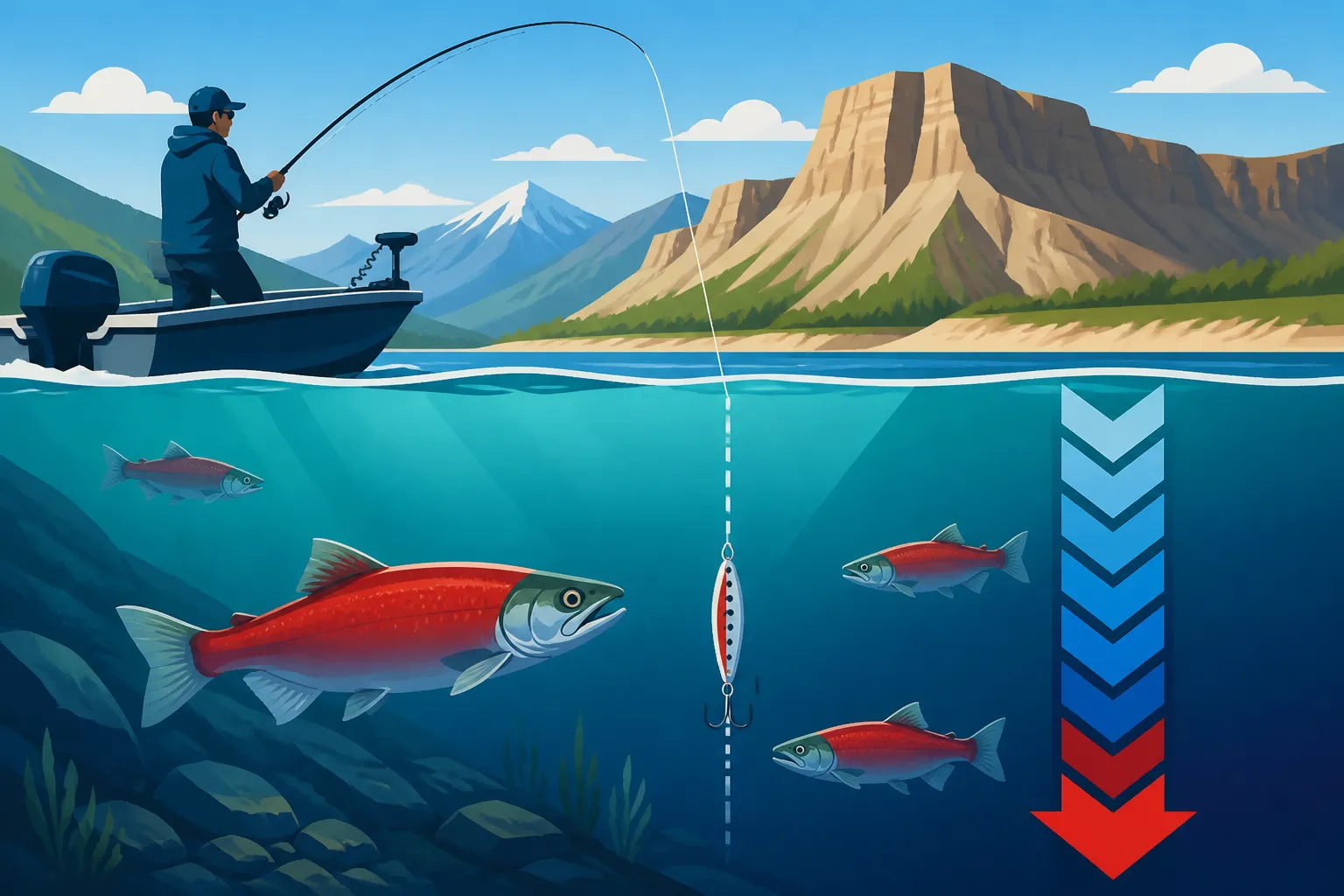
One of the biggest head-scratchers when you're out on the vast waters of Blue Mesa Reservoir, especially when targeting those elusive Kokanee salmon, is figuring out just how deep they're holding. It can be incredibly frustrating to troll for hours, seeing schools on your sonar, but never getting a bite because your lure isn't in the strike zone. This guide is all about demystifying kokanee depth at Blue Mesa, giving you the insights and techniques to put your gear right where the fish are feeding.
Understanding Kokanee Behavior and Depth Preferences
Kokanee salmon are fascinating fish, and their depth preferences at Blue Mesa Reservoir aren't just random. They're deeply tied to their biological needs and the constantly changing conditions of their environment. Missing this crucial understanding means you're essentially fishing blind.
Seasonal Movements of Kokanee Salmon
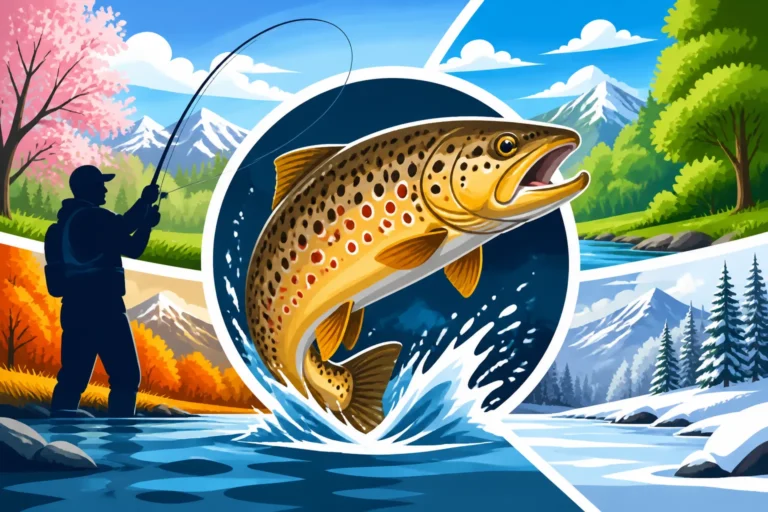
Kokanee salmon in Blue Mesa are highly sensitive to water temperature, light penetration, and the availability of their primary food source, zooplankton. This means their preferred depth can shift dramatically throughout the year.
- Spring (Ice-out to late May): As the ice recedes and the lake begins to warm, kokanee often stay in the upper water column, typically from 15 to 40 feet deep. The water is still cool enough for them, and plankton blooms start to become more prevalent in these shallower zones. They're also often spread out more, beginning to feed actively after the long winter. This is a great time to target them, as they're not yet as pressured and are actively foraging. You might even find them higher if there's an overcast sky or early morning conditions, allowing them to feel safer from predators like lake trout.
- Summer (June to August): This is when things get a bit more complex. As the surface water warms significantly, Blue Mesa develops a thermocline – a distinct layer where water temperature changes rapidly. Kokanee will generally hold just above or within this thermocline, seeking cooler, oxygen-rich water. This usually places them anywhere from 40 to 80 feet deep, sometimes even deeper during the brightest parts of the day. They're trying to escape the warmer surface temperatures but still stay in an area with good oxygen and food. Keeping an eye on your fish finder to locate this thermocline is key, as it will often show up as a distinct layer where fish activity might concentrate. Learning to pinpoint this can really help you understand where to start your search when Trolling for Kokanee Salmon in Colorado
- Fall (September to November): As temperatures begin to drop again, the thermocline might break up, and the water column starts to mix. Kokanee will often rise shallower, sometimes back into the 20 to 50-foot range. However, this is also when their powerful biological drive to spawn kicks in. They'll start their pre-spawning migrations, moving towards the inlets of the reservoir. Their feeding behavior might become more aggressive as they build energy for the spawn, but their focus will shift from purely foraging to migrating. This is when you can see those incredible Kokanee Salmon Spawning Runs in Colorado in the tributaries.
- Winter (Ice Fishing Season): Once Blue Mesa freezes over, kokanee can be found at varying depths. Early ice often sees them shallower, similar to fall depths, from 20 to 60 feet. As winter progresses and ice thickens, they may suspend at different levels, often near underwater structure or deep points, still seeking that perfect balance of temperature and food. Ice fishing for them requires a different approach, but depth remains critical.
Factors Influencing Kokanee Depth
Beyond the seasons, several daily and environmental factors play a huge role in where kokanee decide to hang out.
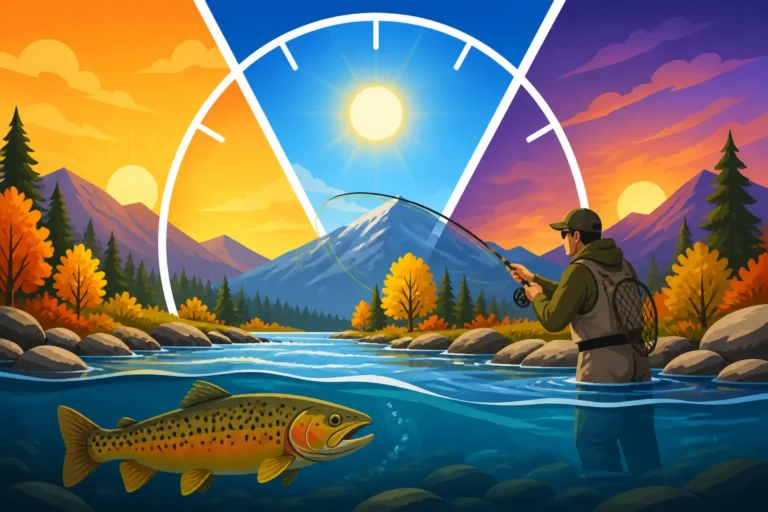
- Light Penetration: Kokanee are very sensitive to light. On bright, sunny days, they'll generally go deeper to escape the harsh light and perceived predator threat. On overcast days, or during dawn and dusk, they'll often come shallower. This is why many anglers find the best success early in the morning or late in the evening when the light is lower.
- Water Temperature: This is perhaps the most critical factor. Kokanee thrive in cold water, typically preferring temperatures between 45 and 55 degrees Fahrenheit. As mentioned with the thermocline, they will actively seek out this temperature band, even if it means suspending in the middle of the water column. If you can read your water temperature at various depths, you're halfway to finding the fish.
- Food Availability: Kokanee are primarily zooplankton eaters. While you can't see the plankton, knowing where it generally congregates can give you clues. Plankton often drifts with currents or congregates along thermoclines. Your fish finder might not show individual plankton, but it will often show baitfish (which feed on plankton) or larger schools of kokanee concentrating in these areas.
- Dissolved Oxygen: While Blue Mesa is generally very well-oxygenated, especially in its cold depths, extremely deep areas can sometimes become oxygen-depleted, especially in other reservoirs. Kokanee need sufficient oxygen, so they won't go beyond a certain point if oxygen levels drop. This is less of an issue at Blue Mesa, but it's a factor to be aware of in other systems.
Essential Gear for Successful Kokanee Trolling at Blue Mesa
Successfully targeting kokanee at depth requires more than just a rod and reel. You need specialized equipment to get your lures down to where these fish live and to detect their often subtle bites.
Downriggers and Dipsy Divers
These are your primary tools for precision depth control. Without them, you'd be guessing where your lures are, and guessing rarely catches fish.
- Downriggers: For serious kokanee anglers at Blue Mesa, downriggers are indispensable. They allow you to set your lure at an exact depth and hold it there, regardless of boat speed or water currents. A heavy lead ball (often 8-12 lbs) is lowered on a separate cable, and your fishing line, attached to a release clip, is clipped to this cable. When a fish strikes, the line pops free from the clip, allowing you to fight the fish directly without the weight of the cannonball. This precision is crucial when kokanee are holding in a tight depth band. Brands like Scotty and Cannon offer reliable downriggers that can withstand the rigors of frequent use. You can find excellent downrigger models, along with spare parts and accessories, readily available on platforms like Amazon.
- Dipsy Divers (or Planer Boards): These tools offer a different approach to depth control, often used in conjunction with downriggers or as a standalone method for shallower depths or spreading out lines. Dipsy divers use water pressure to dive and run out to the side of the boat, presenting lures at specific depths and distances. They're adjustable, allowing you to fine-tune their dive angle and depth. While they don't offer the pinpoint accuracy of downriggers, they're excellent for covering more water and targeting fish that might be spread out in a wider depth range. They're also less expensive than downriggers, making them a good entry-level option for getting lures down.
Specialized Rods, Reels, and Lines
Your standard bass or trout setup likely won't cut it when you're trolling for kokanee. You need gear that can handle the specific demands of this type of fishing.
- Rods: Look for rods that are 7 to 9 feet long, with a moderate to moderate-fast action. The longer length helps with shock absorption and keeping lines spread out, especially when running multiple lines from downriggers. A softer tip is critical for detecting those subtle kokanee bites; they often "mouth" the lure rather than aggressively striking it. Brands like Okuma or Shimano offer specific kokanee trolling rods.
- Reels: Levelwind baitcasting reels are the go-to for kokanee trolling. They're durable, have smooth drags, and the line counter feature is absolutely essential. A line counter allows you to know exactly how much line is out, which, when combined with your downrigger or diver settings, helps you replicate successful depths. Look for reels with a good capacity for braided or monofilament line.
- Line: Many anglers prefer a braided main line (20-30 lb test) for its sensitivity and zero stretch, allowing you to feel even the lightest taps. However, a monofilament leader (8-12 lb fluorocarbon or monofilament) is almost universally used. Fluorocarbon leaders are nearly invisible underwater, which is a huge advantage when targeting line-shy kokanee. The length of your leader will vary, but 6-10 feet is a good starting point. Some anglers even use a small, clear snubber (a stretchy piece of rubber) between their main line and leader to absorb the shock of a kokanee strike and prevent hooks from tearing out of their soft mouths.
Lures, Baits, and Scent Attractants
Kokanee can be finicky eaters, so having a variety of presentations is key.
- Lures: Small dodgers and flashers (like Sling Blades or Wee Tads) are crucial for attracting kokanee. These flutter and flash in the water, mimicking schools of baitfish, and create a commotion that draws kokanee in. The actual "lure" often trails behind the dodger/flasher on a short leader (typically 8-18 inches). Popular choices include small hoochies (squid skirts), mini-squid, or wedding rings. Color choice can be critical; pink, orange, green, and chartreuse are perennial favorites at Blue Mesa. Experimentation is always important – what worked yesterday might not work today. You can find a vast selection of dodgers, hoochies, and scent attractants on Amazon, making it easy to stock up before your trip.
- Baits: The undisputed king of kokanee bait is corn, specifically Shoepeg corn. It's often dyed bright colors (pink, orange, green) and soaked in various scents. You'll typically tip your hook with 2-4 kernels of corn behind your hoochie or wedding ring. The corn provides visual appeal, subtle scent, and a bit of flotation.
- Scent Attractants: Kokanee rely heavily on their sense of smell. Adding a good quality scent to your lures and corn is almost non-negotiable. Pro-Cure, Pautzke's, and Kokanee Killer are popular brands offering scents like Anise, Garlic, Bloody Tuna, and Krill. Apply these generously to your lures and corn, and reapply frequently, especially after catching a fish or if your lure has been in the water for a while.
Mastering Trolling Techniques for Blue Mesa Kokanee
Getting your gear down to the right depth is only part of the equation. How you present it, and how you interpret what your electronics are telling you, are equally vital for consistent success.
Reading Your Electronics for Depth and Fish
Your fish finder is your best friend when targeting kokanee. Learning to interpret its readings will directly translate to more fish in the cooler.
- Sonar Display: Look for arches or distinct blobs on your sonar screen. These are fish. Kokanee often school tightly, so you're looking for dense clusters or long, narrow bands of fish. Pay close attention to the depth at which these schools appear. This is your target depth. If you see fish at 60 feet, that's where your lure needs to be.
- Thermocline Detection: Many modern fish finders can display the thermocline as a distinct band. It often appears as a fuzzy or mottled layer on the screen. As we discussed, kokanee love to hold near this temperature break. If you see a prominent thermocline at, say, 50 feet, and fish just above it, that's a strong indicator of where to set your downriggers.
- Bottom Contours and Structure: While kokanee are pelagic (open water) fish, they still relate to underwater structure, especially points, humps, and old river channels. Use your GPS and sonar to identify these features. Fish might congregate along the edges of a submerged riverbed or over a deep hump. Even if they're suspended, they're often doing so in proximity to these features. Many anglers use tools like the Colorado Fishing Atlas to scout these contours before even leaving the dock.
Adjusting Speed and Lure Presentation
Kokanee are particular about how their meal is presented. Small adjustments can make a huge difference.
- Trolling Speed: Generally, kokanee prefer slower trolling speeds, typically between 0.8 and 1.8 miles per hour. However, this is not a hard and fast rule. Sometimes they want it slower, sometimes a bit faster. The key is to watch your rod tips. Your dodger/flasher needs to have an active wobble – not just dragging dead. Your rod tip should show a steady, rhythmic pulse. If it's not pulsing, you're likely going too slow. If it's vibrating too wildly, you might be going too fast, causing the dodger to spin. Experiment within this range until you find what triggers bites. Use your boat's GPS or speedometer to maintain a consistent speed.
- S-Turns and Zig-Zags: Instead of just trolling in a straight line, introduce gradual S-turns or zig-zags. This causes your lures on the outside of the turn to speed up and rise slightly, while lures on the inside slow down and sink. This change in speed and depth can often trigger strikes from following fish. It's a fantastic tactic for presenting a varied action to a school that might be hesitant.
- Leader Length: The distance between your dodger/flasher and your lure (the leader length) is also crucial. A shorter leader (8-12 inches) will give your lure a more erratic, "kicking" action, mimicking a struggling baitfish. A longer leader (18-24 inches) will give your lure a wider, more sweeping action. Experiment with different lengths until you find what the fish prefer on a given day. Sometimes a minor change in this distance is all it takes to go from no bites to a full cooler, especially when fishing for Colorado's Kokanee Salmon Limit at Blue Mesa.
Locating Key Structure and Schools
Blue Mesa is a massive body of water, and finding the fish can feel like searching for a needle in a haystack. But there are strategies to narrow down your search.
- Start with Known Areas: Blue Mesa has several well-known kokanee haunts. Areas like the Cebolla Basin, the Iola Basin, and the Sapinero Basin are often productive. The key is to not just go there, but to understand why they are productive – usually because of deep water access, proximity to the old river channel, or historical plankton concentrations. Don't be afraid to ask local bait shops or follow reports from other anglers.
- Watch for Bird Activity: Birds, especially gulls, can be your natural fish finders. If you see gulls diving and congregating over a specific area of the lake, it's often because baitfish (and thus, kokanee) are pushing them to the surface. This is a dead giveaway that there's active feeding happening below.
- Use Your Electronics Constantly: Never stop watching your fish finder. Troll in areas where you expect to find fish based on depth and structure. If you're not marking any fish after 15-20 minutes, don't be afraid to change your depth, speed, or location. Remember that Fishing Blue Mesa Reservoir for Kokanee Salmon is a dynamic process, and constant adjustment is often required. You'll likely want to pay attention to your Best Season to Fish Blue Mesa for Kokanee Salmon too, as this will dictate where you begin your search.
Troubleshooting Common Depth Challenges
Even with the best gear and techniques, you'll still face days when the kokanee seem to have vanished. Don't despair; a systematic approach to troubleshooting can often turn a tough day around.
When Kokanee Seem to Disappear
It’s happened to all of us. You were catching fish, then suddenly, the bites stop, and your screen goes blank. This doesn't mean the fish are gone, just that they've moved or changed their behavior.
- Check Your Depth: The most common reason for a sudden slowdown is a change in the kokanee's preferred depth. Were they at 50 feet and now you're not seeing anything? Try moving your downriggers up 5-10 feet, then down 5-10 feet. Even a slight shift in water temperature or light can cause kokanee to rise or fall. If you're not getting bites and not seeing fish on the sonar at your current depth, change it aggressively.
- Evaluate the Time of Day and Light: As the sun gets higher and brighter, kokanee often go deeper. If your bites stopped mid-morning, it's a strong signal to drop your lures further down. Conversely, if it gets overcast, they might rise. Always consider the light conditions.
- Change Your Speed or Direction: Sometimes a subtle change in speed is all it takes to trigger a strike. Speed up by 0.2 mph, then slow down. Also, try making those S-turns more frequently. A change in direction can bring your lure into a different current or past a new group of fish.
- Switch Lures or Scents: Kokanee can become accustomed to certain presentations. If you've been running the same dodger/hoochie combination for a while without success, try a different color. Sometimes a subtle shift from pink to orange, or a different dodger size, can make all the difference. Don't forget to refresh your scent attractant; it wears off over time, and a fresh burst of garlic or krill can wake them up. You might find some excellent deals on different colors or brands of lures on Amazon, which allows for plenty of experimentation without breaking the bank.
Dealing with Thermoclines and Water Temperature
Understanding and actively using the thermocline is a game-changer for kokanee fishing at Blue Mesa, especially in the warmer months.
- Pinpointing the Thermocline: Use your fish finder to locate the distinct temperature break. It will often appear as a hazy or thicker line on your sonar, signifying a change in water density. If your fish finder has a temperature gauge, use a probe to measure temperatures at different depths to confirm the exact top and bottom of this layer.
- Fishing Above, Within, or Below: Kokanee are most often found just above or within the thermocline. They want the cooler water below it but often feed in the richer plankton zone that accumulates at the top of this layer. Start by setting your lures at the top of the thermocline, and then deploy other lines to fish slightly below it or right in the middle. Rarely will you find them significantly below the thermocline unless it's extremely deep and oxygenated water.
- Temperature Gradients: Sometimes, it's not just the thermocline, but subtle temperature gradients above it that hold fish. Keep an eye on your water temperature gauge if you have one that displays surface and downrigger ball temperatures. A drop of even a few degrees can indicate a zone where kokanee might be holding. The nuances of water temperature can also dictate what types of fish are most active, so understanding the overall Colorado Fishing Seasons Month by Month can add another layer to your strategy.
By systematically working through these depths and presentations, you'll increase your odds significantly. Kokanee fishing is about persistence and observation. The more time you spend on the water, experimenting and paying attention to every detail, the better you'll become at cracking the code of Blue Mesa's incredible kokanee.
Here’s a quick overview of typical kokanee depth ranges at Blue Mesa throughout the year, but remember these are starting points, not strict rules!
| Season | Typical Kokanee Depth Range (Feet) | Key Factors | Best Trolling Speed (MPH) | Notes |
|---|---|---|---|---|
| Spring | 15 – 40 | Ice-out, warming water, early plankton blooms | 1.0 – 1.8 | Often more spread out, active feeding after winter. Deeper on sunny days, shallower on overcast. |
| Early Summer | 30 – 60 | Water warming, thermocline forming | 1.0 – 1.6 | Begin to seek cooler water as surface heats. Thermocline starts to be a factor. |
| Mid-Summer | 40 – 80+ | Strong thermocline, bright sun, deepest seeking | 0.8 – 1.5 | Will hold tightly to thermocline. Deeper on bright days, shallower during low light. |
| Late Summer | 40 – 70 | Thermocline may deepen, pre-spawn movements begin | 0.9 – 1.6 | Still relating to thermocline but may start to congregate more. Watch for baitfish schools. |
| Fall | 20 – 50 | Water cooling, thermocline breaks up, spawning run | 1.0 – 1.8 | Focus shifts to spawning. May be more aggressive but also moving towards inlets. Kokanee Salmon Life Cycle in Colorado becomes very visible during this time. |
| Winter | 20 – 60 | Ice cover, colder stable water | N/A (Ice Fishing) | Depth can vary. Early ice often shallower, later ice they may suspend. Relate to structure. |
Remember, these are averages and starting points. The real secret is using your electronics, paying attention to what's working (and what's not), and making constant adjustments out on the water. Blue Mesa's kokanee can be challenging, but incredibly rewarding once you crack their code. For more general information on fishing at Blue Mesa Reservoir, check out our comprehensive guide.
Disclaimer
Fishing conditions and regulations in Colorado can change. Always consult the most current Colorado Parks and Wildlife (CPW) regulations brochure before heading out on the water. This guide provides general information and recommendations, but it is your responsibility to be aware of and comply with all applicable laws and regulations.